
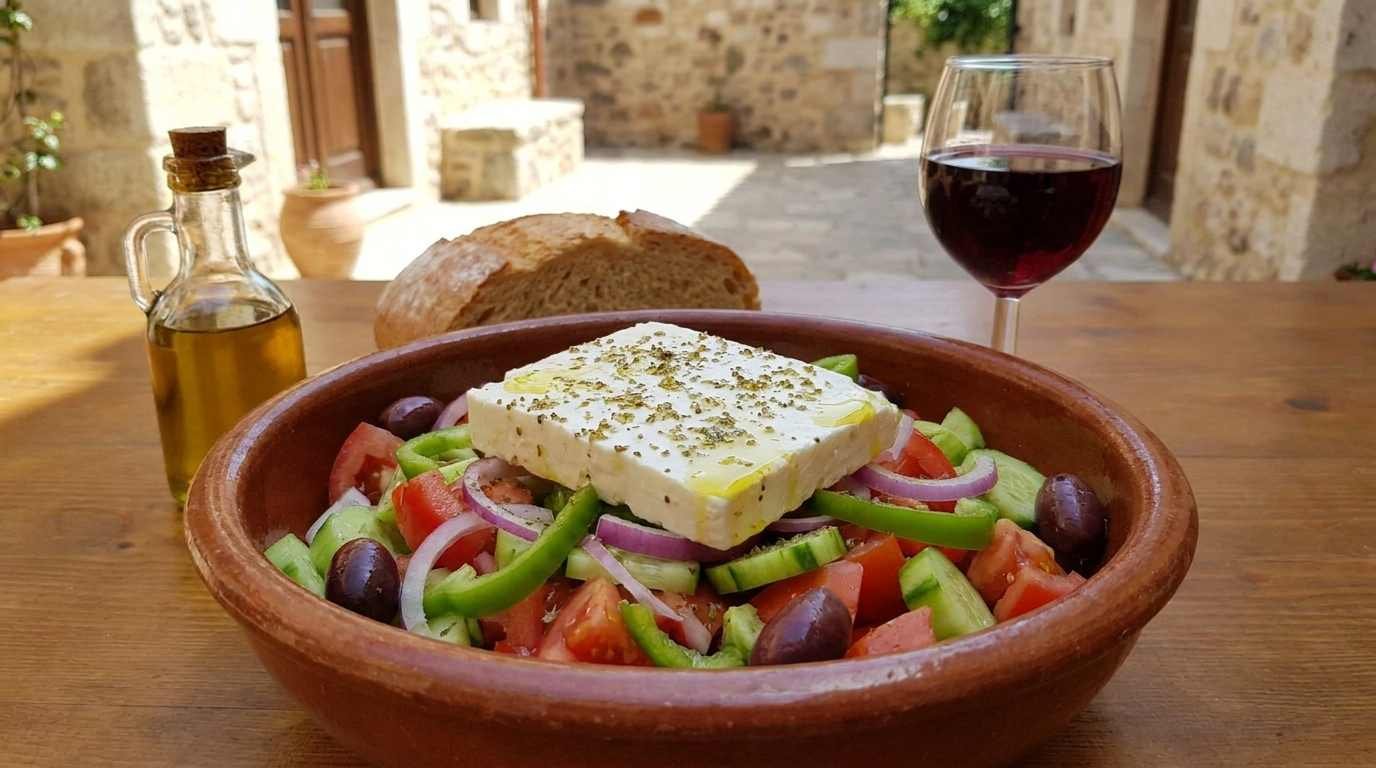

A traditional Greek salad recipe, known in Greece as Horiatiki, is one of the simplest Mediterranean dishes to prepare—and one of the easiest to get wrong. The best version isn’t overloaded with ingredients or buried under a heavy dressing. Instead, it celebrates a handful of fresh, high-quality ingredients: ripe tomatoes, crisp cucumber, green pepper, red onion, Kalamata olives, and creamy Greek feta.
The beauty of an authentic Greek salad lies in its balance. Juicy tomatoes provide sweetness and acidity, cucumber adds refreshing crunch, olives bring saltiness, feta contributes richness, and extra-virgin olive oil ties everything together. A little dried oregano finishes the dish with the unmistakable flavor of the Greek countryside.
Unlike many modern restaurant versions, a traditional Greek village salad doesn’t traditionally contain lettuce. It is rustic, chunky, colorful, and designed to let each ingredient remain recognizable.
Whether served alongside grilled meat, roasted fish, warm bread, or enjoyed as a light lunch, this classic Mediterranean salad is a dependable recipe for almost any occasion.
Table of Contents
What Is a Traditional Greek Salad?
Traditional Greek salad is a rustic salad originating from Greece and commonly called Horiatiki Salata, or village salad.
The word Horiatiki is associated with the countryside or village style of preparation. Rather than finely chopping everything into uniform pieces, the vegetables are generally cut into substantial chunks and arranged or tossed casually.
A classic Greek salad typically includes:
- Ripe tomatoes
- Cucumber
- Green bell pepper
- Red onion
- Kalamata olives
- Greek feta cheese
- Extra-virgin olive oil
- Dried Greek oregano
- Salt, when needed
Some variations may include a splash of red wine vinegar, although excellent tomatoes and olive oil can provide enough acidity and flavor on their own.
What makes the salad special isn’t complexity. It’s ingredient quality and proportion.
Traditional Greek Salad Ingredients
Tomatoes
Tomatoes are the foundation of the salad, so choose ripe, flavorful tomatoes rather than watery varieties.
Large vine-ripened tomatoes, heirloom tomatoes, or ripe plum tomatoes can all work well. The important thing is that they’re juicy, fragrant, and naturally sweet.
Cut them into large wedges or irregular chunks. Avoid cutting them too small because the salad should retain its rustic character.
Cucumber
Fresh cucumber provides the crisp texture that balances the softness of the tomatoes and feta.
English cucumbers are convenient because their skin is thin and their seeds are relatively mild. Traditional-style salads can also use regular cucumbers.
Cut the cucumber into thick half-moons or chunky pieces rather than paper-thin slices.
Green Bell Pepper
Green pepper contributes a fresh, slightly bitter flavor that works beautifully with sweet tomatoes and salty feta.
Remove the seeds and white membrane, then slice the pepper into relatively thin rings or strips.
Red Onion
Red onion adds sharpness and a subtle sweetness.
For a milder flavor, slice the onion very thinly. If the onion is particularly strong, briefly soaking the slices in cold water can soften its bite before adding them to the salad.
Kalamata Olives
Kalamata olives are one of the defining ingredients of a Greek salad.
Their dark purple-brown color, fruity flavor, and briny character provide an important contrast to the fresh vegetables.
For convenience, pitted olives are perfectly practical. If using olives with pits, warn diners before serving.
Greek Feta
Authentic Greek feta is traditionally made primarily from sheep’s milk, sometimes with goat’s milk.
For the best texture, use a block of feta rather than pre-crumbled feta. Place the feta on top of the vegetables or break it into large pieces instead of pulverizing it throughout the salad.
This allows every bite to contain a different combination of vegetables, olives, cheese, and dressing.
Extra-Virgin Olive Oil
Olive oil isn’t simply a dressing ingredient here. It’s a major part of the dish.
Use a good-quality extra-virgin olive oil with a flavor you enjoy. Fruity or slightly peppery olive oil works especially well.
Since the dressing is so simple, poor-quality oil will be noticeable.
Dried Oregano
A generous sprinkling of dried oregano provides the characteristic Mediterranean aroma.
Greek oregano is particularly suitable, but good-quality dried oregano works beautifully.
How to Make Traditional Greek Salad
Step 1: Prepare the Vegetables
Wash and dry the tomatoes, cucumber, and green pepper thoroughly.
Cut the tomatoes into chunky wedges or large pieces. Slice the cucumber into thick pieces, then prepare the green pepper and red onion.
Avoid making the pieces too small. A rustic Greek salad should look abundant and natural.
Step 2: Combine the Vegetables
Place the tomatoes, cucumber, green pepper, and red onion in a large serving bowl.
Add the Kalamata olives and gently toss the ingredients together.
At this stage, the salad should already look vibrant and colorful.
Step 3: Season Simply
Sprinkle the vegetables with a little salt if necessary, keeping in mind that the feta and olives are already salty.
Add dried oregano and drizzle generously with extra-virgin olive oil.
If desired, add a small amount of red wine vinegar for additional acidity.
Step 4: Add the Feta
Place a substantial piece or several large pieces of feta over the top of the salad.
This is preferable to completely crumbling the cheese into the vegetables because it preserves the traditional rustic presentation.
Finish with another drizzle of olive oil and a final pinch of oregano.
Step 5: Serve Immediately
Traditional Greek salad is best served fresh.
Allowing it to sit briefly can help the flavors mingle, but leaving it for too long will cause the vegetables—especially the tomatoes—to release excessive liquid.
Serve it with crusty bread so the flavorful tomato juices and olive oil don’t go to waste.
Does Authentic Greek Salad Have Lettuce?
Generally, traditional Horiatiki Greek salad does not contain lettuce.
Lettuce-based Greek salads are common outside Greece, particularly in restaurants and Western adaptations, but the classic village-style preparation focuses on tomatoes, cucumber, pepper, onion, olives, feta, olive oil, and oregano.
That doesn’t mean lettuce is wrong for every Greek-inspired salad. It simply isn’t necessary for an authentic Horiatiki-style salad.
Should Greek Salad Have Dressing?
A traditional Greek salad doesn’t require a complicated dressing.
The classic combination of extra-virgin olive oil and oregano allows the vegetables and feta to remain the stars.
Some recipes add red wine vinegar or lemon juice, while others rely on the acidity of ripe tomatoes.
If adding vinegar, start with a small amount. The goal is to enhance the salad rather than make it sharply acidic.
Tips for the Best Traditional Greek Salad
Use the Best Tomatoes You Can Find
Because tomatoes provide much of the salad’s moisture and flavor, their quality matters enormously.
Whenever possible, use ripe seasonal tomatoes.
Don’t Overdress the Salad
More dressing doesn’t necessarily mean more flavor.
A traditional Greek salad should taste fresh and balanced, with enough olive oil to coat the vegetables without drowning them.
Use Block Feta
Block feta has a creamier, more substantial texture than many pre-crumbled varieties.
It also creates a more authentic presentation.
Don’t Chop Everything Too Finely
Chunky vegetables create better texture and make the salad look rustic.
There’s no need to create perfectly uniform cubes.
Season Gradually
Olives and feta can contain considerable salt, so taste before adding much additional seasoning.
Serve at the Right Temperature
The vegetables are best when they’re fresh and cool, but extremely cold tomatoes can lose some of their flavor.
If possible, allow refrigerated tomatoes to come closer to room temperature before preparing the salad.
Easy Traditional Greek Salad Variations
While the classic recipe is intentionally simple, there are several ways to adapt it while maintaining its Mediterranean character.
Greek Salad With Cucumber
For an especially refreshing salad, increase the amount of cucumber. This is particularly enjoyable during hot summer weather.
Greek Salad With Extra Feta
If feta is your favorite ingredient, add a larger slab rather than scattering tiny crumbs throughout the bowl.
Greek Salad With Red Wine Vinegar
A small splash of red wine vinegar creates a brighter, more acidic flavor and pairs especially well with sweet tomatoes.
Greek Salad With Fresh Herbs
Fresh parsley or mint can add a pleasant herbal note, although dried oregano remains the classic seasoning.
Greek Salad With Capers
Capers can introduce additional briny flavor. Use them sparingly because olives and feta already provide plenty of saltiness.
What to Serve With Greek Salad
Traditional Greek salad is exceptionally versatile.
Serve it alongside grilled chicken, lamb, fish, shrimp, or beef for a complete Mediterranean-style meal.
It also pairs beautifully with:
- Grilled pita bread
- Hummus
- Tzatziki
- Roasted vegetables
- Grilled halloumi
- Lemon potatoes
- Rice
- Grilled seafood
- Mediterranean sandwiches
- Warm crusty bread
For a lighter lunch, simply serve a generous bowl of Greek salad with bread and a piece of feta.
How to Store Greek Salad
Greek salad is best eaten soon after preparation, but leftovers can be refrigerated in an airtight container.
For the best texture, consider storing the vegetables and feta separately from any additional dressing.
The tomatoes will gradually release liquid, while the cucumber can lose some of its crunch.
If preparing the salad ahead of time, chop the vegetables a few hours before serving and add the olive oil, oregano, and feta closer to mealtime.
Can You Make Greek Salad Ahead of Time?
Yes, but a little preparation strategy makes a significant difference.
The vegetables can be washed and cut ahead of time, then refrigerated separately. The salad can be assembled shortly before serving.
For entertaining, prepare the vegetables in advance and keep them chilled. Add the olives, feta, olive oil, oregano, and optional vinegar shortly before bringing the salad to the table.
This preserves the crisp texture and fresh flavor.
Traditional Greek Salad Recipe
Ingredients
- 4 large ripe tomatoes, cut into wedges
- 1 large cucumber, sliced into thick pieces
- 1 green bell pepper, sliced
- 1 small red onion, thinly sliced
- ¾ cup Kalamata olives
- 150–200 g Greek feta cheese
- 3–4 tablespoons extra-virgin olive oil
- 1–2 teaspoons dried oregano
- Salt, to taste
- 1 tablespoon red wine vinegar, optional
Instructions
- Prepare the vegetables: Wash and dry the tomatoes, cucumber, and pepper. Cut the tomatoes into wedges and the remaining vegetables into chunky pieces.
- Build the salad: Add the tomatoes, cucumber, green pepper, red onion, and Kalamata olives to a large serving bowl.
- Season: Sprinkle lightly with salt and dried oregano.
- Add olive oil: Drizzle generously with extra-virgin olive oil.
- Add optional vinegar: If desired, add a small splash of red wine vinegar.
- Add feta: Place the feta in large pieces over the vegetables.
- Finish: Sprinkle with another little pinch of oregano and drizzle with olive oil.
- Serve: Serve immediately with crusty bread or your favorite Mediterranean main dish.
The Secret to a Great Greek Salad
The secret isn’t a complicated technique or an elaborate dressing. It’s fresh ingredients, generous but balanced seasoning, and restraint.
Use ripe tomatoes, crisp cucumber, flavorful olives, good feta, fragrant oregano, and quality extra-virgin olive oil. Cut the vegetables into generous pieces and avoid drowning them in dressing.
That’s what makes this traditional Greek salad so appealing.
It feels effortless, yet every ingredient has a purpose. The tomatoes provide sweetness and juice. The cucumber brings crunch. The pepper and onion add character. Kalamata olives contribute salt and depth. Feta adds creamy richness, while oregano and olive oil bring everything together.
The result is a fresh, colorful, authentic Mediterranean salad that can accompany almost any meal.
And sometimes, the simplest recipes are the ones worth returning to again and again.
Frequently Asked Questions
What is traditional Greek salad made of?
Traditional Greek salad is made with tomatoes, cucumber, green pepper, red onion, Kalamata olives, feta cheese, extra-virgin olive oil, and oregano. Some versions include red wine vinegar or other optional seasonings.
Is Greek salad healthy?
Greek salad can be a nutrient-rich addition to a balanced diet. It combines vegetables with olive oil, olives, and feta, providing a satisfying mixture of fresh produce, fats, and protein.
Can I use black olives instead of Kalamata olives?
You can, although Kalamata olives provide a more characteristic Greek flavor. If Kalamata olives aren’t available, another good-quality Mediterranean olive can work as a substitute.
Can I use crumbled feta?
Yes, but block feta generally provides a better texture and more traditional presentation. Large pieces of feta also make the salad feel more substantial.
Why does my Greek salad become watery?
Tomatoes and cucumbers naturally release water, especially after being salted and left to sit. To minimize excess liquid, prepare the salad close to serving time and avoid letting it sit for many hours before eating.






Leave a Reply