
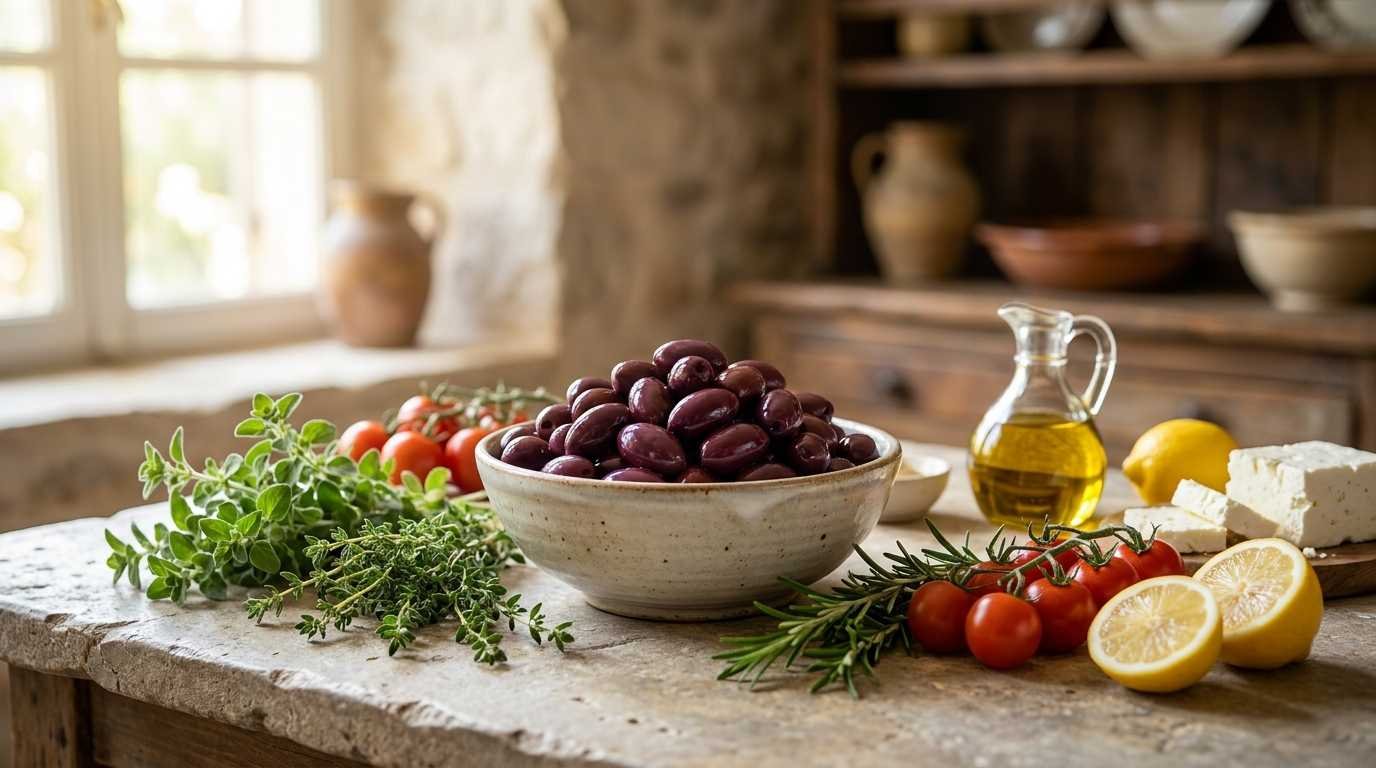

Kalamata olives are among the most recognizable and celebrated olives in Mediterranean cuisine. Known for their deep purple-brown color, almond-like shape, smooth skin, and rich fruity flavor, they bring a distinctive combination of savory, slightly bitter, and pleasantly tangy notes to everything from salads and appetizers to pasta, bread, and main courses.
Traditionally associated with the Greek region of Kalamata in the southern Peloponnese, these olives have become a staple far beyond Greece. Their versatility makes them equally suitable for simple everyday meals and more elaborate Mediterranean-inspired dishes.
But Kalamata olives are more than a flavorful garnish. They are a source of healthy fats and contain naturally occurring compounds that contribute to their nutritional profile. Understanding their flavor, preparation, storage, and culinary uses makes it easier to get the most from this classic Mediterranean ingredient.
Table of Contents
What Are Kalamata Olives?
Kalamata olives are a variety of olive traditionally cultivated in Greece, particularly in the Peloponnese. They are usually harvested when mature, giving them their characteristic dark purple to aubergine color.
Unlike some smaller green olives, Kalamata olives tend to have an elongated, slightly curved shape. Their flesh is relatively firm but tender, with a flavor that becomes especially appealing when properly cured.
The olives cannot generally be eaten straight from the tree because freshly harvested olives contain naturally bitter compounds. They must undergo curing or processing to develop the flavor and texture associated with table olives.
Kalamata olives are commonly preserved in brine, vinegar, olive oil, or a combination of these ingredients. The preservation method has a significant influence on their final taste.
What Do Kalamata Olives Taste Like?
The flavor of Kalamata olives is one of the reasons they have become so popular worldwide.
We typically find them rich, fruity, mildly bitter, salty, and slightly tangy. Properly cured Kalamata olives have a complex flavor rather than simply tasting salty.
Their texture is another defining characteristic. Good-quality olives should have a pleasant firmness without being excessively hard. The flesh should separate relatively easily from the pit.
Depending on how they are cured and packaged, Kalamata olives may also develop subtle notes reminiscent of wine, fruit, herbs, or vinegar.
This complexity makes them particularly effective in recipes where a small amount of an ingredient can dramatically change the overall flavor.
Kalamata Olives vs. Black Olives
Kalamata olives are often confused with ordinary black olives, but they aren’t the same thing.
One of the easiest differences to notice is appearance. Kalamata olives generally have a longer, almond-like shape and a dark purple-brown color, while many commercially available black olives are rounder and have a uniform black appearance.
The flavor is also different.
Kalamata olives tend to have a stronger, fruitier, more complex taste. Conventional canned black olives are usually much milder and softer.
There can also be differences in processing. Many black olives sold in cans undergo processing designed to produce a consistent dark color and mild flavor. Kalamata olives are traditionally cured in ways that preserve their characteristic taste.
For Mediterranean dishes, Kalamata olives are often preferred when we want an ingredient with enough personality to stand out.
Are Kalamata Olives Healthy?
Kalamata olives can be part of a balanced diet and are particularly valued for their monounsaturated fat content.
Olives are naturally rich in fat because they are the fruit from which olive oil is produced. Much of this fat is monounsaturated fat, which is an important component of Mediterranean-style eating patterns.
Kalamata olives also contain small amounts of several vitamins and minerals, although the exact nutritional profile varies according to serving size and processing.
They provide compounds with antioxidant activity, including various polyphenols. These naturally occurring plant compounds contribute to the nutritional characteristics of olives.
However, there is one important consideration: sodium.
Because olives are commonly preserved in brine, they can contain a significant amount of salt. People monitoring sodium intake should pay attention to serving sizes and nutrition labels.
Kalamata Olives Nutrition
The nutritional value of Kalamata olives varies depending on the product and preparation method.
A typical serving provides:
- Monounsaturated fats
- Dietary fiber
- Small amounts of protein
- Vitamin E
- Iron
- Calcium
- Copper and other micronutrients
- Naturally occurring polyphenolic compounds
Olives are relatively energy-dense because of their fat content, so portion size matters.
A modest serving can add substantial flavor without requiring a large quantity. This makes Kalamata olives useful when we want to enhance a dish without relying exclusively on heavy sauces or large amounts of cheese.
Why Are Kalamata Olives So Salty?
The saltiness of Kalamata olives primarily comes from the curing and preservation process.
Fresh olives are naturally bitter and require processing before they become pleasant to eat. Brining is one traditional method of reducing bitterness while preserving the olives.
As a result, salt becomes part of the final product.
Fortunately, we can reduce some of the surface saltiness by rinsing the olives under cool water before using them. For recipes where salt levels are particularly important, soaking them briefly can reduce additional salt, although this can also soften their flavor.
When cooking with Kalamata olives, it is wise to taste the finished dish before adding additional salt.
How to Use Kalamata Olives in Cooking
Kalamata olives are exceptionally versatile.
Their bold flavor works particularly well with ingredients commonly associated with Mediterranean cuisine, including tomatoes, garlic, lemon, feta cheese, oregano, basil, parsley, cucumber, eggplant, and extra virgin olive oil.
Greek Salads
One of the most familiar uses is the classic Greek-style salad.
Kalamata olives pair naturally with:
- Tomatoes
- Cucumber
- Red onion
- Feta
- Bell peppers
- Extra virgin olive oil
- Oregano
Their salty, fruity flavor balances the freshness of the vegetables and creaminess of the feta.
Pasta
Kalamata olives are excellent in pasta dishes.
We can combine chopped olives with tomatoes, garlic, capers, olive oil, herbs, and chili for a flavorful Mediterranean pasta.
They can also be tossed with roasted vegetables and pasta for a quick meat-free meal.
Pizza
Instead of relying exclusively on pepperoni or other salty toppings, Kalamata olives can add depth to homemade pizza.
They work especially well with:
- Feta
- Mozzarella
- Roasted peppers
- Mushrooms
- Artichokes
- Tomatoes
- Fresh herbs
Because olives are salty, we should use them thoughtfully when combining them with other strongly seasoned ingredients.
Dips and Spreads
Kalamata olives can be blended into spreads and dips.
A simple olive spread can combine chopped Kalamata olives with garlic, olive oil, lemon juice, herbs, and a small amount of vinegar.
The result works beautifully with crusty bread, crackers, roasted vegetables, or grilled meats.
Grain Bowls
For an easy lunch, Kalamata olives can be added to quinoa, couscous, farro, rice, or bulgur.
Combine them with roasted vegetables, chickpeas, leafy greens, feta, and a lemon-olive oil dressing for a satisfying Mediterranean-inspired bowl.
Kalamata Olive Tapenade
Tapenade is one of the best ways to showcase Kalamata olives.
A basic version can be made by combining pitted Kalamata olives with:
- Capers
- Garlic
- Extra virgin olive oil
- Lemon juice
- Fresh herbs
The ingredients can be finely chopped by hand or processed into a coarse paste.
We recommend keeping some texture rather than blending everything completely smooth. Small pieces of olive provide a more interesting mouthfeel.
Serve tapenade with toasted bread, grilled fish, roasted vegetables, or as a spread for sandwiches.
How to Store Kalamata Olives
Proper storage helps preserve both flavor and texture.
Unopened commercially packaged Kalamata olives should be stored according to the manufacturer’s instructions. Once opened, they generally need refrigeration.
If the olives are stored in brine, keeping them covered by their preserving liquid helps maintain their quality.
Always use clean utensils when removing olives from the container. Avoid repeatedly introducing food particles into the brine.
If an olive develops an unusual odor, mold, significant discoloration, or other obvious signs of spoilage, it should be discarded.
Should Kalamata Olives Have Pits?
Both pitted and whole Kalamata olives are widely available.
Pitted Kalamata olives are convenient for salads, pasta, sandwiches, and cooking because they can be added directly to recipes.
Whole olives, however, can sometimes retain a firmer texture and are particularly attractive when served as part of an appetizer platter.
If buying whole Kalamata olives, we should remember to remove the pits before serving them in dishes where eating around a pit would be inconvenient.
How to Pit Kalamata Olives
Pitting olives at home is relatively straightforward.
Place an olive on a cutting board and gently press it with the flat side of a chef’s knife. The olive should loosen around the pit, allowing us to remove it with our fingers.
An olive pitter can make the process faster when preparing a large quantity.
For salads and cooked dishes, chopping the pitted olives into halves or smaller pieces can help distribute their flavor throughout the recipe.
How to Choose Good Kalamata Olives
When shopping for Kalamata olives, we should look beyond appearance.
Look for olives with:
- A naturally deep purple-brown color
- Firm but tender flesh
- A pleasant fruity aroma
- No unpleasant fermented or spoiled odor
- Intact skins
- A suitable curing liquid
Reading the ingredient label is also useful. Different products can contain varying amounts of salt, vinegar, oil, herbs, and other ingredients.
For recipes where olive flavor is central, choosing a higher-quality product can make a noticeable difference.
Are Kalamata Olives Naturally Black?
Kalamata olives are naturally dark when fully mature, but their color isn’t necessarily the same deep, uniform black associated with some canned olives.
They typically range from deep purple to reddish-purple, brownish-purple, or dark aubergine.
This variation is normal and is part of what distinguishes naturally mature olives from olives that have been processed specifically to achieve a uniform black appearance.
Can We Eat Kalamata Olives Every Day?
Kalamata olives can certainly fit into everyday meals when eaten as part of a balanced diet.
Their strong flavor means that a relatively small serving can contribute significantly to a meal.
We can add a few to breakfast plates, salads, grain bowls, sandwiches, or vegetable dishes.
The main consideration is sodium. Since cured olives can be salty, eating reasonable portions and considering the sodium content of the rest of the meal is sensible.
Kalamata Olives in Mediterranean Cooking
Kalamata olives are deeply connected with the broader traditions of Mediterranean cooking.
The Mediterranean approach to food often emphasizes vegetables, legumes, whole grains, seafood, herbs, olive oil, nuts, seeds, and fruit, with olives providing an intensely flavored component.
Their versatility also makes them ideal for modern cooking.
We can use them in simple weeknight recipes, elegant entertaining dishes, vegetarian meals, appetizers, and packed lunches.
They can transform a basic combination of vegetables and grains into something far more flavorful without requiring complicated preparation.
Best Ingredients to Pair With Kalamata Olives
Because of their distinctive flavor, Kalamata olives pair particularly well with ingredients that complement their salty and fruity character.
Excellent combinations include:
Feta cheese: The creamy, tangy flavor balances the intensity of the olives.
Tomatoes: Fresh or roasted tomatoes provide acidity and sweetness.
Garlic: Garlic reinforces the savory Mediterranean character.
Lemon: Fresh lemon juice adds brightness.
Extra virgin olive oil: The two ingredients naturally complement each other.
Oregano: A classic pairing for Greek-inspired dishes.
Eggplant: Its soft texture and mild flavor provide an excellent backdrop.
Chickpeas: Their earthy flavor works beautifully with salty olives.
Fish: Kalamata olives can provide a flavorful contrast to mild white fish.
Roasted vegetables: The caramelized sweetness of roasted vegetables balances the olives’ savory intensity.
Final Thoughts on Kalamata Olives
Kalamata olives offer far more than decoration on a salad. Their rich fruity flavor, firm texture, Mediterranean heritage, and versatility make them one of the most useful olives to keep in the kitchen.
They can elevate a simple Greek-style salad, bring depth to pasta, create an impressive tapenade, complement roasted vegetables, or add character to sandwiches and grain bowls.
Their nutritional profile also makes them an interesting part of a balanced Mediterranean-style diet, particularly because they provide monounsaturated fats and naturally occurring plant compounds.
The key is balance. Because cured Kalamata olives can be high in sodium, sensible portions and attention to the overall seasoning of a meal are important.
Once we understand how their flavor works, it’s easy to see why Kalamata olives remain a beloved Mediterranean ingredient—one small olive can bring remarkable depth to an entire dish.





Leave a Reply