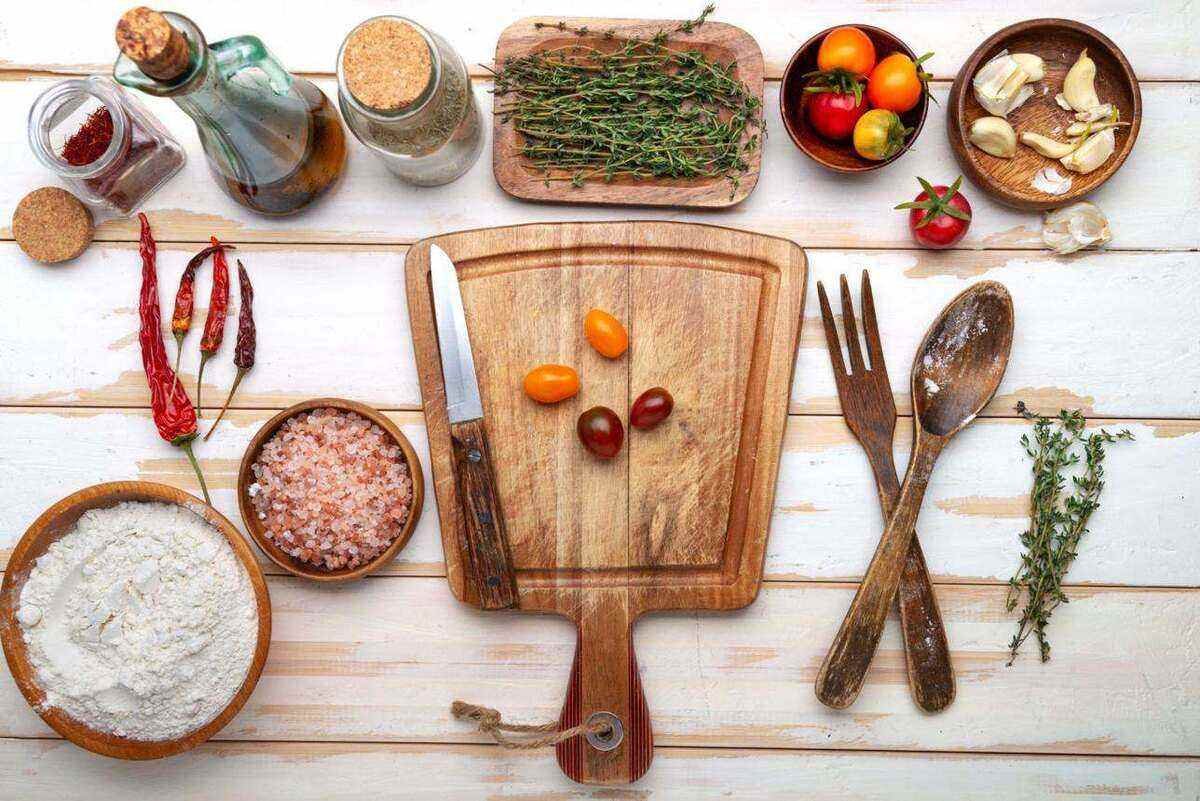

Cooking becomes easier, more enjoyable, and more rewarding when we understand the language used in recipes. From basic preparation techniques to advanced culinary methods, common cooking terms help us follow instructions accurately, control cooking temperatures, develop flavors, and achieve consistent results.
Whether we are preparing a simple breakfast, baking homemade bread, making a flavorful sauce, or cooking an elaborate dinner, knowing essential kitchen terminology gives us greater confidence.
Many recipes use words such as sauté, simmer, blanch, fold, braise, and julienne without explaining what they mean. Although these instructions might seem complicated at first, most cooking terms describe straightforward techniques that we can learn through practice.
This comprehensive cooking glossary explains essential culinary vocabulary in clear, practical language. We explore preparation methods, cooking techniques, baking terminology, measurements, heat levels, and professional kitchen expressions to help us become more confident home cooks.
Table of Contents
1. Basic Food Preparation Terms
Before we begin cooking, we usually need to prepare ingredients. Professional recipes often use specific words to describe how vegetables, meat, herbs, and other ingredients should be handled.
Understanding these preparation terms helps us achieve the correct texture, appearance, and cooking consistency.
Chop
To chop means to cut food into smaller pieces using a knife. The pieces do not necessarily need to be identical in size.
We commonly chop onions, carrots, potatoes, garlic, and fresh herbs.
The size of the pieces depends on the recipe. Smaller pieces cook faster, while larger pieces retain more texture.
Dice
To dice means to cut ingredients into small, relatively uniform cubes.
Recipes may specify:
- Small dice: Approximately ¼ inch.
- Medium dice: Approximately ½ inch.
- Large dice: Approximately ¾ inch.
Uniform pieces are particularly important when preparing soups, stews, sauces, and vegetable dishes because they help ingredients cook evenly.
Mince
Mincing means cutting an ingredient into extremely small pieces.
Garlic, ginger, onions, and fresh herbs are frequently minced to distribute their flavors throughout a dish.
For example, minced garlic releases its flavor more readily than large garlic pieces, making it useful in marinades, dressings, and sauces.
Julienne
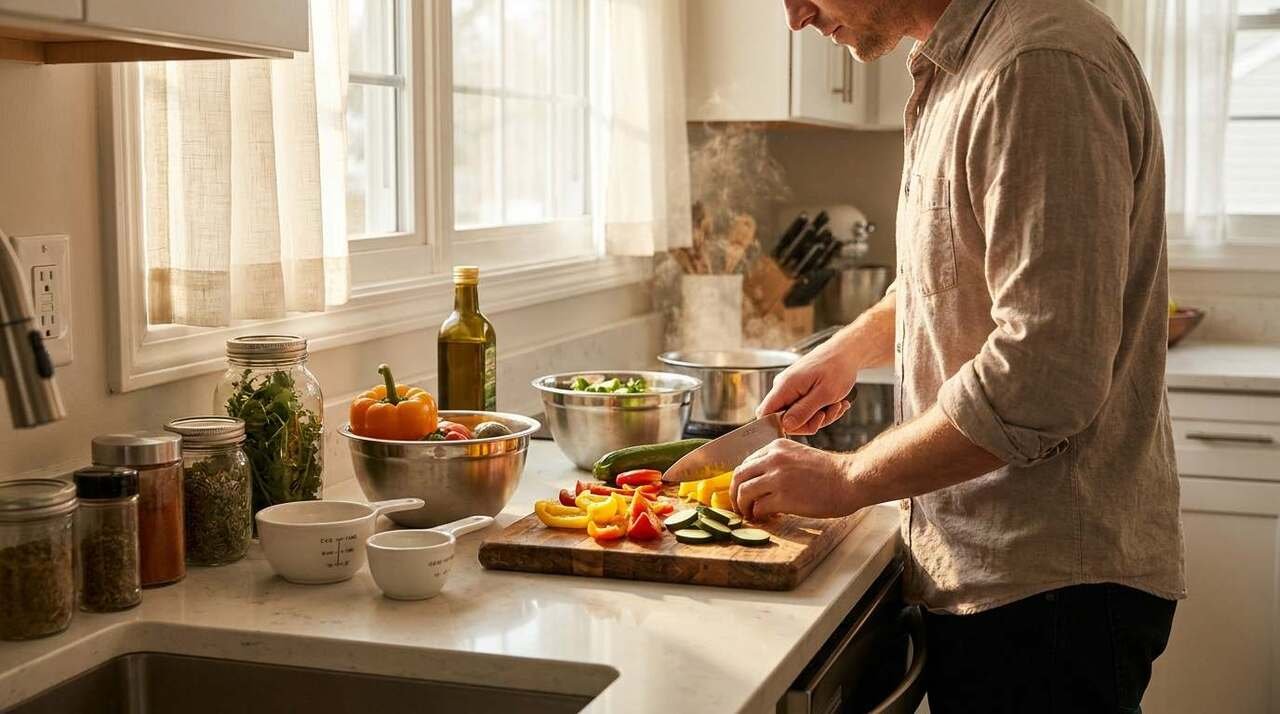
Julienne is a knife-cutting technique that produces thin, matchstick-shaped strips.
We commonly julienne carrots, bell peppers, zucchini, and other vegetables for salads, stir-fries, and garnishes.
This technique creates attractive, evenly sized pieces that cook relatively quickly.
Slice
Slicing means cutting food into flat pieces of a particular thickness.
We can slice tomatoes, onions, mushrooms, potatoes, meat, and fruit.
Depending on the recipe, slices may be thin, thick, round, diagonal, or lengthwise.
Grate
To grate means to rub food against a grater to produce small pieces or fine shreds.
Cheese, carrots, potatoes, chocolate, and citrus zest are commonly grated.
The size of the grating holes determines whether we obtain fine, medium, or coarse pieces.
Peel
Peeling means removing the outer skin or covering of an ingredient.
We commonly peel potatoes, carrots, apples, cucumbers, and certain fruits.
A vegetable peeler or paring knife makes this task easier.
Core
To core means to remove the central section of a fruit or vegetable.
Apples and pears are frequently cored to remove their seeds and tough central portions before baking or preparing desserts.
Trim
Trimming means removing unwanted parts of an ingredient before cooking.
We might trim excess fat from meat, remove the ends of green beans, or cut away damaged vegetable sections.
Zest
Zesting involves removing the colorful outer skin of citrus fruits, such as lemons, oranges, and limes.
The zest contains aromatic oils that provide concentrated citrus flavor.
We should avoid including too much of the white layer underneath the skin because it can taste bitter.
2. Common Cooking Methods Explained
Cooking methods describe how heat is transferred to food. Some techniques use water or steam, while others rely on hot air, oil, or direct contact with a heated surface.
Choosing the correct method influences the final flavor, texture, moisture, and appearance of a dish.
Boil
Boiling means cooking food in liquid that reaches its boiling point.
At standard atmospheric pressure, water boils at approximately 100°C (212°F).
We commonly boil pasta, potatoes, eggs, rice, and vegetables.
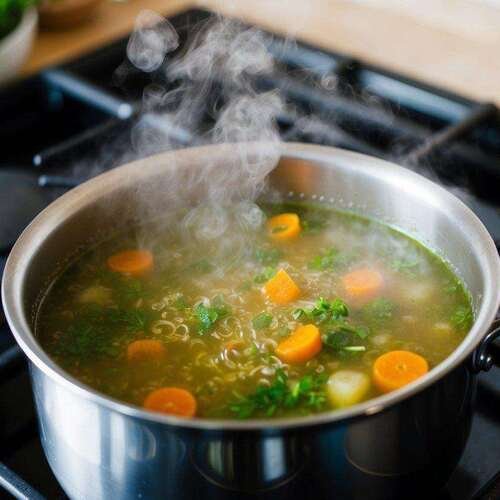
Boiling produces vigorous bubbles throughout the liquid. It is important to distinguish this from simmering, which uses gentler heat.
Simmer
Simmering means cooking food in liquid at a temperature just below boiling.
Small bubbles gently rise to the surface rather than producing the vigorous movement associated with boiling.
We use simmering when preparing:
- Homemade soups.
- Tomato sauces.
- Meat stews.
- Broths and stocks.
- Slow-cooked legumes.
A gentle simmer helps flavors develop while reducing the risk of overcooking delicate ingredients.
Sauté
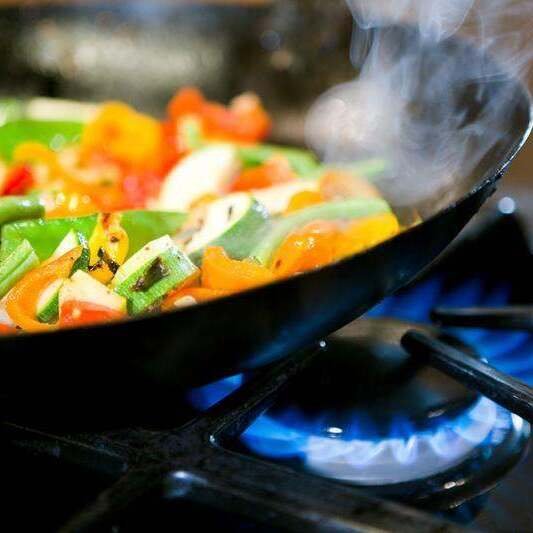
To sauté means to cook food quickly in a small amount of hot oil or fat, usually in a frying pan or skillet.
The technique generally uses medium-high to high heat.
We frequently sauté onions, mushrooms, garlic, vegetables, and thin pieces of meat.
The goal is to develop flavor and sometimes achieve light browning without completely submerging the ingredients in oil.
Fry
Frying involves cooking food in hot fat or oil.
There are several common frying techniques:
- Shallow frying: Food cooks in a relatively small amount of oil.
- Deep frying: Food is completely submerged in hot oil.
- Pan-frying: Food cooks in a skillet with enough oil or fat to brown its surface.
- Stir-frying: Small pieces of food cook quickly while being continuously stirred or tossed.
Each technique produces different textures and levels of browning.
Roast
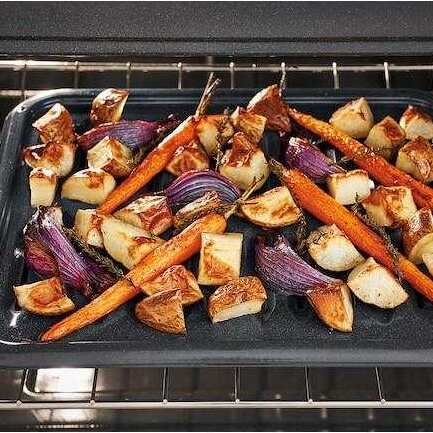
Roasting means cooking food using dry heat, usually inside an oven.
We commonly roast chicken, beef, potatoes, carrots, pumpkins, and other vegetables.
Roasting encourages browning and caramelization, creating deeper flavors and attractive surfaces.
For best results, we should avoid overcrowding the baking tray because excess moisture can prevent proper browning.
Bake
Baking uses dry oven heat to cook food.
Although baking and roasting share similarities, the word baking is most commonly associated with bread, cakes, cookies, pastries, casseroles, and other oven-prepared dishes.
Precise temperatures and cooking times are particularly important when baking because small changes can affect the final structure.
Grill
Grilling means cooking food using direct heat from below or above.
Common grilled foods include chicken, fish, vegetables, burgers, and steaks.
Grilling creates characteristic browned surfaces and smoky flavors, particularly when food is cooked over charcoal or wood.
Broil
Broiling uses intense heat from above the food, usually through an oven’s upper heating element.
It is useful for quickly browning cheese, crisping surfaces, cooking thin cuts of meat, and finishing casseroles.
Because broiling uses intense heat, food requires close attention to prevent burning.
Steam
Steaming means cooking food using hot water vapor rather than immersing it directly in boiling water.
Vegetables, fish, dumplings, and certain grains can be steamed.
This technique is particularly useful when we want to cook delicate ingredients while limiting direct contact with water.
Poach
Poaching is a gentle cooking method that involves immersing food in liquid maintained below a simmer.
Eggs, fish, chicken, and fruit are commonly poached.
The gentle temperature helps delicate ingredients retain their structure and moisture.
Braise
Braising combines dry and moist cooking methods.
We generally brown the ingredient first, then cook it slowly in a covered pot with a relatively small quantity of liquid.
This technique is particularly suitable for tougher cuts of meat, root vegetables, and hearty stews.
Long, gentle cooking helps break down connective tissue and develop rich flavors.
Stew
Stewing involves slowly cooking relatively small pieces of food in enough liquid to partially or completely cover them.
Beef stew, vegetable stew, chicken stew, and bean stew are familiar examples.
Unlike braising, which often involves larger pieces and less liquid, stewing generally uses smaller portions and more cooking liquid.
3. Essential Baking Terms
Baking requires accuracy, patience, and an understanding of how ingredients react to heat.
Recipes frequently use specialized expressions to describe mixing methods, ingredient preparation, and changes in texture.
Cream
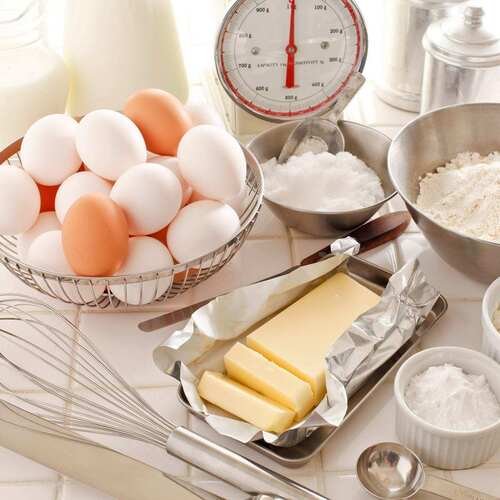
Creaming means beating softened butter and sugar together until the mixture becomes lighter, softer, and fluffier.
This technique incorporates air into the mixture and is frequently used when making cookies, cakes, and certain pastries.
Fold
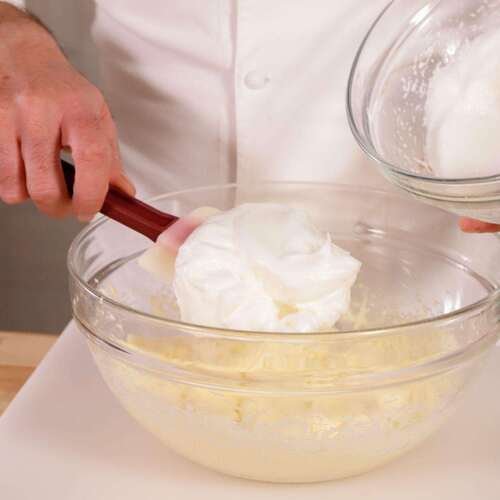
Folding is a gentle mixing technique used to combine delicate ingredients without losing too much incorporated air.
We usually use a spatula to lift the mixture from the bottom of the bowl and turn it over the ingredients.
Folding is especially important when combining whipped cream, beaten egg whites, and delicate cake batters.
Whisk
Whisking means beating ingredients using a whisk or similar utensil.
The technique combines ingredients, incorporates air, and helps create smooth mixtures.
We commonly whisk eggs, cream, sauces, pancake batter, and salad dressings.
Beat
Beating means mixing ingredients vigorously to combine them or incorporate air.
An electric mixer, hand mixer, fork, or whisk can be used depending on the recipe.
Beating is frequently required when preparing cake batter, eggs, and creamy mixtures.
Knead
Kneading involves repeatedly pressing, stretching, folding, and turning dough.
This process develops gluten in wheat-based dough, helping bread develop its structure and elasticity.
We can knead by hand or use a stand mixer equipped with a dough hook.
Proof
Proofing refers to allowing yeast dough to rise before baking.
During this process, yeast produces carbon dioxide, which creates bubbles inside the dough and increases its volume.
The dough is generally placed in a warm, draft-free environment until it reaches the desired size.
Sift
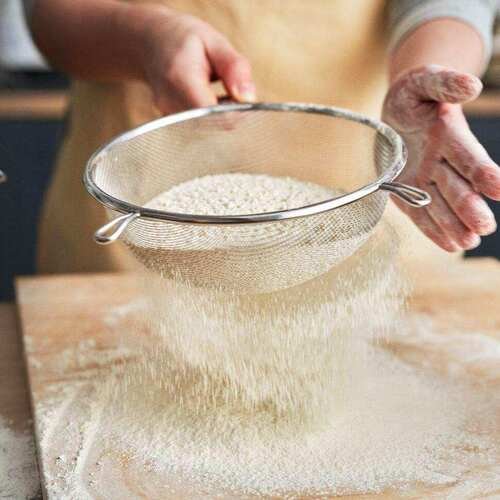
Sifting means passing dry ingredients through a fine-mesh sieve.
We commonly sift flour, cocoa powder, powdered sugar, and baking ingredients.
Sifting helps remove lumps and distributes dry ingredients more evenly.
Preheat
Preheating means bringing an oven to the required temperature before placing food inside.
For example, if a recipe requires baking at 180°C (350°F), we should allow the oven to reach that temperature first.
Starting with the correct oven temperature helps produce more predictable baking results.
Grease
Greasing means coating a baking pan or dish with a thin layer of butter, oil, or another suitable fat.
This prevents food from sticking and makes removing baked goods easier.
Line
Lining means covering a baking tray or pan with parchment paper, foil, or another appropriate material.
Parchment paper is commonly used for cookies, pastries, and cakes.
Blind Bake
Blind baking means partially or completely baking a pastry crust before adding its filling.
We typically line the pastry with parchment paper and add baking weights or dried beans to prevent the crust from puffing up.
This technique is particularly useful for custard pies, fruit tarts, and quiches.
Temper
Tempering can refer to two different culinary processes.
In chocolate preparation, it involves carefully controlling heating and cooling temperatures to produce a smooth, glossy finish and a firm structure.
When preparing custards or sauces, tempering means gradually introducing a hot liquid into eggs or another temperature-sensitive ingredient while whisking to prevent sudden cooking.
4. Important Culinary Techniques and Kitchen Expressions
Beyond basic cooking and baking methods, recipes often include professional culinary expressions.
These terms describe specific actions that improve flavor, texture, consistency, and presentation.
Blanch
Blanching means briefly cooking food in boiling water before transferring it into ice water.
This technique is commonly used for green beans, broccoli, tomatoes, and other vegetables.
Blanching helps preserve color, partially cooks ingredients, and can make peeling certain foods easier.
Shock
Shocking means immediately transferring hot food into ice water to stop the cooking process.
It is frequently performed after blanching vegetables.
This rapid temperature change helps prevent overcooking and preserves a crisp texture.
Deglaze
Deglazing involves adding liquid to a hot pan after cooking meat or vegetables.
The liquid loosens the browned particles stuck to the bottom of the pan, allowing us to incorporate their concentrated flavors into a sauce.
Wine, broth, stock, and water are commonly used for deglazing.
Reduce
Reducing means simmering or boiling a liquid until some of its water evaporates.
This concentrates the remaining flavors and produces a thicker consistency.
We frequently reduce sauces, stocks, gravies, and fruit mixtures.
Emulsify
Emulsifying means combining two liquids that normally do not mix easily, such as oil and water.
Mayonnaise and vinaigrette are familiar examples of emulsions.
Egg yolks, mustard, and other emulsifying ingredients can help stabilize mixtures.
Marinate
Marinating means soaking food in a seasoned liquid mixture before cooking.
Marinades commonly contain ingredients such as:
- Olive oil.
- Lemon juice.
- Vinegar.
- Garlic.
- Herbs and spices.
- Yogurt.
- Soy sauce.
Marinating adds flavor and can influence the texture of certain ingredients.
However, acidic marinades should not be used for excessively long periods because they can negatively affect delicate foods.
Season
Seasoning means adding ingredients such as salt, pepper, herbs, spices, or other flavorings to improve a dish.
Seasoning is not limited to the final stage of cooking. We often season ingredients at different points to develop balanced flavors.
Garnish
Garnishing means adding decorative or flavorful ingredients to a finished dish.
Fresh herbs, lemon wedges, toasted nuts, grated cheese, and edible flowers are common garnishes.
A good garnish should complement the food rather than simply decorate the plate.
Baste
Basting means repeatedly spooning cooking juices, melted butter, oil, or another liquid over food while it cooks.
This technique is often used when roasting poultry and meat.
Basting can add flavor and help coat the surface, although it does not guarantee that food will remain moist.
Caramelize
Caramelization occurs when sugars break down under heat, producing deeper flavors, golden-brown colors, and characteristic aromas.
We can caramelize onions, sugar, certain fruits, and vegetables.
Caramelized onions, for example, develop a naturally sweet, rich flavor after prolonged cooking over moderate heat.
Sear
Searing means cooking the surface of food at high heat to create a browned exterior.
Steaks, chicken, fish, and certain vegetables are commonly seared.
Searing develops flavor through the Maillard reaction, which occurs when proteins and reducing sugars react under suitable heating conditions.
Contrary to a common misconception, searing does not seal juices inside meat.
Dredge
Dredging means coating food lightly with a dry ingredient, usually flour, breadcrumbs, or seasoned flour, before cooking.
This technique is commonly used when preparing fried chicken, fish, and cutlets.
Dust
Dusting means lightly sprinkling a fine ingredient over food.
Powdered sugar, cocoa powder, flour, and cinnamon are frequently used for dusting.
5. Common Cooking Temperature Terms
Temperature plays an essential role in cooking. Understanding heat-related terminology helps us select the correct cooking method and avoid undercooking or burning ingredients.
| Cooking term | Meaning |
|---|---|
| Low heat | Gentle heat for slow cooking |
| Medium heat | Moderate heat for everyday cooking |
| Medium-high heat | Higher heat for faster cooking and browning |
| High heat | Intense heat for searing and rapid cooking |
| Simmer | Gentle bubbling below boiling |
| Boil | Vigorous bubbling throughout liquid |
| Slow cook | Cooking over an extended period at relatively low heat |
| Room temperature | The surrounding temperature of the kitchen |
| Internal temperature | Temperature measured inside the food |
What Does Low Heat Mean?
Low heat provides gentle cooking conditions.
We use it when melting butter, warming sauces, gently cooking onions, or keeping food warm without excessive browning.
What Does Medium Heat Mean?
Medium heat provides a balance between cooking speed and temperature control.
It is useful for cooking eggs, pancakes, vegetables, and many everyday dishes.
What Does High Heat Mean?
High heat is used when we need rapid cooking or strong surface browning.
Stir-frying, searing, and certain grilling techniques require higher temperatures.
We should remember that different stovetops distribute heat differently, so visual cues and food behavior are often more useful than relying on dial settings alone.
What Is Carryover Cooking?
Carryover cooking occurs when food continues cooking after being removed from its heat source.
This happens because the hotter exterior transfers heat toward the cooler center.
It is particularly important when preparing roasts, steaks, and larger pieces of meat.
For accurate doneness, we should use an appropriate food thermometer rather than relying exclusively on appearance.
6. Common Cooking Measurements and Abbreviations
Recipes often use abbreviations to make instructions shorter.
Understanding these measurements helps us follow recipes accurately and avoid ingredient mistakes.
| Abbreviation | Meaning |
|---|---|
| tsp | Teaspoon |
| tbsp | Tablespoon |
| cup | Cup |
| oz | Ounce |
| lb | Pound |
| g | Gram |
| kg | Kilogram |
| ml | Milliliter |
| L | Liter |
| °C | Degrees Celsius |
| °F | Degrees Fahrenheit |
Teaspoon (tsp)
A teaspoon is a small unit of volume commonly used to measure spices, salt, baking powder, and extracts.
One standard metric teaspoon is approximately 5 ml.
Tablespoon (tbsp)
A tablespoon is larger than a teaspoon and is commonly used for measuring oil, honey, sauces, and other ingredients.
One standard metric tablespoon is approximately 15 ml.
Cup
A cup is a common volume measurement in recipes, particularly in American cooking.
One US customary cup equals approximately 237 ml.
We should remember that measuring a cup of flour is different from measuring a cup of water because ingredients have different densities.
Ounce (oz)
An ounce can refer to weight or fluid volume.
A weight ounce equals approximately 28.35 grams, while a US fluid ounce measures approximately 29.57 ml.
These measurements are not interchangeable.
Pound (lb)
A pound is a unit of weight frequently used for meat, poultry, and other ingredients.
One pound equals approximately 454 grams.
Gram (g) and Kilogram (kg)
Grams and kilograms are metric weight measurements.
One kilogram equals 1,000 grams.
For baking, measuring ingredients by weight is often more consistent than using volume measurements.
7. Common Cooking Terms for Sauces, Soups, and Liquids
Sauces and soups involve several specialized techniques that influence their consistency, flavor, and appearance.
Stock
Stock is a flavorful liquid made by simmering ingredients such as bones, vegetables, herbs, and aromatics in water.
Chicken, beef, fish, and vegetable stocks are commonly used as foundations for soups, sauces, and risottos.
Broth
Broth is a seasoned liquid prepared by simmering meat, vegetables, herbs, and sometimes bones.
It can be served on its own or used in other recipes.
Although broth and stock are often used interchangeably, stock traditionally emphasizes bones and connective tissue, while broth often contains more meat and seasoning.
Gravy
Gravy is a savory sauce commonly prepared using meat drippings, stock, and a thickening ingredient.
Flour or cornstarch can be used to create the desired consistency.
Roux
A roux is a mixture of flour and fat, usually butter, cooked together before liquid is added.
It serves as a thickening foundation for sauces, soups, and gravies.
Depending on how long it cooks, roux can be white, blond, or brown.
Slurry
A slurry is a mixture of starch, usually cornstarch, and cold water.
We gradually add it to hot liquids to thicken soups, sauces, and stir-fries.
Mixing the starch with cold liquid first helps prevent lumps.
Whisk In
Whisking in means gradually incorporating an ingredient into a mixture while whisking continuously.
For example, we might whisk stock into a roux to create a smooth sauce.
Strain
Straining means passing a liquid or mixture through a sieve, colander, or fine-mesh strainer to remove unwanted solids.
This technique is frequently used for stocks, soups, sauces, and homemade juices.
Skim
Skimming means removing foam, fat, or impurities from the surface of a liquid.
We commonly skim stocks, broths, and simmering sauces to produce a cleaner appearance and flavor.
8. Cooking Terms Every Beginner Should Know
Some cooking expressions appear so frequently that understanding them makes following almost any recipe easier.
Here are additional terms worth learning:
- Al dente: Pasta or vegetables cooked until tender but still slightly firm when bitten.
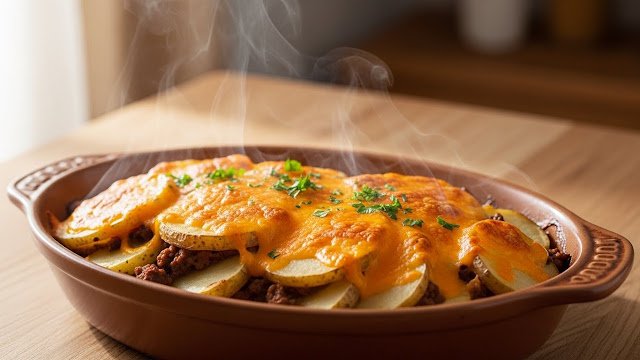
- Au gratin: A dish topped with cheese or breadcrumbs and browned in the oven.
- À la minute: Prepared or finished immediately before serving.
- Aromatic: Ingredients such as onions, garlic, celery, and herbs that create a flavorful foundation.
- Batter: A mixture of ingredients with a pourable or spoonable consistency.
- Bind: To combine ingredients so they hold together.
- Carve: To cut cooked meat or poultry into serving portions.
- Coat: To cover food evenly with another ingredient.
- Crimp: To press or pinch pastry edges together, often when preparing pies.
- Cure: To preserve food using salt, sugar, or other curing ingredients.
- Flambé: To ignite alcohol in a dish briefly under controlled cooking conditions.
- Infuse: To steep an ingredient in liquid to transfer its flavor or aroma.
- Mash: To crush cooked food until it reaches a softer consistency.
- Parboil: To partially cook food in boiling water before finishing it using another method.
- Rest: To allow cooked food, especially meat, to sit before cutting or serving.
- Shred: To tear or cut food into thin strips or small pieces.
- Toast: To heat an ingredient until its surface becomes lightly browned and aromatic.
- Toss: To mix ingredients by lifting and turning them together.
- Truss: To tie poultry or meat into a compact shape before cooking.
- Unmold: To remove food from a mold or baking pan.
- Zest: To remove the aromatic colored outer layer of citrus fruit.
9. Common Cooking Mistakes Caused by Misunderstanding Recipe Terms
Knowing cooking terminology is useful, but applying it correctly is equally important.
Several common mistakes happen when we confuse similar cooking instructions.
Confusing Simmering With Boiling
Simmering and boiling are different heat conditions.
A vigorous boil can break apart delicate ingredients, cause excessive evaporation, and make certain dishes less appealing.
When a recipe says to simmer, we should reduce the heat until only gentle bubbles appear.
Confusing Chopping With Dicing
Chopping does not require uniform pieces, while dicing generally produces evenly sized cubes.
If a recipe calls for diced vegetables, cutting them into inconsistent shapes can cause uneven cooking.
Overmixing Cake Batter
Mixing cake batter too vigorously or for too long after adding flour can develop excessive gluten.
This may produce a tougher texture rather than a soft, tender cake.
We should follow the specified mixing method and stop once the ingredients are properly combined.
Using the Wrong Oil for High-Heat Cooking
Different oils have different smoke points.
When cooking at high temperatures, we should choose an oil suitable for the intended method.
Allowing oil to smoke excessively can produce unpleasant flavors and potentially harmful compounds.
Ignoring Resting Time
Resting is particularly important for roasted meat and steaks.
Cutting immediately can allow more juices to escape.
Allowing meat to rest gives its temperature and moisture distribution time to stabilize.
Skipping Preheating
Putting food into an oven before it reaches the required temperature can change cooking times and affect the final result.
Preheating is especially important for bread, cakes, cookies, and pastries.
10. How to Learn Cooking Terminology Faster
Learning culinary vocabulary does not require professional training.
We can gradually become familiar with cooking terminology by applying each technique in everyday recipes.
Start with basic preparation skills. Practice chopping, dicing, slicing, mincing, and grating vegetables. These techniques appear in countless recipes.
Experiment with different cooking methods. Prepare vegetables by roasting, steaming, sautéing, and grilling. Comparing the results helps us understand how heat changes texture and flavor.
Follow recipes carefully. Instead of skipping unfamiliar words, look up their meanings and apply the instructions as written.
Practice baking fundamentals. Learn how to cream butter, fold ingredients, knead dough, proof yeast, and measure flour correctly.
Use a kitchen thermometer. Understanding internal cooking temperatures improves consistency and helps us prepare food safely.
Build a personal cooking glossary. Keeping a small notebook of unfamiliar culinary terms and their meanings makes future recipes easier to understand.
The most effective way to learn cooking terminology is through repetition. As we prepare different dishes, the instructions become increasingly familiar.
Featured reads: Cooking Basics for Beginners: Essential Skills Guide
Frequently Asked Questions About Common Cooking Terms
What are the most common cooking terms?
Some of the most common cooking terms include chop, dice, mince, sauté, simmer, boil, roast, bake, grill, steam, fry, braise, season, garnish, fold, whisk, knead, and marinate.
These expressions describe essential food preparation and cooking techniques used in everyday recipes.
What is the difference between sautéing and frying?
Sautéing generally involves cooking food quickly in a relatively small amount of fat over moderately high to high heat.
Frying is a broader category that includes pan-frying, shallow frying, and deep frying.
The main difference is the amount of oil used and the specific cooking technique.
What does fold mean in a cooking recipe?
Folding means gently combining ingredients using a spatula or similar utensil.
Instead of stirring vigorously, we lift the mixture from the bottom and turn it over the other ingredients.
This technique helps preserve air incorporated into whipped cream, beaten egg whites, and delicate batters.
What does al dente mean?
Al dente is an Italian expression meaning “to the tooth.”
It describes pasta or certain vegetables cooked until tender while retaining a slight firmness when bitten.
What does it mean to reduce a sauce?
Reducing a sauce means simmering or boiling it to evaporate some of its liquid.
The remaining mixture becomes more concentrated in flavor and often thicker in consistency.
What is the difference between roasting and baking?
Both methods use dry oven heat.
Roasting is commonly associated with meat and vegetables, often at relatively higher temperatures, while baking is generally associated with bread, cakes, pastries, and casseroles.
However, the distinction is not absolute, and the techniques can overlap.
What does it mean to blanch vegetables?
Blanching means briefly cooking vegetables in boiling water before transferring them into ice water.
This technique helps preserve their color, partially cooks them, and makes certain vegetables easier to peel.
What does it mean to season food?
Seasoning means adding ingredients such as salt, pepper, herbs, spices, and other flavorings to improve the taste of food.
Seasoning can take place before, during, or after cooking, depending on the recipe.
What does room temperature mean in baking?
Room temperature means that an ingredient is allowed to warm naturally to the surrounding kitchen temperature.
Butter, eggs, and dairy products are frequently brought to room temperature before baking because their temperature can influence mixing, texture, and consistency.
Conclusion: Build Confidence by Understanding Common Cooking Terms
Understanding common cooking terms makes following recipes easier and helps us develop stronger kitchen skills.
From basic preparation techniques such as chopping, mincing, and dicing to more advanced methods such as braising, emulsifying, deglazing, and tempering, every culinary expression describes an action that contributes to the final result.
We do not need to memorize every professional cooking term immediately. Learning a few techniques at a time and practicing them through everyday meals is a practical way to improve.
As our knowledge grows, we become more comfortable experimenting with ingredients, adjusting cooking methods, understanding recipe instructions, and creating dishes with better flavor and texture.
Ultimately, knowing the language of cooking gives us the confidence to spend less time guessing and more time enjoying the process of preparing delicious food.
Leave a Reply