
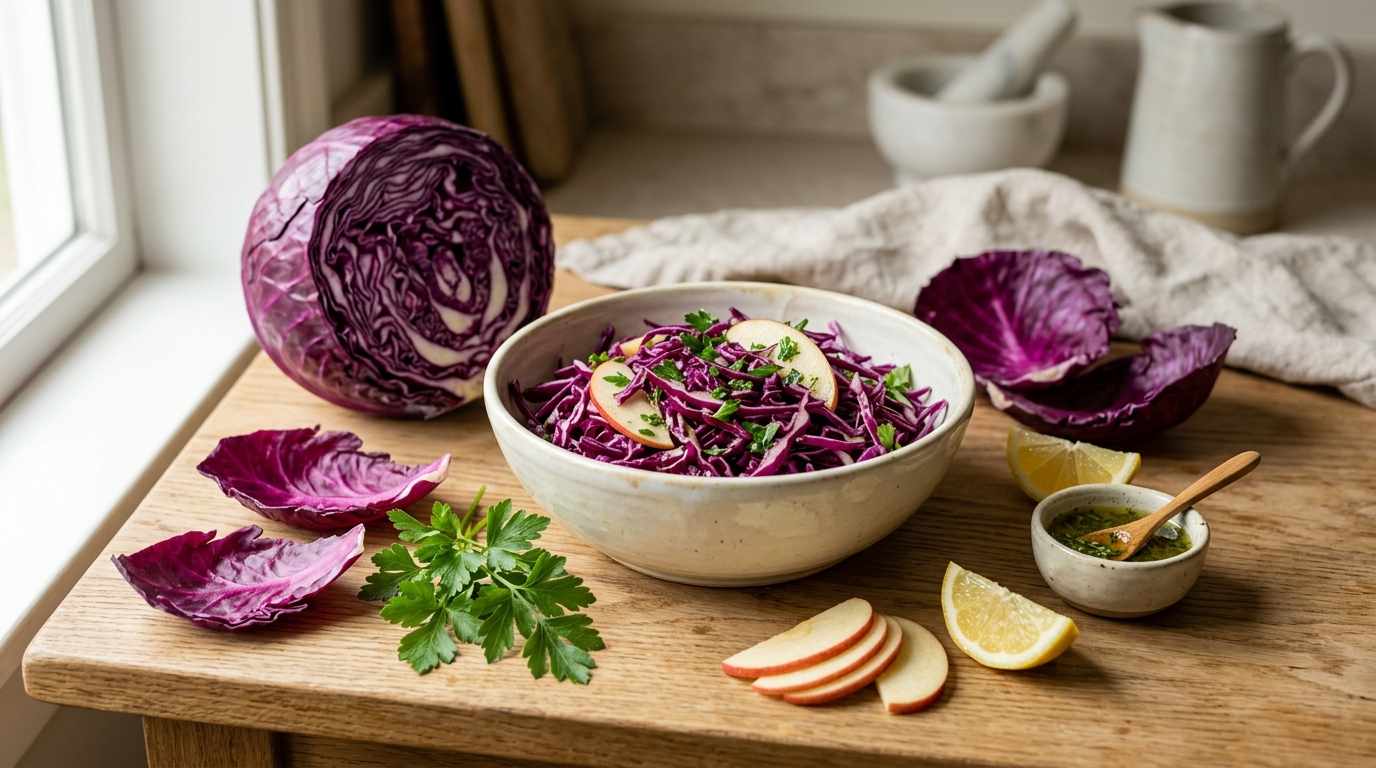

Raw red cabbage brings together crunch, color, freshness, and natural goodness in one remarkably versatile vegetable. With its deep purple-red leaves and mildly peppery flavor, it can transform an ordinary salad, slaw, wrap, bowl, or sandwich into something much more vibrant.
We often think of cabbage as an ingredient that belongs in cooked dishes, but red cabbage is particularly enjoyable when served raw. Its firm texture holds up beautifully against dressings, while its slightly sweet and earthy flavor pairs easily with fruits, herbs, nuts, seeds, grains, and savory proteins.
Whether we are looking for a simple salad ingredient, a colorful side dish, or a fresh addition to everyday meals, raw red cabbage deserves a regular place in the kitchen.
Table of Contents
What Is Raw Red Cabbage?
Red cabbage, sometimes called purple cabbage, is a compact leafy vegetable belonging to the same family as green cabbage, broccoli, kale, Brussels sprouts, and cauliflower.
Its leaves are usually deep purple, burgundy, or reddish-purple. The color comes from naturally occurring plant pigments called anthocyanins, which are also responsible for the colors found in foods such as blueberries, blackberries, and purple onions.
When eaten raw, red cabbage has a distinctive crisp and crunchy texture. Its flavor is generally mild, slightly sweet, and earthy, with a gentle peppery quality that becomes particularly noticeable when the cabbage is finely sliced.
Unlike delicate salad greens, red cabbage remains firm after being dressed. This makes it especially useful for salads and slaws that need to stay crisp rather than becoming limp quickly.
Why We Love the Goodness of Raw Red Cabbage
One of the biggest advantages of raw red cabbage is its combination of nutritional value and culinary versatility.
It is naturally low in calories while providing dietary fiber and several vitamins and minerals. It also contains a variety of naturally occurring plant compounds that contribute to its deep color.
Because we can eat it without cooking, raw red cabbage is an easy way to add a fresh vegetable component to meals without complicated preparation.
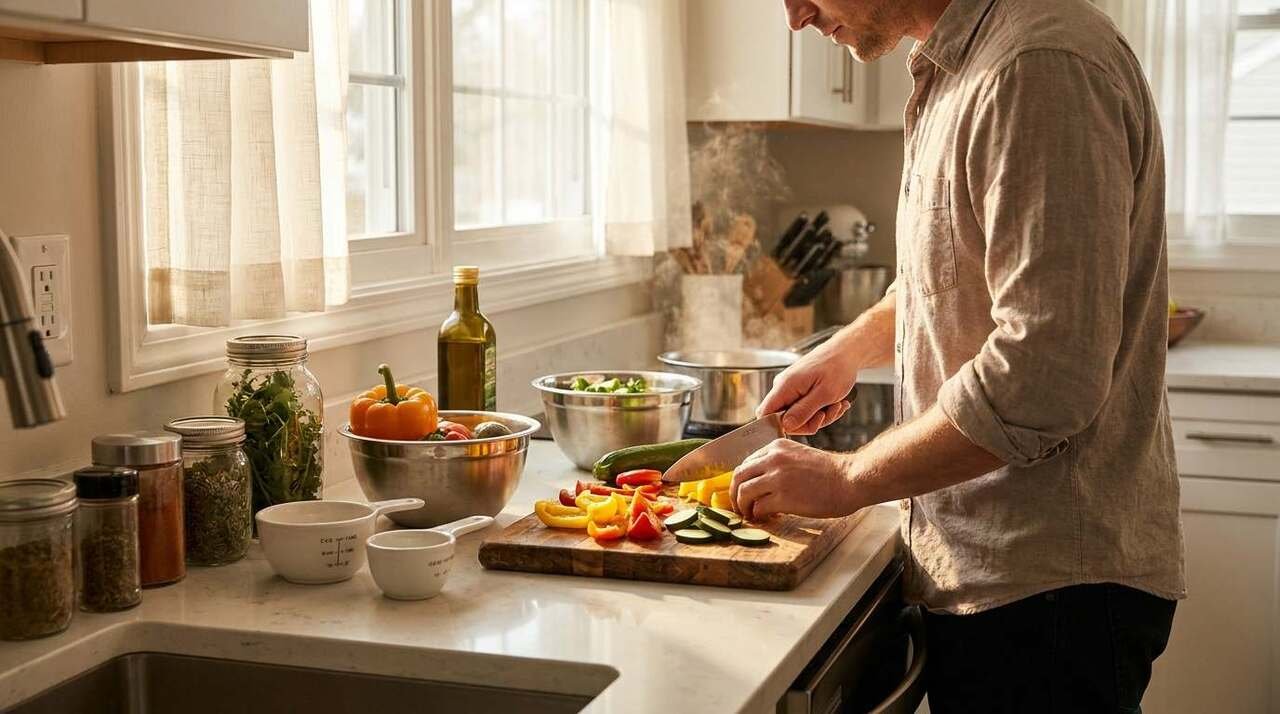
We simply remove the outer leaves, wash the cabbage thoroughly, cut away the tough core, and slice or shred the remaining leaves.
That simplicity makes it particularly convenient for busy kitchens.
Raw Red Cabbage Nutrition
Red cabbage provides a useful combination of fiber, vitamin C, vitamin K, folate, and other micronutrients.
Its fiber contributes to the overall fiber content of the diet and can help make meals more satisfying. Vitamin C is involved in normal immune function and collagen formation, while vitamin K plays an important role in normal blood clotting and bone metabolism.
Red cabbage also contains plant compounds associated with its vivid purple color. The anthocyanins in red and purple vegetables have attracted considerable scientific interest because of their antioxidant activity.
Rather than focusing on one individual nutrient, we can view red cabbage as part of a broader pattern of eating varied, colorful plant foods.
Raw Red Cabbage and Antioxidants
The brilliant color of red cabbage is more than an attractive feature on the plate.
Red cabbage contains anthocyanins, a group of flavonoid pigments found naturally in many purple, blue, and red fruits and vegetables. These compounds have antioxidant properties, meaning they can participate in processes that help protect cells from oxidative damage.
Red cabbage also contains other phytochemicals, including glucosinolate compounds that are characteristic of vegetables in the cruciferous family.
The important point is that red cabbage offers a naturally diverse collection of plant compounds rather than a single isolated nutrient.
For everyday eating, that makes it a valuable ingredient in a diet built around a variety of vegetables, fruits, whole grains, legumes, nuts, and seeds.
How to Prepare Raw Red Cabbage
Preparing raw red cabbage is straightforward.
First, we remove any damaged or wilted outer leaves. We then rinse the cabbage thoroughly under cool running water.
Next, we cut the cabbage into halves or quarters and remove the firm central core. The remaining leaves can be:
- Finely shredded for slaws
- Thinly sliced for salads
- Chopped for grain bowls
- Cut into small pieces for tacos and wraps
- Shaved into sandwiches
- Combined with fruit and nuts
- Used as a crunchy topping for cooked meals
A sharp chef’s knife makes slicing much easier, although a mandoline can produce exceptionally thin pieces when used carefully.
Should We Massage Raw Red Cabbage?
Yes, especially when we want a softer texture.
Red cabbage can be considerably firmer than lettuce. For salads, we can place shredded cabbage in a bowl and gently massage it with our hands for a few minutes.
Adding a small amount of lemon juice, vinegar, or dressing during this process helps soften the leaves while adding flavor.
The result is cabbage that remains pleasantly crunchy but is easier to chew.
For a classic slaw, we can combine shredded cabbage with a dressing and allow it to sit for several minutes before serving. For an even softer texture, we can let the dressed cabbage rest longer in the refrigerator.
Easy Raw Red Cabbage Salad
A simple raw red cabbage salad requires only a handful of ingredients.
We can combine:
- 3 cups finely shredded red cabbage
- 1 carrot, grated or julienned
- 1 small apple, thinly sliced
- A handful of fresh parsley or cilantro
- 2 tablespoons olive oil
- 1 tablespoon lemon juice
- 1 teaspoon honey or maple syrup
- Salt and black pepper to taste
We toss everything together and allow the salad to rest for approximately 10 minutes.
The cabbage provides crunch, the apple contributes sweetness, the herbs add freshness, and the lemon-based dressing brings the ingredients together.
For extra texture, we can add sunflower seeds, pumpkin seeds, walnuts, or sliced almonds.
Raw Red Cabbage Slaw Ideas
Red cabbage is particularly well suited to homemade slaw because it maintains its structure after being mixed with dressing.
For a fresh version, we can combine red cabbage with carrots, green onions, cilantro, lime juice, and a light vinaigrette.
For a sweeter slaw, we can add apple, pear, raisins, or dried cranberries.
For a more savory combination, red cabbage works beautifully with toasted sesame seeds, scallions, shredded carrots, and a sesame-ginger dressing.
We can also combine red and green cabbage to create a two-color slaw with contrasting textures and flavors.
What Goes Well With Raw Red Cabbage?
Raw red cabbage pairs with a surprisingly broad range of ingredients.
Its mild flavor makes it suitable for both sweet and savory combinations.
Fruits
Apples, pears, oranges, grapes, pomegranate seeds, mango, and berries can provide sweetness and acidity.
Herbs
Parsley, cilantro, mint, dill, and basil can add freshness.
Nuts and Seeds
Walnuts, almonds, pumpkin seeds, sunflower seeds, sesame seeds, and cashews provide additional texture.
Dressings
Lemon vinaigrette, lime dressing, balsamic vinaigrette, tahini dressing, yogurt-based dressings, and sesame-ginger sauces all work well.
Proteins
Raw red cabbage can accompany chicken, fish, tofu, beans, lentils, eggs, and other protein-rich foods.
Its crunch can also make simple sandwiches, burgers, tacos, and wraps considerably more interesting.
Raw Red Cabbage in Tacos and Wraps
One of the easiest ways to use raw red cabbage is as a topping.
Instead of relying entirely on lettuce, we can add a small handful of finely shredded red cabbage to tacos, burrito bowls, wraps, or sandwiches.
The cabbage provides freshness and crunch while its vibrant color makes the finished dish more appealing.
A squeeze of lime and a little chopped cilantro can turn plain shredded cabbage into a quick taco topping.
Raw Red Cabbage in Grain Bowls
Grain bowls are another excellent application.
We can start with cooked quinoa, brown rice, farro, or another grain and add roasted vegetables, beans, avocado, and a handful of raw red cabbage.
The contrast between warm ingredients and cool, crunchy cabbage creates a more interesting eating experience.
A simple tahini-lemon dressing can bring the entire bowl together.
How to Store Raw Red Cabbage
A whole red cabbage generally keeps well when refrigerated.
Once cut, we should store the unused portion properly in the refrigerator and use a clean, airtight container or suitable food-storage bag.
Pre-shredded cabbage can be especially convenient for meal preparation. We can prepare enough for several meals and keep it refrigerated, although freshness and texture are best when the cabbage is stored properly and used within a reasonable period.
If prepared as a salad with dressing, texture may gradually soften over time.
For the crunchiest results, we can keep shredded cabbage separate from dressing and combine them shortly before serving.
Can We Eat Raw Red Cabbage Every Day?
For most people, raw red cabbage can easily be part of a varied everyday diet.
However, individual tolerance to large quantities of raw cruciferous vegetables can differ. Some people may experience digestive discomfort or increased gas after eating substantial amounts.
If raw cabbage feels difficult to digest, we can start with smaller portions, slice it more finely, massage it with dressing, or lightly cook it.
The goal is not to eat enormous quantities of one vegetable. The greater nutritional strategy is to enjoy a wide variety of vegetables throughout the week.
Raw Red Cabbage vs. Cooked Red Cabbage
Both raw and cooked red cabbage have a place in the kitchen.
Raw cabbage provides a distinctive crunch and fresh flavor, making it ideal for salads, slaws, wraps, and toppings.
Cooking softens the leaves and changes their flavor. Roasting can bring out sweeter notes, while braising produces a tender texture that works particularly well with hearty meals.
Neither approach needs to replace the other.
We can enjoy raw red cabbage when we want freshness and texture and cooked red cabbage when we want something warm and tender.
Tips for Making Raw Red Cabbage Taste Better
If raw cabbage seems too strong or firm, a few simple techniques can make a noticeable difference.
Slice it thinly. Very fine shreds are easier to eat than large pieces.
Add acidity. Lemon juice, lime juice, or vinegar can brighten the flavor.
Balance it with sweetness. Apple, pear, orange, honey, or maple syrup can soften its earthy character.
Add healthy fats. Olive oil, avocado, tahini, nuts, and seeds can create a more satisfying salad.
Use fresh herbs. Cilantro, parsley, mint, and dill can make cabbage taste lighter and fresher.
Let it rest. A dressed cabbage salad often becomes more pleasant after sitting for several minutes.
The Simple Goodness of Raw Red Cabbage
Raw red cabbage demonstrates how a simple vegetable can add considerably more to a meal than color alone.
Its crunchy texture, naturally vibrant appearance, fiber, vitamins, and plant compounds make it an easy ingredient to incorporate into everyday meals.
We can shred it into a quick salad, mix it with carrots for slaw, add it to tacos, pile it into sandwiches, or use it to bring contrast to a grain bowl.
Most importantly, raw red cabbage does not require an elaborate recipe.
A little slicing, a squeeze of citrus, a drizzle of dressing, and a few complementary ingredients can turn this humble vegetable into a fresh and satisfying dish.
For anyone looking to make everyday meals more colorful, varied, and vegetable-rich, raw red cabbage is a simple ingredient with plenty of goodness to offer.



Leave a Reply