
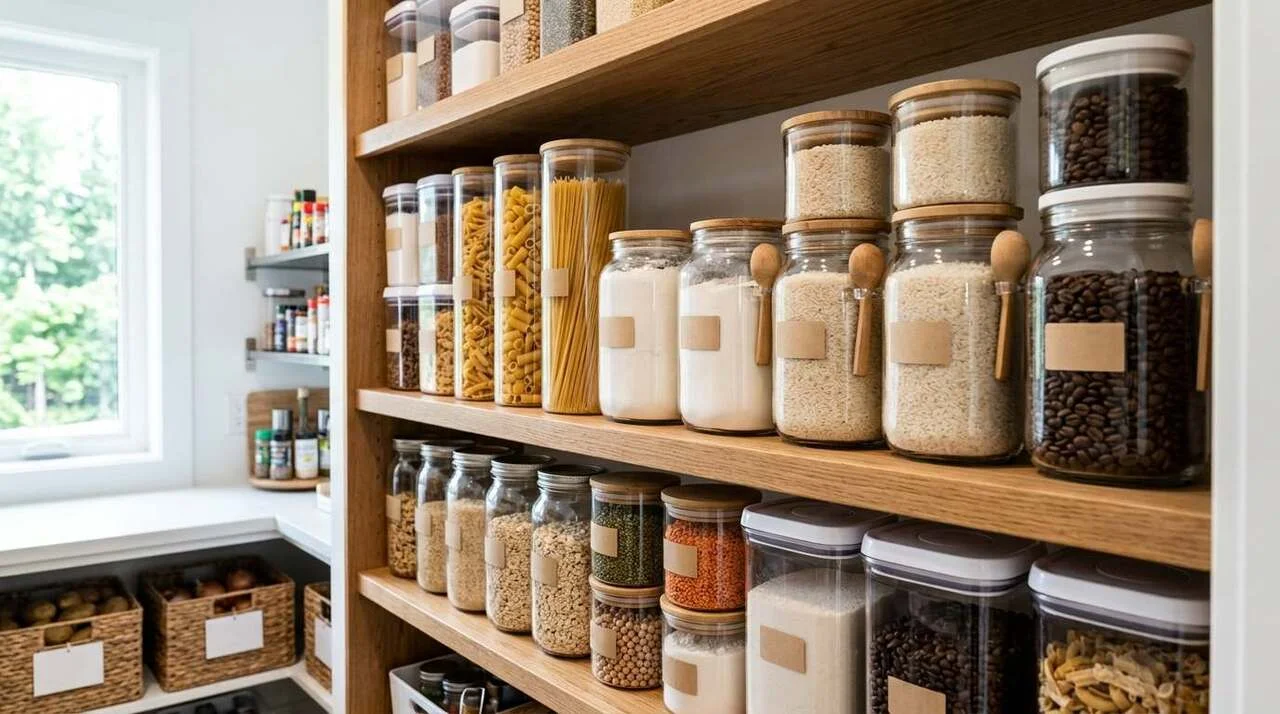

I threw out a half-bag of brown rice last month because pantry moths got into the cardboard box. That $4 bag turned into a $12 loss when I factored in the time I spent vacuuming larvae out of my cereal cabinet. If you’re still storing dry goods in their original packaging, you’re leaving your food exposed to air, moisture, pests, and your own forgetfulness.
A solid set of airtight kitchen containers pays for itself in prevented waste alone. I’ve tested dozens of sets over the past three years, and this guide breaks down exactly which ones are worth your counter space and which ones are just expensive plastic.
Table of Contents
Quick Recommendations: The Best Airtight Containers by Category
Table
| Container Set | Best For | Capacity Range | Material | Price Indicator |
|---|---|---|---|---|
| OXO Good Grips POP | Overall pantry organization | 0.5 to 5.5 quarts | BPA-free plastic | [Check Current Price on Amazon] |
| Rubbermaid Brilliance | Meal prep and fridge storage | 1.3 to 9.6 cups | Tritan plastic | [Check Current Price on Amazon] |
| Anchor Hocking Glass | Baking ingredients and long-term storage | 1 to 2.5 quarts | Glass with metal clasp | [Check Current Price on Amazon] |
| Chef’s Path Large Set | Bulk dry goods (flour, rice, sugar) | 3.3 to 6.5 liters | BPA-free plastic | [Check Current Price on Amazon] |
| Komax Biokips | Snacks and kid-friendly access | 0.5 to 2.5 liters | Polypropylene | [Check Current Price on Amazon] |
Why Airtight Containers Matter More Than You Think
Flour sits in your pantry for six months. Coffee beans lose their aroma in two weeks if you leave the bag folded over. Brown sugar turns into a brick. These aren’t minor annoyances. They’re small daily frustrations that add up to real money and real clutter.
I switched every dry good in my kitchen to airtight containers three years ago. My pantry went from a leaning tower of half-open bags to a clean grid where I can see exactly how much pasta I have left. I stopped buying duplicate spices because I could finally read the labels. My brown sugar stayed soft through a humid July without a single terracotta disk.
The real benefit is shelf life. Airtight seals block oxygen, which is what makes fats go rancid and bugs hatch. They block moisture, which keeps crackers crisp and salt pourable. And they block pests, which can chew through paper and thin plastic but can’t penetrate a proper locking lid.
What “Airtight” Actually Means on a Container Label
Not every container that claims to be airtight actually is. I’ve bought “sealed” canisters that leaked water during a simple submersion test. Here’s the difference between marketing language and real performance.
True airtight containers use a silicone or rubber gasket compressed by a locking mechanism. The lid should have some form of latch, twist-lock, or push-button seal that physically presses the gasket against the rim. When you close it, you should feel resistance. If the lid snaps on with no effort, it’s probably just a regular container with a tight fit, not a genuine airtight seal.
Leakproof is the real test. Flip a sealed container full of water upside down. If a single drop escapes, it’s not airtight. I do this test with every new set I review. Containers that pass stay in my kitchen. Containers that fail go back in the box.
Vacuum-sealed is a step above. Some high-end systems, like certain electric pump containers, actively remove air before sealing. These are overkill for most pantries but excellent for coffee beans, specialty flours, or long-term emergency food storage.
Plastic vs. Glass vs. Stainless Steel: Which Material Wins?
Plastic Containers
Plastic is lightweight, cheap, and shatterproof. Most modern kitchen containers use BPA-free Tritan or polypropylene, which won’t leach chemicals into your food. The downside is staining. Tomato sauce and turmeric will leave orange ghosts on plastic that no amount of scrubbing removes. Plastic also scratches over time, and those micro-grooves harbor odors.
Who it’s for: Families with kids, anyone who drops things regularly, people who want a full pantry set without spending a fortune.
Who should skip it: If you microwave your containers or store heavily pigmented foods like curry paste and beet salad.
Pros:
- Won’t shatter if a kid pulls it off the shelf
- Lightweight enough for high cabinets
- Usually dishwasher-safe on the top rack
Cons:
- Stains permanently with acidic or pigmented foods
- Can absorb garlic and onion odors
- Less heat-resistant than glass
Glass Containers
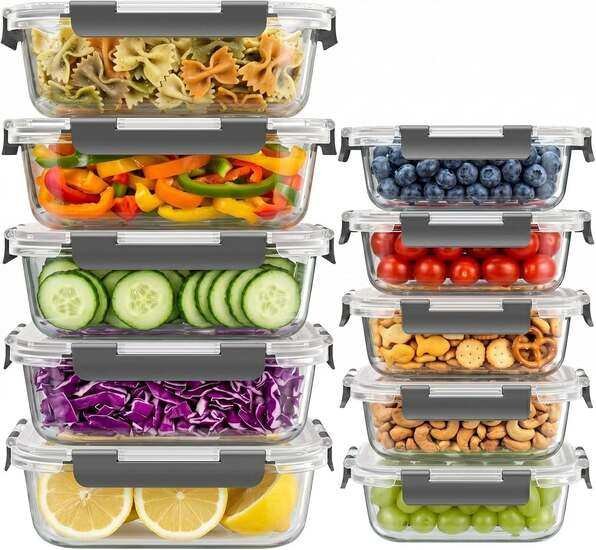
Glass doesn’t stain, doesn’t absorb odors, and lasts forever if you don’t drop it. I use glass canisters for flour, sugar, and anything I bake with because I can see the texture and color clearly. Anchor Hocking and Le Parfait make classic clamp-lid jars that seal tight and look good enough to sit on open shelving.
The weight is real. A 2-quart glass jar full of rice weighs about 7 pounds. That’s fine on a sturdy pantry shelf but risky in an overhead cabinet.
Who it’s for: Home bakers, people with open pantry shelving, anyone who microwaves leftovers directly in the storage container.
Who should skip it: If you have high shelves, small children, or butterfingers.
Pros:
- Microwave and oven safe (without the lid)
- Zero staining or odor retention
- Recyclable and environmentally friendlier long-term
Cons:
- Heavy when filled
- Breaks if dropped on tile or concrete
- Metal clasp lids can rust if run through the dishwasher repeatedly
Stainless Steel
Steel containers look sleek and block all light, which helps preserve the flavor of coffee and tea. They’re also virtually indestructible. The catch is that you can’t see inside without opening the lid, and most steel sets cost significantly more than plastic or glass.
Who it’s for: Minimalist kitchen designers, coffee enthusiasts, people who want containers that outlast their mortgage.
Who should skip it: If you need to see inventory levels at a glance or if you’re on a tight budget.
Pros:
- Blocks light completely
- Dents instead of shattering
- Modern aesthetic
Cons:
- Can’t see contents without opening
- Higher price point
- Some cheaper sets use thin metal that warps
The OXO Good Grips POP Containers: My Top Pick for Pantries
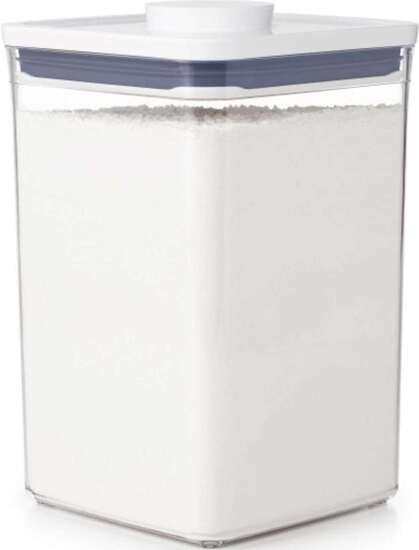
I’ve owned two full sets of POP containers over five years. The push-button seal is satisfyingly mechanical. You press the button down to seal, press again to release. The button also doubles as a handle, which sounds minor until you’re trying to lift a 5-quart container of flour one-handed.
The modular stacking is where these shine. A 2.5-quart container sits perfectly on top of a 4-quart container. The lids are flat, so nothing wobbles. I can fit an entire pantry’s worth of dry goods in a 24-inch-wide cabinet because the square shape wastes almost no space.
Specs:
- Material: BPA-free plastic
- Seal type: Push-button silicone gasket
- Dishwasher safe: Lids only; hand-wash bodies
- Sizes available: 0.5 qt to 5.5 qt
Pros:
- One-handed opening and closing
- Modular stacking saves serious space
- Replacement parts available directly from OXO
Cons:
- Not leakproof for liquids
- Premium price compared to generic brands
- Button mechanism can collect crumbs if you don’t wipe it
[Check Current Price on Amazon]
Rubbermaid Brilliance: Best for Fridge and Meal Prep
I use Brilliance containers for cooked food, cut vegetables, and anything that goes in the refrigerator. The latches snap down with an audible click, and the crystal-clear plastic lets you see whether that’s Tuesday’s chili or Wednesday’s soup without opening the lid.
The vented lids are a nice touch. You can microwave with the latches open and the vent uncovered, which reduces splatter without trapping steam. I meal prep every Sunday, and these stack neatly in my fridge like Lego blocks.
Specs:
- Material: Tritan plastic (BPA-free)
- Seal type: Dual-latch with silicone gasket
- Dishwasher safe: Yes, all pieces
- Sizes available: 1.3 cups to 9.6 cups
Pros:
- Truly leakproof; I’ve transported soup in a backpack with zero spills
- Vented lids make microwaving safe and clean
- Stain-resistant compared to cheaper plastics
Cons:
- Not ideal for pantry dry goods (too many small sizes)
- Latches can snap if forced aggressively
- Higher per-container cost than bulk pantry sets
[Check Current Price on Amazon]
Anchor Hocking Glass Canisters: Best for Baking Staples
These old-school clamp jars have been around since your grandmother’s kitchen, and there’s a reason. The wire bail and rubber gasket create a seal that holds up for years. I store all-purpose flour, bread flour, and powdered sugar in these because the wide mouth lets me dip a measuring cup straight in.
The 1-gallon size holds a standard 5-pound bag of flour with room to spare. I label mine with masking tape and a Sharpie. When the tape gets ratty, I peel it off and write a new label.
Specs:
- Material: Soda-lime glass with metal clasp
- Seal type: Wire bail with rubber gasket
- Dishwasher safe: Glass yes; hand-wash metal clasp
- Sizes available: 1 qt to 2.5 qt
Pros:
- Wide mouth fits a measuring cup
- Glass won’t absorb flour dust or odors
- Gaskets are replaceable for pennies
Cons:
- Metal clasks rust if you dishwasher them
- Heavy when full
- Not stackable in the same modular way as square containers
[Check Current Price on Amazon]
How to Organize Your Containers So You Actually Use Them
Buying the containers is only half the battle. I’ve seen too many kitchens where beautiful canisters sit empty on a shelf while the original packaging piles up in a drawer. Here’s the system that works for me.
Step 1: Decant everything the day you buy the containers. Don’t wait. Open the pasta box, dump it in, recycle the box immediately. If you leave the box sitting next to the container for “later,” later becomes never.
Step 2: Label with contents and purchase date. I use a label maker for a clean look, but masking tape works fine. The date matters because airtight containers extend shelf life but don’t make food immortal. Brown rice lasts about 6 months in a sealed container. White flour lasts a year. Write it down so you don’t guess.
Step 3: Group by category. Breakfast items together. Baking items together. Snacks at kid height. Dinner staples at adult height. When you open the pantry, your hand should move to the right zone without thinking.
Step 4: Leave one container empty. I keep a spare medium-sized container open for bulk-bin purchases, leftover nuts, or that random half-cup of dried cranberries. An empty container is more useful than a full one you can’t touch for six months.
Common Mistakes People Make with Airtight Containers
Putting wet food into a sealed container and closing it immediately. Trapped moisture breeds mold. Let cooked rice or washed berries cool and dry before you seal them. I spread hot leftovers on a plate for ten minutes before transferring them to a Brilliance container.
Buying a 20-piece set when you only need six containers. Those giant starter sets look like a deal, but half the sizes won’t fit your actual food. I made this mistake with a “complete pantry set” that included four containers too small for anything but spices I already owned jars for. Buy à la carte when possible, or measure your staple items before ordering.
Ignoring the gasket. That rubber ring is doing all the work. If it gets cracked, stretched, or coated in old grease, the seal fails. I pull gaskets out and wash them separately every few months. Replacement gaskets cost a few dollars and extend the life of a $15 container by years.
Storing containers with lids sealed shut. Closed empty containers trap humidity and can grow mildew in a damp climate. Store them with lids slightly ajar or completely off until you fill them.
Key Takeaways
- Airtight containers pay for themselves by preventing food waste, pest infestations, and duplicate purchases.
- True airtight seals require a gasket and a locking mechanism, not just a tight-fitting lid.
- Plastic is practical and lightweight but stains over time; glass is heavy and breakable but lasts forever.
- The OXO Good Grips POP set is the best all-around choice for pantry dry goods.
- Rubbermaid Brilliance wins for meal prep and refrigerator storage because it’s genuinely leakproof.
- Always decant food immediately, label with dates, and wash gaskets separately to maintain the seal.
- Leave headspace when freezing, and never seal hot food until it cools to room temperature.
- Buy for your actual pantry size and eating habits rather than falling for oversized starter sets.
Frequently Asked Questions
How long does food actually last in an airtight container?
Dry goods like white rice and pasta last 1 to 2 years. Whole grains with natural oils, like brown rice and quinoa, last 6 to 12 months before going rancid. Coffee beans stay fresh for 2 to 4 weeks. These timelines assume a cool, dark pantry. Heat and sunlight shorten them regardless of the seal.
Are plastic airtight containers safe for food?
Yes, if they’re labeled BPA-free and made from food-grade polypropylene or Tritan. Avoid reusing old takeout containers or industrial buckets that aren’t rated for food contact. I only buy containers that explicitly state “food safe” on the packaging.
Can I put airtight containers in the freezer?
Most can, but check the manufacturer’s guidelines. Plastic becomes brittle in extreme cold and can crack if dropped. Glass can shatter if the contents expand or if you move it straight from freezer to hot water. I leave an inch of headspace in any container I freeze to allow for expansion.
How do I get rid of smells in plastic containers?
Make a paste of baking soda and water, scrub the interior, and let it sit for 24 hours. For stubborn odors, crumple newspaper inside, seal the lid, and leave it for two days. The paper absorbs residual smells. If that fails, the plastic is probably permanently saturated, and it’s time to replace it.
What’s the difference between airtight and watertight?
Airtight blocks air and keeps dry goods fresh. Watertight blocks liquid from escaping. Many containers are both, but not all. A container can be airtight enough for flour yet leak chicken broth if you tip it over. If you need to transport soups or sauces, look for “leakproof” on the label, not just “airtight.”
Do I need to buy the same brand for everything?
Not at all. I mix OXO POP canisters for my pantry with Anchor Hocking glass for baking supplies and Rubbermaid Brilliance for the fridge. The only downside is that mismatched brands don’t stack as neatly. If aesthetics matter to you, stick to one line for open shelving and mix freely behind closed cabinet doors.

Leave a Reply