
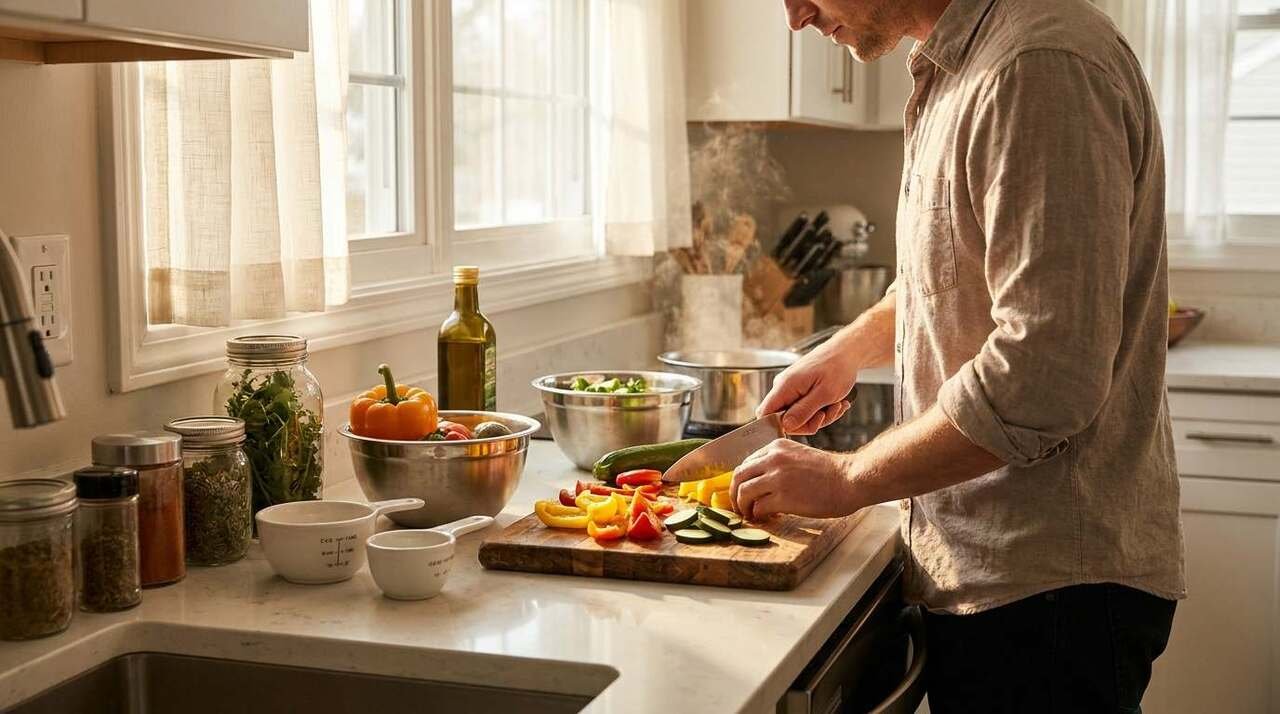

Mastering the cooking basics for beginners is the first step toward preparing delicious, homemade meals with confidence. You don’t need professional training or expensive equipment—just a few essential skills that make cooking easier and more enjoyable.
In this guide, you’ll learn how to measure ingredients correctly, use essential kitchen tools, improve your knife skills, understand common cooking terms, season food properly, and adjust flavors like an experienced home cook. These practical techniques will help you avoid common mistakes, build confidence, and create better meals every time you cook.
Table of Contents
Why Cooking Basics Matter
Learning cooking fundamentals offers benefits beyond making food taste better. Strong basic skills help you:
- Prepare meals more efficiently.
- Reduce food waste.
- Improve kitchen safety.
- Save money by cooking at home.
- Follow recipes with confidence.
- Experiment with new ingredients.
- Develop healthy eating habits.
Think of these skills as building blocks. Once they’re second nature, learning advanced techniques becomes much easier.
How to Measure Ingredients Correctly
Accurate measurements are one of the biggest differences between successful and disappointing recipes. While experienced cooks often estimate ingredient amounts, beginners should focus on measuring carefully until they gain more experience.
For a complete guide, see How to Measure Ingredients Correctly.
Dry vs. Liquid Measurements
Different ingredients require different measuring tools.
| Ingredient Type | Best Tool |
|---|---|
| Flour | Dry measuring cup |
| Sugar | Dry measuring cup |
| Rice | Dry measuring cup |
| Milk | Liquid measuring cup |
| Water | Liquid measuring cup |
| Oil | Liquid measuring cup |
Using the correct measuring tool improves consistency and helps recipes turn out as intended.
Measuring Dry Ingredients
For ingredients like flour, avoid scooping directly from the container. Instead:
- Stir the flour to loosen it.
- Spoon it gently into the measuring cup.
- Level it with a straight edge.
Scooping directly can pack flour tightly, leading to dense baked goods.
Measuring Liquids
Place the measuring cup on a flat surface and check the measurement at eye level. Looking from above or below can cause inaccurate readings.
Measuring Small Quantities
Use measuring spoons for ingredients such as:
- Salt
- Baking powder
- Vanilla extract
- Herbs
- Spices
Never estimate these ingredients when following a new recipe.
Kitchen Scale vs. Measuring Cups
A digital kitchen scale provides the greatest accuracy, especially for baking. Weight measurements eliminate inconsistencies caused by packed ingredients and varying cup sizes.
Expert Tip: If a recipe provides measurements in grams, use a kitchen scale whenever possible.
Essential Kitchen Tools for Beginners
You don’t need a fully equipped professional kitchen to cook excellent meals. A few quality tools will handle almost every everyday recipe.
For a complete buying guide, visit Essential Kitchen Tools for Beginners.
Must-Have Equipment
Chef’s Knife
A sharp chef’s knife handles most cutting tasks, including vegetables, fruits, herbs, and meat.
Cutting Board
Choose separate boards for raw meat and fresh produce to reduce cross-contamination.
Measuring Cups and Spoons
These ensure consistent results for cooking and baking.
Mixing Bowls
Having several bowl sizes makes meal preparation easier.
Nonstick Skillet
Perfect for:
- Eggs
- Pancakes
- Stir-fries
- Grilled sandwiches
Saucepan
Ideal for:
- Rice
- Pasta
- Soups
- Sauces
Baking Sheet
Useful for roasting vegetables, baking cookies, and preparing sheet pan dinners.
Wooden Spoon and Silicone Spatula
Gentle on cookware and suitable for nearly every cooking task.
Optional Tools That Save Time
Once you’ve mastered the basics, these tools can make cooking even easier:
- Digital kitchen scale
- Instant-read thermometer
- Vegetable peeler
- Box grater
- Fine mesh strainer
- Kitchen timer
- Food processor
- Immersion blender
Remember, skill matters far more than expensive equipment.
Basic Knife Skills for Home Cooks
Safe knife skills make cooking faster, easier, and far safer.
Learn more in Basic Knife Skills for Home Cooks.
Choose the Right Knife
A quality 8-inch chef’s knife can complete nearly every cutting task in a home kitchen.
Other useful knives include:
- Paring knife
- Serrated bread knife
- Utility knife
Hold the Knife Correctly
Grip the blade near the handle using your thumb and index finger. This pinch grip provides greater control and reduces fatigue.
Avoid holding the knife only by the handle, which limits precision.
Protect Your Fingers
Keep your guiding hand in a “claw” position:
- Fingertips tucked inward.
- Knuckles facing the blade.
- Thumb safely behind your fingers.
Professional chefs use this technique because it’s both safer and more accurate.
Master Basic Cuts
Learning a few common cuts improves cooking consistency.
Dice
Small cubes for onions, potatoes, carrots, and peppers.
Slice
Thin cuts for tomatoes, cucumbers, mushrooms, and meats.
Chop
Rough cuts for soups, stews, and slow-cooked dishes.
Mince
Very fine cuts for garlic, ginger, and herbs.
Uniform pieces cook evenly, helping prevent undercooked or overcooked food.
Keep Your Knife Sharp
Contrary to popular belief, dull knives are more dangerous than sharp ones. A dull blade requires more force and is more likely to slip.
Sharpen your knife regularly and use a honing steel to maintain the edge between sharpenings.
Beginner Knife Safety Tips
- Always cut on a stable cutting board.
- Never cut while holding food in your hand.
- Keep knives dry.
- Store blades safely.
- Wash knives by hand instead of leaving them in the sink.
- Focus while cutting—avoid distractions.
Common Cooking Terms Explained
Recipes often include cooking terms that may seem confusing if you’re just starting out. Understanding these terms helps you follow instructions accurately and improves your confidence in the kitchen.
For a complete glossary, visit Common Cooking Terms Explained.
Sauté
Sautéing means cooking food quickly over medium-high or high heat using a small amount of oil or butter. This method works well for vegetables, shrimp, diced chicken, and thin cuts of meat.
Best for:
- Onions
- Bell peppers
- Mushrooms
- Zucchini
- Chicken strips
Tip: Keep the food moving to prevent burning and encourage even browning.
Simmer
A simmer is gentler than a boil. Small bubbles slowly rise to the surface without vigorous movement.
Use simmering for:
- Soups
- Stews
- Sauces
- Chili
- Broths
Simmering allows flavors to develop while preventing ingredients from breaking apart.
Boil
Boiling occurs when large bubbles rapidly break the surface of the liquid.
It’s ideal for:
- Pasta
- Potatoes
- Corn
- Eggs
Once pasta is added, reduce the heat slightly to maintain a steady boil without overflowing.
Roast
Roasting uses dry heat inside an oven, usually between 375°F and 450°F (190°C–230°C).
Roasting caramelizes food, producing deeper flavors and crisp edges.
Popular roasted foods include:
- Potatoes
- Carrots
- Broccoli
- Chicken
- Beef
- Fish
Bake
Baking also uses dry oven heat but generally refers to foods that rely on structure rather than browning.
Examples include:
- Bread
- Cakes
- Cookies
- Muffins
- Casseroles
Dice, Chop, and Mince
These three cutting methods are among the most common recipe instructions.
| Term | Description | Best Uses |
|---|---|---|
| Chop | Large, rough pieces | Soups, stews |
| Dice | Even cubes | Salads, stir-fries |
| Mince | Very fine pieces | Garlic, herbs, ginger |
Using consistent cuts helps food cook evenly.
Fold
Folding is a gentle mixing technique that preserves air inside delicate mixtures like whipped cream or cake batter.
Instead of stirring vigorously, use a spatula to lift ingredients from the bottom and gently turn them over.
Brown
Browning creates rich flavor through caramelization.
You’ll often brown:
- Ground beef
- Chicken
- Sausage
- Mushrooms
- Butter
Don’t rush this step. Proper browning adds depth to almost every savory dish.
How to Season Food Properly
Seasoning transforms ordinary ingredients into delicious meals. Learning when and how to season is one of the fastest ways to improve your cooking.
For more detailed techniques, read How to Season Food Properly.
Start with Salt
Salt doesn’t simply make food salty—it enhances natural flavors.
Instead of adding all the salt at once, season in stages:
- While preparing ingredients
- During cooking
- Before serving
This creates balanced flavor throughout the dish.
Balance with Pepper
Freshly ground black pepper adds mild heat and aroma.
Different recipes may also benefit from:
- White pepper
- Cayenne pepper
- Crushed red pepper flakes
- Smoked pepper blends
Build Flavor with Herbs
Fresh herbs provide bright, vibrant flavor.
Popular fresh herbs include:
- Parsley
- Basil
- Cilantro
- Dill
- Mint
Add delicate herbs near the end of cooking to preserve their freshness.
Use Dried Herbs Correctly
Dried herbs are more concentrated than fresh ones.
As a general guideline:
- 1 tablespoon fresh herbs ≈ 1 teaspoon dried herbs
Add dried herbs early so they have time to release their flavor.
Add Acidity
Many dishes taste flat because they’re missing acidity rather than salt.
Try adding:
- Lemon juice
- Lime juice
- Vinegar
- Tomatoes
A small splash can brighten soups, sauces, roasted vegetables, and meats.
Taste Throughout Cooking
Professional cooks constantly taste their food.
Ask yourself:
- Does it need more salt?
- Is it too acidic?
- Is it lacking sweetness?
- Could herbs improve it?
Making small adjustments is easier than correcting major mistakes at the end.
Common Seasoning Mistakes
- Adding too much salt at once
- Forgetting acid
- Overusing dried herbs
- Under-seasoning vegetables
- Never tasting while cooking
How to Taste and Adjust a Dish
One of the biggest differences between beginners and experienced cooks is knowing how to fine-tune a dish before serving.
Learn more in How to Taste and Adjust a Dish.
Taste with Purpose
Rather than taking random bites, evaluate your food by asking:
- Is it salty enough?
- Is it too sweet?
- Does it taste balanced?
- Is the texture right?
- Are the spices noticeable?
Fix Common Flavor Problems
Too Salty
Try adding:
- Unsalted broth
- Cooked potatoes (for soups)
- More vegetables
- Plain rice or pasta (depending on the dish)
Too Acidic
Balance acidity with a small amount of:
- Honey
- Sugar
- Cream
- Butter
Too Bland
Improve flavor using:
- Salt
- Fresh herbs
- Garlic
- Lemon juice
- Black pepper
- Parmesan cheese
Too Spicy
Reduce heat by adding:
- Dairy products
- Coconut milk
- More broth
- Additional vegetables
Avoid adding water alone, as it can dilute flavor without reducing heat effectively.
Common Beginner Cooking Mistakes to Avoid
Everyone makes mistakes while learning. Recognizing them early helps you improve much faster.
Cooking Without Preparation
Gather and prepare ingredients before turning on the stove. This keeps cooking organized and reduces stress.
Overcrowding the Pan
Too much food in one pan traps steam instead of creating a golden-brown crust.
Cook in batches when necessary.
Using the Wrong Heat
High heat isn’t always better.
- High heat: Searing and stir-frying
- Medium heat: Most everyday cooking
- Low heat: Simmering sauces and soups
Constantly Flipping Food
Let meat and vegetables cook undisturbed long enough to develop a flavorful crust before turning them.
Ignoring Food Safety
Remember to:
- Wash hands frequently.
- Keep raw meat separate from ready-to-eat foods.
- Refrigerate leftovers promptly.
- Cook foods to safe internal temperatures.
Giving Up Too Quickly
Every great cook has burned food, overcooked pasta, or forgotten an ingredient. Mistakes are part of learning and help you improve with practice.
Practice Makes Better
Cooking is a skill that improves through repetition. Start with simple recipes and focus on mastering one technique at a time rather than trying to learn everything at once.
As your confidence grows, you’ll begin recognizing flavors, adjusting seasonings instinctively, and preparing meals more efficiently. Before long, tasks that once felt challenging—like chopping vegetables evenly or balancing flavors—will become second nature.
The best way to become a better cook is simply to cook more often. Each meal teaches you something new, bringing you one step closer to creating delicious, homemade dishes with ease.
Conclusion
Every confident home cook begins with the basics. By learning how to measure ingredients accurately, use essential kitchen tools, develop safe knife skills, understand common cooking terms, season food thoughtfully, and taste as you cook, you’ll build a solid foundation for preparing successful meals.
Don’t worry about perfection. Focus on developing good habits, practicing regularly, and learning from each experience. With time, patience, and curiosity, you’ll gain the skills and confidence to cook a wide variety of meals that you and your family can enjoy.
Quick Reference Table: Essential Cooking Skills
| Skill | Why It Matters | Beginner Tip |
|---|---|---|
| Measure Ingredients | Ensures consistent results | Use dry cups for dry ingredients and liquid cups for liquids. |
| Use the Right Tools | Makes cooking easier and safer | Invest in a few quality essentials instead of many gadgets. |
| Knife Skills | Improves speed, safety, and consistency | Practice the claw grip and keep your knife sharp. |
| Cooking Terms | Helps you follow recipes accurately | Learn common techniques like sauté, simmer, and roast. |
| Seasoning | Builds balanced flavor | Season in layers and taste as you cook. |
| Taste & Adjust | Fine-tunes the finished dish | Make small adjustments with salt, acid, herbs, or spices before serving. |
Beginner’s Cooking Checklist
Use this checklist before every meal until these habits become second nature.
✅ Wash your hands before handling food.
✅ Gather all ingredients and equipment.
✅ Measure ingredients carefully.
✅ Read through the recipe once before cooking.
✅ Prepare vegetables and proteins before heating the pan.
✅ Preheat the oven if needed.
✅ Use the correct pan size.
✅ Keep raw meat separate from ready-to-eat foods.
✅ Taste your food throughout cooking.
✅ Adjust seasoning before serving.
✅ Clean as you go to keep your workspace organized.
✅ Store leftovers safely within two hours of cooking.
Expert Tips for New Home Cooks
- Start with simple recipes before trying more advanced dishes.
- Buy quality basics rather than expensive specialty gadgets.
- Learn one new cooking technique each week.
- Keep staple pantry ingredients on hand, such as rice, pasta, canned tomatoes, olive oil, herbs, and spices.
- Don’t be discouraged by mistakes—they’re part of learning.
- Taste everything you cook. Developing your palate is one of the fastest ways to improve.
- Keep your knives sharp for better safety and efficiency.
- Cook regularly. Even preparing two or three homemade meals each week will build confidence over time.
Key Takeaways
- Strong cooking fundamentals make preparing meals easier and more enjoyable.
- Measuring ingredients accurately improves consistency.
- A few quality kitchen tools are enough for most everyday recipes.
- Proper knife skills increase both safety and efficiency.
- Understanding cooking terminology helps you follow recipes confidently.
- Season food gradually instead of all at once.
- Taste your food throughout cooking and adjust flavors before serving.
- Avoid common beginner mistakes like overcrowding pans and using incorrect heat.
- Practice consistently—confidence grows with every meal you prepare.
Frequently Asked Questions
What are the most important cooking skills for beginners?
The most important cooking skills include measuring ingredients accurately, using kitchen tools safely, learning basic knife skills, understanding common cooking terms, seasoning food properly, and tasting dishes before serving.
What kitchen tools should every beginner own?
A beginner should start with a chef’s knife, cutting board, measuring cups and spoons, mixing bowls, saucepan, nonstick skillet, baking sheet, wooden spoon, silicone spatula, and a digital kitchen thermometer if possible.
How can I improve my cooking quickly?
Practice regularly, start with simple recipes, taste your food throughout the cooking process, and focus on mastering one technique at a time instead of trying to learn everything at once.
Why is seasoning so important?
Seasoning enhances natural flavors and creates balance in a dish. Adding salt, herbs, spices, and acidic ingredients at the right time can dramatically improve the taste of your meals.
What’s the difference between sautéing and frying?
Sautéing uses a small amount of fat over relatively high heat while frequently moving the food. Frying generally uses more oil and cooks food for longer, often creating a crisp exterior.
Should beginners use recipes exactly as written?
Yes. Following recipes closely helps you understand ingredient ratios and cooking techniques. Once you gain experience, you’ll feel more comfortable making substitutions and adjustments.
How do I know when food is fully cooked?
The safest method is to use an instant-read food thermometer. Different foods require different internal temperatures, especially poultry, seafood, and meat.
How often should I sharpen my kitchen knife?
Home cooks typically benefit from sharpening their chef’s knife every few months, depending on use. Regular honing between sharpenings helps maintain the blade’s edge.


Leave a Reply