
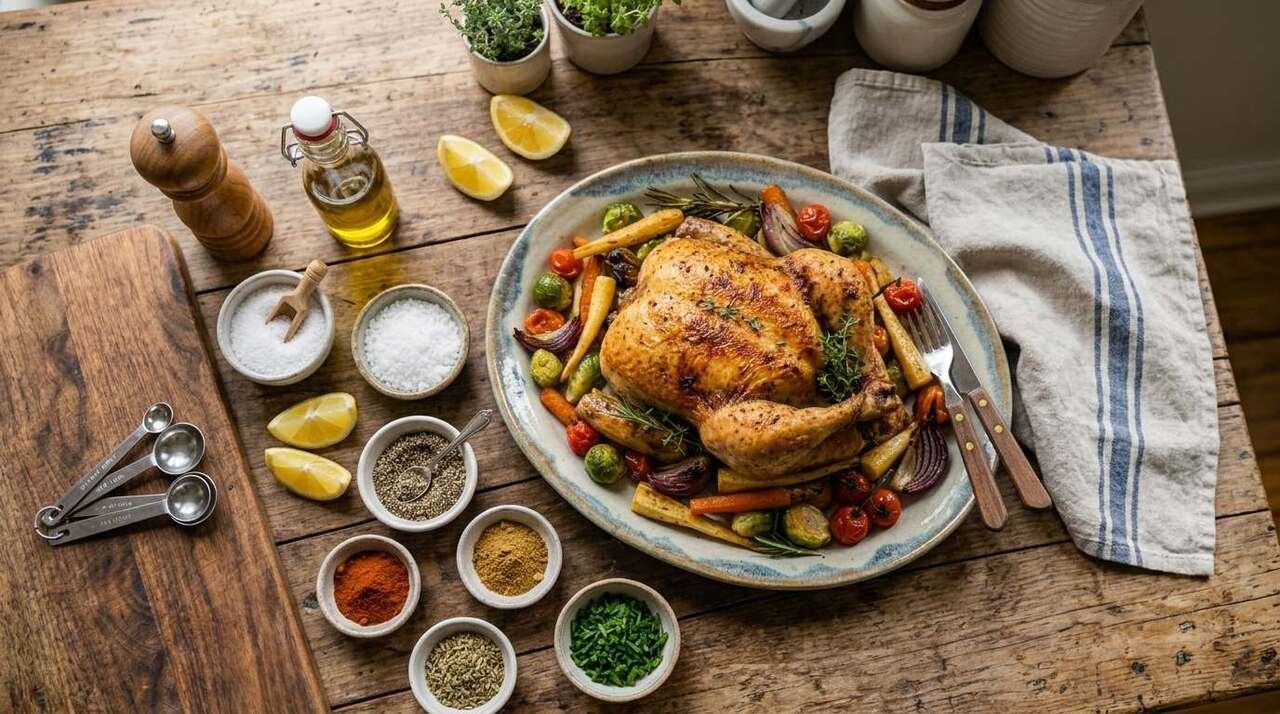

Learning how to season food properly comes down to one skill: adding salt, acidity, aromatics, herbs, spices, and other flavor builders at the right time and in the right amount. The goal is food that tastes balanced, where every ingredient has a clear flavor and nothing feels flat, harsh, salty, or muddy.
A perfectly seasoned dish rarely comes from following a rigid measurement. It comes from tasting, adjusting, and understanding how different seasonings behave during cooking.
Whether you’re making scrambled eggs, roasted vegetables, soup, steak, pasta, chicken, or a simple salad, the same principles apply.
Table of Contents
What Does It Mean to Season Food Properly?
Properly seasoned food has a balanced combination of saltiness, acidity, sweetness, bitterness, umami, aroma, heat, and texture. Salt is usually the starting point because it can make the natural flavors of ingredients more noticeable.
A simple way to think about seasoning is:
Taste → identify what’s missing → add a small amount → taste again → repeat until balanced.
Seasoning should happen throughout cooking rather than only at the end. Adding small amounts at different stages gives you more control and helps flavors develop as the dish cooks.
The Basic Seasoning Formula
For most savory dishes, start with four questions:
| If the food tastes… | Try adding… |
|---|---|
| Flat or dull | Salt |
| Heavy or rich | Lemon juice or vinegar |
| Bland or one-dimensional | Herbs, spices, garlic, onion, or umami |
| Too spicy | Fat, dairy, sweetness, or more unsalted ingredients |
| Too salty | Unsalted liquid or additional ingredients |
| Too bitter | A little acidity, sweetness, or fat |
| Too acidic | A small amount of sweetness or fat |
| Missing depth | Stock, soy sauce, mushrooms, tomato paste, cheese, or other umami-rich ingredients |
This gives you a practical starting point when you taste a dish and can’t immediately figure out what’s wrong.
Salt: The Foundation of Savory Seasoning
Salt affects much more than saltiness. Used correctly, it makes other flavors easier to perceive.
A tomato can taste more tomato-like with a little salt. Roasted potatoes become more flavorful. Meat develops a fuller taste when seasoned before cooking.
When Should You Add Salt?
The answer depends on what you’re cooking.
Meat: Seasoning before cooking gives salt time to move into the surface of the meat. For larger cuts, earlier seasoning can be especially useful.
Vegetables: Salt before roasting, sautéing, or grilling so it seasons the vegetables as they cook.
Soups and sauces: Add some salt during cooking, then make the final adjustment near the end.
Pasta: Salt the cooking water before adding the pasta. The water should taste noticeably seasoned.
Salads: Season the vegetables and dressing rather than relying entirely on the dressing to carry the flavor.
Kosher Salt vs. Table Salt
Different salts have different crystal sizes, so a teaspoon of one type may contain a different amount of salt than a teaspoon of another.
| Salt | Typical characteristic | Best use |
| Kosher salt | Larger, easy-to-pinch crystals | General cooking |
| Table salt | Fine crystals | Baking and precise measurements |
| Sea salt | Varies by crystal size | Cooking and finishing |
| Flaky salt | Large, delicate flakes | Finishing dishes |
If you’re switching between salt types, taste rather than blindly replacing one teaspoon for another.
A pinch of flaky salt can also provide a pleasant crunch when sprinkled over finished food.
Season in Layers
One of the most useful cooking habits is layering seasoning.
Instead of putting all your salt and spices into a pot at the end, season different ingredients as they cook.
For example, when making chicken soup:
- Season the chicken.
- Season the onions, carrots, and celery while sautéing.
- Add seasoned stock.
- Taste as the soup simmers.
- Adjust salt near the end.
- Add herbs or fresh acidity before serving if needed.
Each layer contributes something different.
This approach also prevents the common problem of a dish that tastes salty on the surface but bland underneath.
How to Use Black Pepper Properly
Black pepper adds heat, aroma, and a slightly earthy flavor.
Freshly ground pepper usually has a more pronounced aroma than pre-ground pepper because volatile compounds fade over time.
Use black pepper at different stages depending on the dish.
Add it early when you want its flavor to become part of the sauce or cooking base. Add freshly ground pepper near the end when you want a sharper pepper aroma.
For delicate foods such as eggs, cream sauces, and fish, start with a small amount.
For roasted meats, potatoes, mushrooms, and hearty soups, you can usually use more.
Acidity Is a Seasoning Tool Too
Acid is one of the easiest ways to rescue food that tastes heavy or dull.
Common acidic ingredients include:
- Lemon juice
- Lime juice
- Red wine vinegar
- White vinegar
- Apple cider vinegar
- Balsamic vinegar
- Rice vinegar
- Pickled vegetables
- Tomatoes
- Yogurt
- Tamarind
Imagine a creamy pasta sauce that tastes rich but somewhat heavy. A small squeeze of lemon can make it taste fresher and more balanced.
The key is moderation.
Add acid gradually. You can always add another splash, but removing too much vinegar or lemon from a finished dish is difficult.
Herbs and Spices: Build Aroma and Character
Salt helps food taste more pronounced, while herbs and spices give a dish its identity.
Fresh Herbs
Fresh herbs generally provide bright, aromatic flavors.
Examples include:
- Parsley
- Cilantro
- Basil
- Mint
- Dill
- Chives
- Tarragon
Tender herbs often work well near the end of cooking.
Dried Herbs
Dried herbs are more concentrated and can handle longer cooking.
Common choices include:
- Oregano
- Thyme
- Rosemary
- Sage
- Marjoram
- Bay leaves
Add dried herbs earlier when you want their flavor to infuse a sauce, soup, or stew.
Ground Spices
Ground spices can quickly change the character of a dish.
Think about:
- Cumin for earthy warmth
- Paprika for sweetness and color
- Chili powder for heat and depth
- Turmeric for earthy flavor and color
- Cinnamon for warm sweetness
- Coriander for citrusy, floral notes
- Smoked paprika for smoky depth
Toast whole spices briefly in oil when appropriate. Heat can release their aromatic compounds and create a fuller flavor.
Be careful with ground spices, though. Once they burn, their flavor can become harsh and bitter.
When to Add Seasonings During Cooking
Timing changes the final result.
| Seasoning | Often works best |
| Salt | Throughout cooking |
| Black pepper | During cooking and/or finishing |
| Garlic | Early or midway, depending on desired intensity |
| Fresh herbs | Near the end |
| Dried herbs | Earlier in cooking |
| Whole spices | Toasted early |
| Ground spices | Early or midway |
| Lemon juice | Usually near the end |
| Vinegar | Usually near the end |
| Flaky finishing salt | Immediately before serving |
These are starting points rather than strict rules.
For example, garlic cooked for a long time becomes sweeter and softer, while raw garlic has a much sharper bite.
How to Taste Food While Cooking
Tasting is the fastest way to improve your seasoning.
Use a clean spoon and taste a small amount. Give yourself a moment to identify the flavor before reaching for another ingredient.
Ask:
Does it taste salty enough?
If the dish tastes flat, add a small amount of salt.
Does it feel too heavy?
Try acidity.
Does it need aroma?
Consider herbs, spices, garlic, ginger, toasted seeds, or freshly ground pepper.
Does it taste sharp or harsh?
Fat, sweetness, dilution, or additional unsalted ingredients may help.
Does it taste good but lack contrast?
A finishing ingredient such as lemon zest, fresh herbs, chili flakes, toasted nuts, or flaky salt may provide the missing element.
A Simple Taste-and-Adjust Method
Use this five-step process whenever you’re unsure how to season a dish.
1. Taste Before Changing Anything
You need a baseline.
2. Identify the Problem
Decide whether the dish needs salt, acid, aroma, heat, sweetness, richness, or dilution.
3. Add a Small Amount
Make one change at a time.
4. Stir and Wait
Give the seasoning time to distribute through the food.
5. Taste Again
Repeat until the dish tastes balanced.
This method is much safer than adding several seasonings at once.
If you add salt, pepper, lemon juice, and soy sauce simultaneously, you won’t know which adjustment fixed the problem.
How to Season Different Types of Food
How to Season Meat
For chicken, beef, pork, and lamb, start with salt and pepper.
Then build flavor with spices, herbs, garlic, onion, mustard, marinades, or spice rubs.
For thicker cuts, seasoning ahead of cooking can give salt more time to work into the meat.
Let the surface dry before searing. Moisture on the exterior can interfere with browning.
How to Season Vegetables
Vegetables benefit from salt, pepper, fat, and acidity.
For roasted vegetables, toss them with oil, salt, and spices before roasting. Finish with lemon juice, fresh herbs, grated cheese, or a drizzle of vinegar when appropriate.
Roasting also concentrates natural sweetness, so vegetables often need less added seasoning than you might expect.
How to Season Eggs
Eggs need relatively little seasoning.
Salt and freshly ground pepper are the classic combination. Chives, dill, smoked paprika, cheese, chili flakes, or hot sauce can add another layer.
Season scrambled eggs carefully because their delicate flavor can easily be overwhelmed.
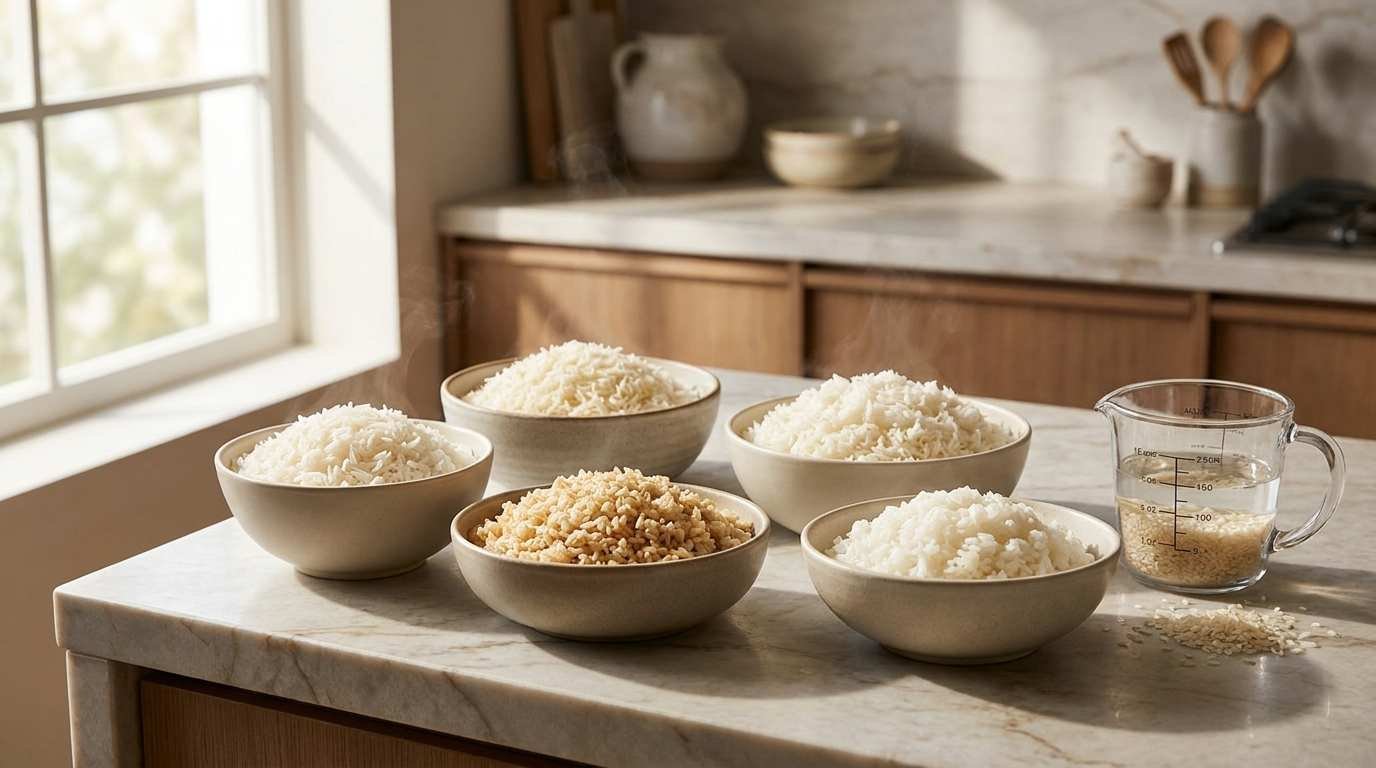
How to Season Rice
Plain rice provides a neutral base, which means seasoning depends on the finished dish.
Try:
- Salt and butter
- Garlic and herbs
- Chicken or vegetable stock
- Lemon zest
- Toasted spices
- Coconut milk
- Saffron
- Fresh cilantro
If you’re serving rice with a strongly seasoned main dish, keep the rice simpler.
How to Season Soup
Soup usually needs seasoning in stages.
Start by seasoning the vegetables as they cook. Add stock and other ingredients, then taste during simmering.
Remember that liquid evaporates.
A soup that tastes perfectly seasoned halfway through cooking can become too salty after significant reduction.
Add delicate ingredients such as fresh herbs and lemon juice toward the end.
How to Season Salads
Salad dressing usually needs four components:
Fat + acid + salt + flavor
For example:
- Olive oil
- Lemon juice
- Salt
- Dijon mustard
Whisk the dressing, taste it by itself, then toss it with the salad.
The dressing should taste slightly more seasoned than you expect because the vegetables and greens will dilute its impact.
How to Fix Over-Salted Food
Over-salting happens easily, especially when you season repeatedly during cooking.
The best fix depends on the dish.
Add More Unsalted Ingredients
For soup, stew, sauce, or casserole, increasing the amount of unsalted ingredients can distribute the salt across a larger volume.
Add Unsalted Liquid
Water, unsalted stock, cream, coconut milk, or another suitable liquid can reduce salt concentration.
Add Acidity Carefully
Lemon juice or vinegar can change your perception of saltiness, although acid doesn’t actually remove salt.
Add More Food
If practical, make another portion without salt and combine the two.
The popular idea that adding a potato magically removes excess salt doesn’t work as a reliable fix. The potato absorbs water along with other dissolved compounds.
How to Fix Bland Food
Bland food doesn’t always need more salt.
Taste first.
If the salt level seems right, try:
- Lemon juice
- Vinegar
- Fresh herbs
- Black pepper
- Chili flakes
- Garlic
- Toasted spices
- Parmesan
- Soy sauce
- Miso
- Tomato paste
- Mustard
A tiny amount of acidity can sometimes make a properly salted dish suddenly taste much more alive.
Common Seasoning Mistakes
Adding Everything at Once
Make one adjustment at a time.
Following Measurements Without Tasting
Recipes provide useful starting points, but ingredients vary in size, moisture, salt content, and intensity.
Taste as you cook.
Forgetting Evaporation
Sauces and soups become more concentrated as water evaporates.
Season cautiously before a long reduction.
Using Old Spices
Ground spices lose aroma over time.
If a jar smells faint when you open it, the spice probably won’t contribute much flavor.
Overusing Strong Ingredients
Soy sauce, fish sauce, vinegar, chili, smoked paprika, and hot spices can quickly dominate a dish.
Start small.
Forgetting the Final Seasoning
Some dishes need a finishing adjustment after cooking.
A squeeze of lemon, a pinch of salt, fresh herbs, or freshly ground pepper can make a noticeable difference.
Essential Tools for Better Seasoning
You don’t need a professional kitchen to season food well, but a few cooking basics make the process easier.
Measuring Spoons
Useful when you’re learning how much of a particular spice or seasoning you prefer.
Pepper Grinder
Freshly ground pepper provides more aroma than pepper that has been sitting pre-ground for a long time.
Fine Grater or Microplane
Useful for lemon zest, garlic, ginger, and hard cheeses.
Instant-Read Thermometer
Temperature control matters because properly cooked food gives you a better base for seasoning and finishing.
Small Tasting Spoons
Keep a few nearby while cooking. Tasting repeatedly from the cooking utensil makes it harder to judge each adjustment cleanly.
A Practical Seasoning Cheat Sheet
When you’re standing over a pot and the flavor feels wrong, use this quick guide:
| Problem | First adjustment to try |
| Flat | Salt |
| Too rich | Lemon juice or vinegar |
| Too salty | Dilute with unsalted ingredients |
| Too acidic | Add fat or a small amount of sweetness |
| Bland but salty enough | Herbs, spices, garlic, or umami |
| Too bitter | Fat, acidity, sweetness, or dilution |
| Too spicy | Dairy, fat, sweetness, or dilution |
| Lacks freshness | Lemon, lime, vinegar, or fresh herbs |
| Lacks depth | Stock, mushrooms, tomato paste, cheese, soy sauce, or miso |
| Needs more aroma | Fresh herbs, spices, zest, garlic, or pepper |
Frequently Asked Questions
What is the best way to season food?
Season gradually while cooking, taste frequently, and make small adjustments. Start with salt, then consider acidity, herbs, spices, heat, sweetness, and umami based on what the dish needs.
Should you season food before or after cooking?
Usually both. Seasoning during cooking distributes flavor throughout the dish, while finishing seasonings such as lemon juice, fresh herbs, pepper, and flaky salt can provide brightness and aroma just before serving.
How do I know if food needs more salt?
Taste a small portion. If the flavors seem muted or flat and there is no obvious issue with acidity or aroma, try adding a small amount of salt and taste again.
Why does my food taste bland even after adding salt?
The dish may need acidity, herbs, spices, aromatics, or umami rather than more salt. Lemon juice, vinegar, garlic, fresh herbs, toasted spices, Parmesan, mushrooms, or soy sauce can add another layer of flavor.
How can I fix food that is too salty?
Dilute the dish with unsalted ingredients or liquid when appropriate. For soups, sauces, and stews, increasing the total volume can reduce the concentration of salt.
When should I add herbs?
Tender fresh herbs are often best added near the end or immediately before serving. Dried herbs and sturdy herbs such as rosemary and thyme can usually tolerate longer cooking.
Does pepper go on food before or after cooking?
Either can work. Add pepper during cooking when you want it integrated into the dish, and finish with freshly ground pepper when you want a stronger pepper aroma.
How much seasoning should I use?
There is no universal amount because ingredients, serving sizes, cooking methods, and personal preferences vary. Start conservatively, taste, and adjust.
Key Takeaways
- Season throughout cooking rather than adding everything at the end.
- Taste before making adjustments.
- Salt is usually the first seasoning to check when food tastes flat.
- Use acidity to balance rich or heavy dishes.
- Fresh herbs often work best as finishing ingredients.
- Add strong ingredients such as vinegar, chili, soy sauce, and fish sauce gradually.
- Taste again after every meaningful adjustment.
- Use the final seasoning step to bring the entire dish into balance.
Great seasoning comes from paying attention. Taste your food, make one small change, taste again, and you’ll quickly develop a feel for what each dish needs.


Leave a Reply