
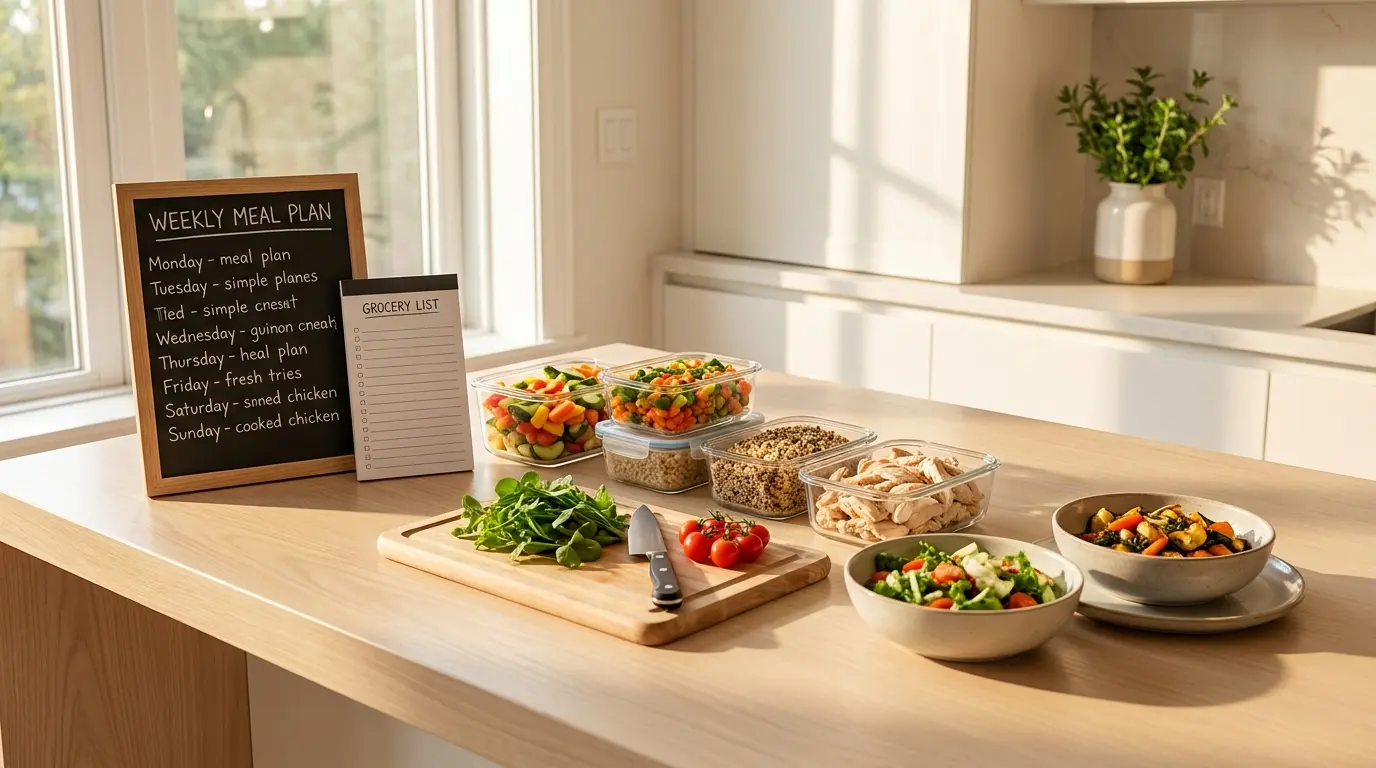

Meal planning for beginners doesn’t need to mean spending hours building complicated menus, cooking every meal in advance, or following a rigid diet. A good meal plan simply gives you a clear answer to one question: What are we eating, and what do I need to make it?
When you have a basic plan, grocery shopping becomes easier, food is less likely to go unused, and busy evenings feel much more manageable. The key is to create a system that fits your actual life rather than trying to organize every meal perfectly.
This beginner-friendly blueprint walks you through how to plan meals, build a practical grocery list, choose flexible recipes, prepare food efficiently, and adjust your plan when life inevitably changes.
Quick answer: The easiest way to start meal planning is to choose 3–5 dinners, add simple breakfasts and lunches, check what you already have, create one grocery list, and prepare a few ingredients ahead of time.
Table of Contents
What Is Meal Planning?
Meal planning is the process of deciding in advance what meals you’ll prepare and eat over a specific period, usually a week. It can include selecting recipes, checking your pantry, creating a shopping list, preparing ingredients, and deciding how leftovers will be used.
The goal isn’t perfection. The goal is reducing daily decisions.
A useful meal plan should help you:
- Know what you’re cooking each day
- Shop with a purpose
- Use ingredients across multiple meals
- Reduce last-minute takeout decisions
- Make better use of leftovers
- Save preparation time during busy days
- Avoid buying food you already have
You don’t need a new recipe every night. Repeating favorite meals is one of the easiest ways to make meal planning sustainable.
Why Meal Planning Makes Cooking Easier
Without a plan, dinner often starts with a familiar question: What should I make tonight?
That question can become surprisingly expensive in terms of time and energy. You may open the refrigerator, discover that you don’t have enough ingredients, make an unplanned grocery trip, or order food instead.
Meal planning moves that decision earlier, when you have more time to think.
The biggest benefits include:
Less decision fatigue: You make most food decisions once rather than every day.
Simpler shopping: Your grocery list is based on actual meals instead of random ingredients.
Better ingredient use: You can intentionally use the same vegetables, sauces, grains, or proteins in several meals.
More flexible cooking: A planned meal can often be changed without completely abandoning the plan.
Lower food waste: Ingredients are purchased with a purpose and assigned to meals.
More predictable weeknights: You already know what needs to happen when you’re short on time.
The best meal plan is therefore not the most elaborate one. It’s the one you can actually follow.
Meal Planning for Beginners Blueprint
If you’re completely new to meal planning, start with this simple seven-step system.
Step 1: Check Your Schedule First
Before choosing recipes, look at the week ahead.
Identify:
- Workdays
- School activities
- Appointments
- Travel
- Late evenings
- Social events
- Days when you’ll have more time to cook
This matters because your available cooking time should determine your meals.
For example:
| Day | Schedule | Best Meal Type |
|---|---|---|
| Monday | Busy evening | 20-minute meal |
| Tuesday | Normal schedule | Simple cooked dinner |
| Wednesday | Late finish | Leftovers |
| Thursday | More free time | Larger recipe |
| Friday | Social evening | Flexible/easy meal |
| Saturday | More time | Batch cooking |
| Sunday | Home day | Family meal + prep |
Don’t assign a complicated recipe to your busiest evening simply because it sounds good.
Step 2: Decide How Many Meals to Plan
Beginners often make the mistake of planning seven completely different dinners.
You don’t have to.
A more manageable starting point is 3–5 planned dinners per week.
The remaining meals can come from:
- Leftovers
- Pantry meals
- Freezer meals
- Simple sandwiches
- Eggs
- Salads
- Flexible grain bowls
- Eating out
This gives you structure without making the plan feel restrictive.
Step 3: Check What You Already Have
Before opening a grocery app or writing a shopping list, check your kitchen.
Look through:
- Refrigerator
- Freezer
- Pantry
- Spice cabinet
- Canned goods
- Dry grains and pasta
- Condiments
Build at least one meal around ingredients that need to be used soon.
This simple habit can save money and prevent forgotten food from sitting at the back of the refrigerator.
Step 4: Choose Your Meals
Select meals based on your schedule, cooking ability, available ingredients, and preferences.
A useful weekly combination might look like:
- 1 quick skillet meal
- 1 pasta or grain-based meal
- 1 sheet-pan dinner
- 1 slow-cooked or batch meal
- 1 leftovers night
Think in meal categories, not just individual recipes.
That makes your plan easier to adapt.
Step 5: Build Your Grocery List
Once your meals are selected, list every ingredient you’ll need.
Then remove anything you already have.
Organize the list by shopping area:
- Produce
- Meat and seafood
- Dairy
- Grains and bakery
- Canned foods
- Frozen foods
- Pantry staples
This makes grocery shopping faster and reduces impulse purchases.
Step 6: Prepare the Highest-Value Ingredients
You don’t need to cook an entire week’s worth of food.
Instead, prepare ingredients that can save time later.
For example:
- Wash and chop vegetables
- Cook a batch of rice
- Roast vegetables
- Prepare a sauce
- Marinate protein
- Cook beans
- Portion snacks
- Wash salad greens
This approach gives you the benefits of meal prep without turning Sunday into an all-day cooking project.
Step 7: Leave Room for Real Life
A meal plan should include flexibility.
Someone may work late. Plans may change. You may simply not feel like eating what you scheduled.
Don’t treat that as failure.
Move meals around, freeze something, use leftovers, or swap in a quick alternative.
A flexible meal plan is much easier to maintain than a perfect one.
Build Your First 7-Day Meal Plan
Here’s a simple example for someone starting from scratch.
| Day | Breakfast | Lunch | Dinner |
| Monday | Oatmeal + fruit | Leftover grain bowl | Chicken and roasted vegetables |
| Tuesday | Eggs + toast | Chicken wrap | Pasta with vegetables |
| Wednesday | Yogurt + fruit | Pasta leftovers | Bean and rice bowls |
| Thursday | Oatmeal + banana | Grain bowl | Sheet-pan chicken |
| Friday | Eggs + toast | Leftovers | Easy homemade pizza |
| Saturday | Yogurt + fruit | Sandwich + salad | Flexible family meal |
| Sunday | Eggs + toast | Leftovers | Soup + bread |
Notice that several ingredients appear more than once.
That’s intentional.
Chicken, vegetables, rice, bread, eggs, and yogurt can serve multiple meals without requiring seven separate shopping lists.
If you want a more structured approach, learning How to Create a Weekly Meal Plan can help you turn this basic framework into a repeatable weekly routine.
Choose Meals by Formula, Not Just Recipes
One of the most useful beginner skills is learning to build meals from components.
Instead of thinking:
“I need a recipe.”
Think:
Protein + vegetable + carbohydrate + flavor
For example:
Chicken + roasted broccoli + rice + lemon-garlic sauce
Or:
Beans + peppers + rice + salsa + avocado
Or:
Eggs + spinach + toast + herbs
This approach gives you more flexibility when ingredients change.
You can also create a basic “meal matrix”:
| Protein | Vegetable | Carb | Flavor |
| Chicken | Broccoli | Rice | Garlic sauce |
| Beans | Peppers | Tortillas | Salsa |
| Eggs | Spinach | Toast | Herbs |
| Tuna | Cucumber | Pasta | Lemon dressing |
| Lentils | Carrots | Rice | Curry spices |
This is especially useful for beginners because it teaches you how meals are constructed rather than making you dependent on exact recipes.
Use a Beginner Meal Prep Strategy
Meal planning and meal preparation aren’t exactly the same thing.
Meal planning answers what you’ll eat.
Meal prep answers what you’ll prepare ahead of time.
You can plan meals without doing extensive prep.
If you want to add preparation gradually, follow a simple Beginner Meal Prep Guide approach:
Start with 30–60 minutes
Choose only a few tasks.
For example:
- Wash vegetables.
- Chop onions and peppers.
- Cook one grain.
- Prepare one protein.
- Make one sauce.
- Portion snacks.
That’s enough to make several meals easier.
Prep components rather than complete meals
Cooking every meal completely in advance isn’t necessary.
Instead, prepare versatile components that can be combined differently throughout the week.
For example, roasted chicken can become:
- A dinner plate
- A wrap
- A salad topping
- A rice bowl
- A sandwich
This gives you variety without requiring completely different ingredients.
Keep Easy Make-Ahead Meals in Your Rotation
Some meals become even better when prepared ahead.
Good candidates include:
- Soups
- Stews
- Chili
- Casseroles
- Pasta sauces
- Grain bowls
- Baked dishes
- Breakfast muffins
- Overnight oats
When choosing Easy Make-Ahead Meals, consider how well the food holds its texture and flavor after refrigeration or freezing.
Meals with sauces and moist ingredients often reheat better than foods that depend on crisp textures.
A useful strategy is to prepare one larger meal and deliberately plan for leftovers.
For example:
Sunday: Make a large vegetable and chicken stew.
Monday: Serve it with bread.
Tuesday: Use the remaining chicken and vegetables in wraps or bowls.
One cooking session can therefore support multiple meals.
Batch Cooking for Beginners: Start Small
Batch cooking doesn’t mean preparing 21 identical meals.
For beginners, it can be as simple as doubling a recipe.
If you’re making soup, cook twice as much.
If you’re roasting vegetables, prepare an extra tray.
If you’re cooking rice, make enough for another meal.
This is the simplest form of Batch Cooking for Beginners because it increases your future options without dramatically increasing the work.
A simple batch-cooking formula
Cook once → portion → refrigerate or freeze → repurpose
For example:
- Cook a large batch of rice.
- Use some tonight.
- Refrigerate some for tomorrow.
- Freeze the rest if appropriate.
The important thing is to avoid cooking more food than you can realistically use.
Make Budget Meal Planning Part of the System
Meal planning can support a lower grocery bill, but only if your plan is designed around what you actually buy and eat.
Budget Meal Planning works best when you prioritize inexpensive, versatile ingredients.
Consider building meals around:
- Beans
- Lentils
- Eggs
- Rice
- Pasta
- Potatoes
- Oats
- Seasonal vegetables
- Frozen vegetables
- Canned tomatoes
- Affordable cuts of meat
Use ingredients multiple ways
Suppose you buy a large bunch of spinach.
Instead of using it for one meal, add it to:
- Omelets
- Pasta
- Grain bowls
- Soups
- Smoothies
The more uses an ingredient has, the easier it becomes to justify buying it.
Don’t confuse cheap with economical
A very cheap ingredient isn’t economical if you repeatedly throw it away.
The better question is:
“Will I actually use this?”
Buying food you love and can use in several meals is often more practical than buying large quantities simply because they’re discounted.
Try Pantry Meal Planning When the Refrigerator Is Empty
Your pantry can be a backup system for busy weeks.
Pantry Meal Planning means building meals around shelf-stable ingredients you already have.
Useful staples include:
- Pasta
- Rice
- Canned beans
- Lentils
- Canned tomatoes
- Tuna
- Broth
- Oats
- Peanut butter
- Flour
- Spices
- Cooking oils
- Vinegar
For example, canned tomatoes, pasta, beans, garlic, and spices can become a simple pantry dinner.
Rice, beans, canned vegetables, and spices can become a bowl.
Oats, fruit, and nut butter can become breakfast.
The goal isn’t to create gourmet meals from the pantry. It’s to have reliable options when shopping or cooking doesn’t go according to plan.
How to Reduce Food Waste With a Meal Plan
Meal planning can reduce waste, but only when the plan accounts for ingredient quantities and leftovers.
A simple system is to assign ingredients to multiple meals before buying them.
For example:
One bunch of herbs
- Monday: Chicken dinner
- Tuesday: Pasta
- Wednesday: Salad
One bag of carrots
- Monday: Roasted vegetables
- Thursday: Soup
- Saturday: Snack or side dish
This is one practical way to How to Reduce Food Waste while keeping meals varied.
Use the “eat first” zone
Keep foods that need to be used soon in one visible area of your refrigerator.
At the beginning of the week, identify:
- Opened produce
- Leftovers
- Fresh herbs
- Dairy nearing its date
- Cooked ingredients
Then give those foods priority.
A meal plan shouldn’t only tell you what to cook. It should also tell you what needs to be used first.
How to Cook Faster on Busy Weeknights
The fastest weeknight meal is often the one you’ve partially prepared before the evening begins.
If you’re learning How to Cook Faster on Busy Weeknights, focus on reducing the number of tasks rather than simply trying to cook faster.
Use these shortcuts:
Prepare ingredients together. Chop vegetables for multiple meals at once.
Choose one-pan meals. Fewer dishes usually means less cleanup.
Use leftovers intentionally. Plan a leftover night rather than treating leftovers as an afterthought.
Keep emergency meals available. Frozen vegetables, eggs, pasta, canned beans, and sauces can become a meal quickly.
Use repeatable recipes. Familiar meals require less mental effort.
Clean while food cooks. Small cleanup tasks during cooking prevent a large pile afterward.
The 15-minute backup meal
Every weekly plan should have at least one emergency dinner.
A simple example:
- Pasta
- Olive oil or sauce
- Frozen vegetables
- Beans or eggs
- Parmesan or another flavorful topping
It may not be your most exciting dinner of the week, but having a dependable fallback prevents one disrupted evening from ruining the entire meal plan.
Common Meal Planning Mistakes Beginners Make
1. Planning too many meals
Seven elaborate dinners can quickly become overwhelming.
Better: Start with three to five dinners.
2. Choosing recipes before checking your schedule
A 90-minute recipe doesn’t belong on your busiest night.
Better: Match cooking difficulty to your available time.
3. Buying ingredients for only one recipe
This can create leftovers that never get used.
Better: Choose ingredients that appear in multiple meals.
4. Preparing too much food
More meal prep isn’t automatically better.
Better: Start with a small amount and increase gradually.
5. Ignoring leftovers
If leftovers aren’t assigned a purpose, they can disappear into the refrigerator.
Better: Schedule a leftover lunch or dinner.
6. Making the plan too rigid
Life doesn’t follow a spreadsheet.
Better: Move meals around when necessary.
7. Trying to eliminate every convenience food
Convenience isn’t the enemy.
Pre-cut vegetables, frozen produce, canned beans, prepared sauces, and other shortcuts can make a sustainable meal plan easier.
A Simple Meal Planning Template
Use this framework each week:
1. Check your schedule
Identify your busiest and easiest days.
2. Inventory your kitchen
Look for food that should be used first.
3. Pick 3–5 dinners
Choose meals that match your available time.
4. Plan leftovers
Decide when leftovers will be eaten.
5. Choose simple breakfasts and lunches
Repeat meals if that makes the week easier.
6. Create your grocery list
Group ingredients by category.
7. Prep a few ingredients
Focus on the tasks that will save the most time.
8. Add one emergency meal
Keep a quick backup option available.
9. Review the week
At the end of the week, ask:
- Which meals worked?
- Which recipes took too long?
- What ingredients went unused?
- Which meals would I make again?
- What should I change next week?
This final review turns meal planning into a system that improves over time.
Key Takeaways
- Meal planning is about reducing daily decisions, not creating a perfect schedule.
- Beginners can start with just three to five planned dinners.
- Check your refrigerator, freezer, and pantry before shopping.
- Choose meals based on your actual schedule.
- Reuse ingredients across several meals to simplify shopping.
- Meal prep can focus on ingredients rather than complete meals.
- Batch cooking can be as simple as doubling a favorite recipe.
- Keep at least one quick emergency meal available.
- Plan leftovers intentionally instead of treating them as accidental extras.
- Review your plan each week and adjust it to fit your real life.
Final Thoughts
The best meal planning system is the one that makes cooking feel simpler rather than more complicated.
You don’t need color-coded spreadsheets, dozens of recipes, or an entire weekend dedicated to meal preparation. Start with a few meals you already enjoy, match them to your schedule, use ingredients more than once, and leave some flexibility for unexpected changes.
After a few weeks, you’ll begin to notice which meals are worth repeating, which ingredients consistently get used, and which preparation tasks genuinely save time.
That’s when meal planning stops being another chore and becomes a practical kitchen habit.
Frequently Asked Questions
How many meals should a beginner plan for?
Start with three to five dinners per week rather than planning every meal. Use leftovers, simple meals, or flexible options for the remaining days. This makes the system easier to maintain.
What is the easiest way to start meal planning?
Check your schedule and kitchen first, then choose three simple dinners, create one grocery list, and prepare a few ingredients ahead of time. Keep the first week deliberately simple.
Is meal prepping the same as meal planning?
No. Meal planning decides what you’ll eat, while meal prepping involves preparing ingredients or meals ahead of time. You can meal plan without doing extensive meal prep.
How can I meal plan on a tight budget?
Use affordable staples such as beans, lentils, eggs, rice, pasta, potatoes, oats, and seasonal or frozen vegetables. Choose ingredients that can be used across several meals.
How do I avoid getting bored with meal planning?
Don’t create completely different meals every day. Instead, reuse ingredients in different formats. For example, cooked chicken can become a bowl, wrap, salad, or sandwich.
Should I plan breakfast and lunch too?
You can, but beginners may find it easier to start with dinner. Once dinner planning becomes routine, add simple breakfasts and lunches if they would make your week easier.
What should I do when I don’t follow my meal plan?
Simply move the meal to another day, use it as leftovers, freeze it when appropriate, or replace it with your backup meal. A meal plan is a tool, not a rulebook.





Leave a Reply