
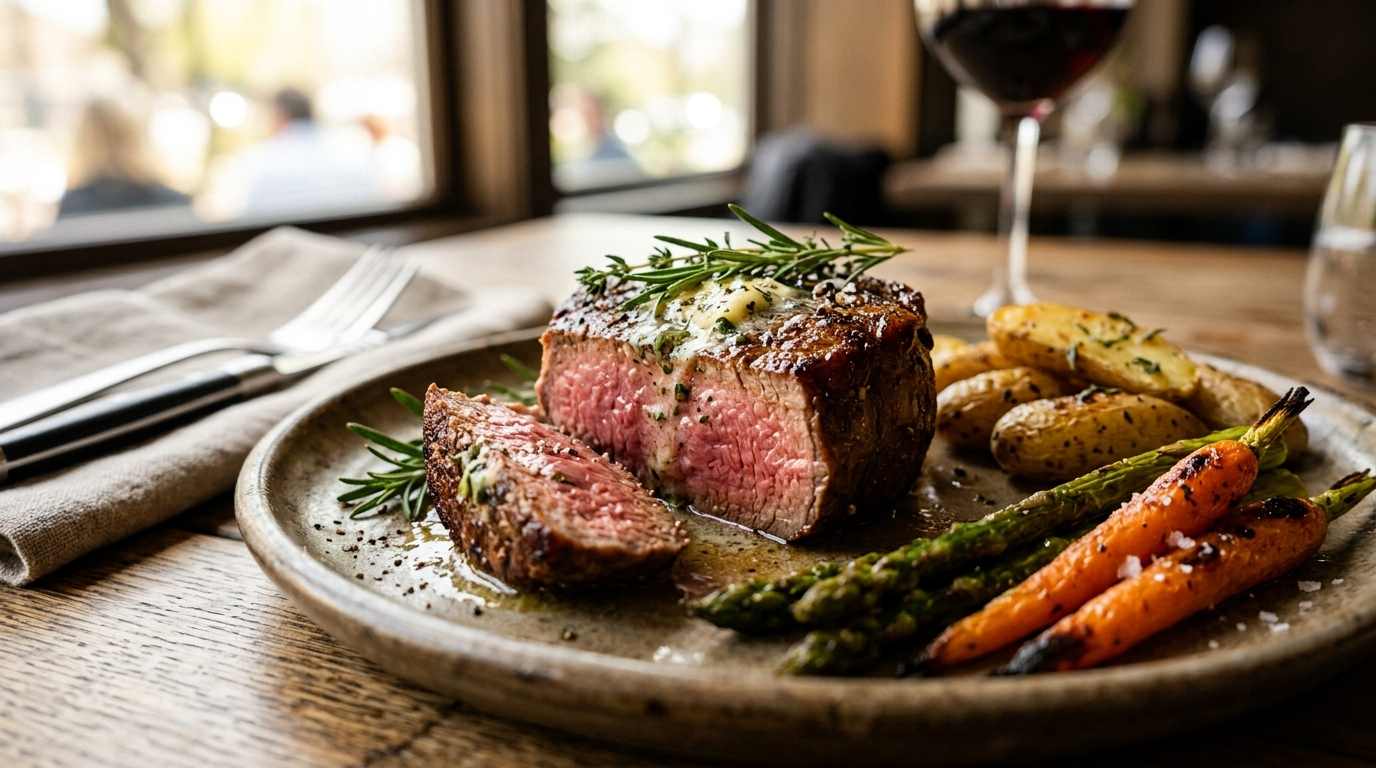

Few steaks deliver the combination of tenderness, richness, and elegance that filet mignon provides. Cut from the tenderloin, this premium steak is naturally lean, exceptionally tender, and mild enough to pair beautifully with everything from garlic butter to creamy sauces.
The secret to an irresistible tender filet mignon is not complicated. With the right steak, proper seasoning, high heat, and careful temperature control, we can create a restaurant-quality dinner in our own kitchen.
Table of Contents
What Makes Filet Mignon So Tender?
Filet mignon comes from the tenderloin, a muscle that does relatively little work compared with heavily used muscles in the animal. Because there is less connective tissue, the meat has an unusually soft texture.
Unlike fattier cuts such as ribeye, filet mignon does not contain extensive marbling. Its appeal comes primarily from its delicate texture and clean beef flavor.
That is also why we need to avoid overcooking it. Since filet mignon is naturally lean, excessive cooking can make it dry rather than juicy and tender.
For the best results, we want a beautifully browned exterior with a warm, juicy center.
Ingredients for Tender Filet Mignon
For a simple preparation, we only need a handful of ingredients:
- 2 filet mignon steaks, preferably about 1½ to 2 inches thick
- 1 tablespoon olive oil or another high-heat cooking oil
- Kosher salt
- Freshly ground black pepper
- 2 tablespoons unsalted butter
- 2 garlic cloves, lightly crushed
- 2–3 sprigs fresh thyme or rosemary
The quality of the beef makes a noticeable difference. We should choose steaks with an even thickness so they cook consistently.
If the steaks are very cold when they hit the pan, the exterior can brown before the center has warmed sufficiently. Allowing them to sit briefly at room temperature before cooking can help promote more even cooking.
How to Prepare Filet Mignon
Before cooking, we pat the steaks thoroughly dry with paper towels. Removing surface moisture is important because a dry surface browns more effectively.
We then season both sides generously with salt and freshly ground black pepper.
For a classic preparation, there is no need to cover the steak with a complicated marinade. Filet mignon already has a naturally delicate texture, so a simple seasoning lets the beef remain the star.
If desired, we can season the steaks shortly before cooking or salt them in advance and refrigerate them uncovered. Either approach can work well as long as the surface is dry before searing.
The Best Pan for Filet Mignon
A heavy skillet is ideal for cooking filet mignon. A cast-iron skillet is particularly useful because it retains heat exceptionally well and creates the intense searing temperature needed for a deeply browned crust.
We heat the skillet over medium-high to high heat until it is thoroughly hot. Then we add the oil.
The oil should shimmer without smoking excessively. Once the pan is hot, the steaks go directly into the skillet.
The immediate contact between the hot pan and the meat begins developing the flavorful browned crust that makes a perfectly cooked filet mignon so appealing.
How to Sear Filet Mignon
We place the steaks in the hot skillet and leave them undisturbed for several minutes. Moving them too frequently can interfere with browning.
Once the first side has developed a rich brown crust, we turn the steaks and sear the other side.
The exact cooking time depends on the thickness of the steak, the starting temperature of the meat, and the heat of the pan. For that reason, internal temperature is a better guide than time alone.
For a particularly thick filet, we can also sear the edges briefly to develop color all around the steak.
Add Garlic Butter for Extra Flavor
One of the easiest ways to make filet mignon even more flavorful is to finish it with garlic herb butter.
After the steaks have developed a good crust, we reduce the heat slightly and add butter, garlic, and fresh herbs to the skillet.
As the butter melts, we carefully spoon the foaming butter over the steaks repeatedly. This technique adds richness while allowing the garlic and herbs to perfume the butter.
Fresh thyme and rosemary both work beautifully with beef. We can use either one or combine them for a more aromatic finish.
The butter should become fragrant and lightly browned, but we should watch it carefully so the milk solids do not burn.
How to Know When Filet Mignon Is Done
A reliable instant-read thermometer is one of the best tools for cooking steak accurately.
For a medium-rare filet mignon, we generally aim for an internal temperature around 130–135°F after resting. Medium is typically around 135–145°F.
Because the temperature can continue rising slightly after the steak leaves the pan, we should account for carryover cooking rather than waiting until the final desired temperature is reached in the skillet.
The thermometer should be inserted horizontally into the thickest part of the steak for the most useful reading.
Cooking by temperature rather than appearance gives us much greater control and helps prevent an expensive steak from becoming overcooked.
Why Resting Filet Mignon Matters
After cooking, we transfer the steaks to a plate or cutting board and allow them to rest for several minutes.
Resting gives the juices time to redistribute through the meat. Cutting immediately can cause more of those flavorful juices to escape onto the plate.
We do not need to rest the steak for an excessively long period. A few minutes is generally sufficient while we finish the sauce, prepare the sides, or set the table.
Easy Sauces for Filet Mignon
Filet mignon works beautifully with both simple and luxurious sauces.
Garlic Herb Butter
The easiest option is the butter already used during cooking. We can spoon the warm garlic-herb butter over the steak immediately before serving.
Peppercorn Sauce
For a classic steakhouse presentation, we can prepare a creamy peppercorn sauce with crushed black peppercorns, stock, and cream.
Its rich texture and peppery flavor contrast nicely with the mild character of filet mignon.
Red Wine Sauce
A reduced red wine sauce provides deeper flavor without overwhelming the beef. We can reduce red wine with aromatics and stock, then finish the sauce with butter.
Mushroom Sauce
Sautéed mushrooms are another natural companion. Their savory flavor adds depth while maintaining the elegant character of the dish.
Best Side Dishes for Filet Mignon
Because filet mignon is rich but relatively delicate in flavor, we can pair it with sides that provide contrast.
Some excellent choices include:
- Creamy mashed potatoes
- Roasted baby potatoes
- Crispy smashed potatoes
- Roasted asparagus
- Green beans with garlic
- Sautéed mushrooms
- Creamed spinach
- Simple mixed greens
- Roasted Brussels sprouts
- Grilled vegetables
For a classic steakhouse dinner, filet mignon with mashed potatoes and roasted asparagus makes a particularly satisfying combination.
Common Mistakes to Avoid
Even a premium steak can lose its appeal if we make a few common cooking mistakes.
Starting with a wet steak: Excess moisture makes it harder to create a strong crust.
Using a cold pan: A properly heated skillet is essential for effective searing.
Constantly moving the steak: We should give the meat enough uninterrupted contact with the pan to develop browning.
Pressing down on the steak: This can force flavorful juices out of the meat.
Overcooking it: Filet mignon is lean, so excessive cooking can quickly reduce its tenderness.
Skipping the thermometer: Cooking time varies considerably. An instant-read thermometer provides much more reliable results.
Cutting immediately: Resting allows the steak to finish properly before slicing.
How to Serve Filet Mignon
Once rested, we can serve the filet mignon whole for an elegant presentation or slice it into thick pieces.
If slicing, we should use a sharp knife and cut across the grain. This creates shorter muscle fibers and can make each bite feel even more tender.
A small spoonful of garlic butter, pan sauce, or finishing salt can complete the presentation.
For an especially polished dinner, we can place the steak alongside a colorful vegetable and a creamy or crispy potato side. The result looks impressive without requiring complicated cooking techniques.
Can Filet Mignon Be Cooked Ahead?
Filet mignon is at its best immediately after cooking. However, leftovers can be refrigerated in an airtight container and used later.
Rather than aggressively reheating the steak, we can warm it gently to help preserve its texture. Leftover filet can also be sliced thinly and served over salads, sandwiches, grain bowls, or roasted vegetables.
For the best original texture, though, cooking only the amount we plan to eat is preferable.
The Secret to Irresistible Tender Filet Mignon
Creating irresistible tender filet mignon comes down to controlling a few important details: choose a quality steak, dry the surface, season it well, use a very hot pan, develop a deep crust, monitor the internal temperature, and allow the meat to rest.
From there, garlic, butter, and fresh herbs provide all the extra flavor we need for an elegant meal.
With this straightforward method, we can turn a few quality ingredients into a tender, juicy, beautifully seared filet mignon that feels worthy of a special occasion while remaining simple enough for a weeknight dinner.






Leave a Reply