
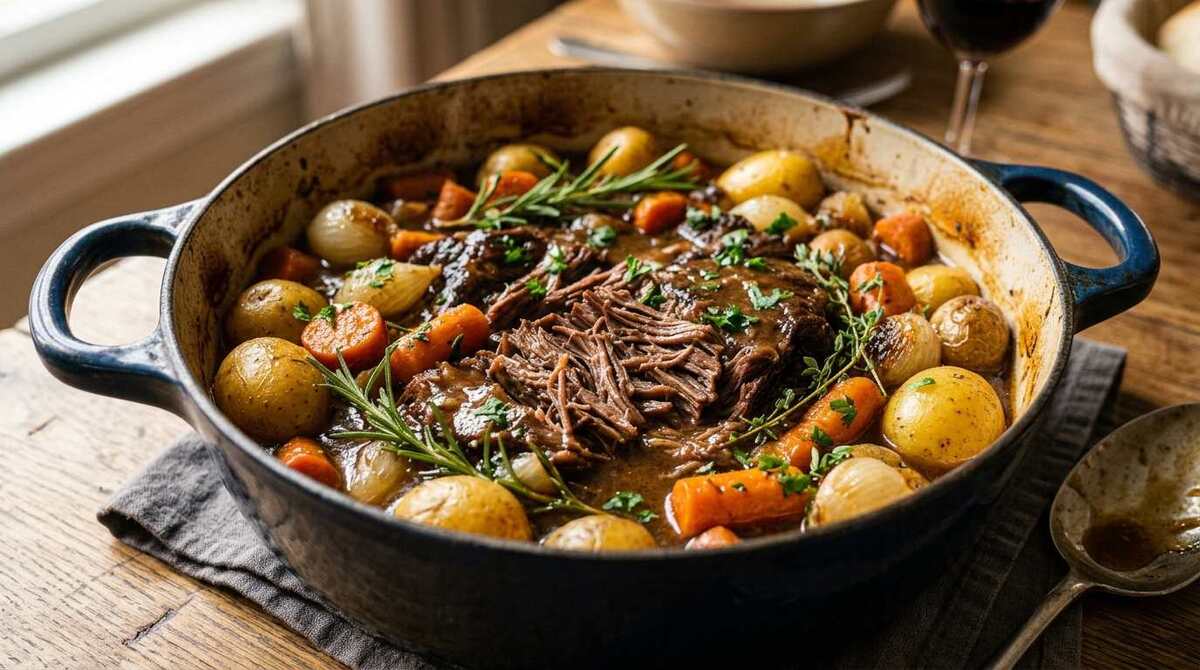

A delicious easy pot roast recipe is one of those comforting meals that can turn a few simple ingredients into a hearty dinner everyone looks forward to. With tender beef, flavorful vegetables, savory broth, and a rich cooking sauce, pot roast is ideal for a relaxed family meal, Sunday dinner, or a make-ahead dish for busy weekdays.
The best part is that we do not need complicated techniques or a long ingredient list. With the right cut of beef, a few aromatic vegetables, and gentle cooking, we can create a tender, flavorful pot roast that practically falls apart when served.
Table of Contents
What Makes a Great Easy Pot Roast?
A great pot roast depends on three simple things: the right beef, enough cooking liquid, and plenty of time.
For the beef, we can use a chuck roast, which is one of the most reliable choices because it contains enough connective tissue and marbling to become exceptionally tender during slow cooking. As the roast cooks, the connective tissue gradually breaks down, creating the soft texture we expect from a classic pot roast.
We also want vegetables that can stand up to longer cooking. Carrots, onions, and potatoes are traditional choices because they absorb the savory juices while contributing their own flavor.
Finally, slow cooking gives the meat time to transform. Rather than rushing the process with high heat, we cook the roast gently until it becomes tender enough to cut with a fork.
Ingredients for an Easy Pot Roast
For a comforting family-sized pot roast, we can use:
- 3 to 4 pounds beef chuck roast
- 2 tablespoons olive oil
- 1 large onion, sliced or roughly chopped
- 4 carrots, peeled and cut into large pieces
- 1½ pounds baby potatoes or chopped potatoes
- 3 to 4 garlic cloves, minced
- 2 cups beef broth
- 1 tablespoon tomato paste
- 1 teaspoon dried thyme
- 1 teaspoon dried rosemary
- 1 bay leaf
- Salt, to taste
- Black pepper, to taste
We can also add mushrooms, celery, Worcestershire sauce, or a small amount of red wine if we want a deeper and more complex flavor.
How to Make Delicious Easy Pot Roast
1. Prepare the Beef
We begin by removing the roast from the refrigerator and patting it dry with paper towels. Removing excess surface moisture helps the beef develop a better browned crust.
We season the entire roast generously with salt and freshly ground black pepper, making sure all sides are covered.
Allowing the seasoned beef to sit for a short time while we prepare the vegetables can also help the seasoning distribute more evenly.
2. Brown the Roast
We heat the olive oil in a large Dutch oven or heavy oven-safe pot over medium-high heat.
Once the oil is hot, we carefully place the roast into the pot. We brown each side for several minutes until a deep golden-brown crust develops.
This step is worth taking seriously because the browned surface adds tremendous depth to the finished dish.
Once all sides are browned, we transfer the beef to a plate.
3. Cook the Aromatic Vegetables
We add the chopped onion to the same pot and cook it for a few minutes.
As the onion softens, it picks up the flavorful browned bits left behind by the beef. We then add the garlic and cook briefly until fragrant.
Next, we stir in the tomato paste. Cooking it for a minute helps develop a richer flavor before the liquid is added.
4. Add the Cooking Liquid
We slowly pour the beef broth into the pot, scraping the bottom with a wooden spoon.
Those browned bits are packed with flavor, so we want to incorporate them into the cooking liquid rather than leave them stuck to the bottom of the pot.
We add the thyme, rosemary, and bay leaf, then return the browned roast to the pot.
The liquid should come partway up the sides of the beef rather than completely cover it.
5. Add the Vegetables
We arrange the carrots and potatoes around the roast.
If we are using particularly large potatoes, we cut them into similar-sized pieces so they cook more evenly.
The vegetables will absorb the savory broth as they cook, becoming tender and flavorful alongside the beef.
6. Slow Cook the Pot Roast
We cover the pot with a tight-fitting lid and place it in a preheated oven at approximately 325°F (165°C).
The roast generally needs around 3 to 4 hours, depending on its size, shape, and the characteristics of the oven.
Rather than relying exclusively on cooking time, we check the beef for tenderness. When a fork or knife slides easily into the roast and the meat begins to pull apart, it is ready.
If the beef still feels firm, we continue cooking and check again later.
Why Low and Slow Cooking Works
Pot roast contains connective tissue that needs time to break down.
Cooking the meat slowly allows this connective tissue to soften gradually. As it breaks down, the roast becomes increasingly tender and develops the rich texture associated with a traditional pot roast.
This is why we should not worry if the meat seems firm after the first couple of hours. Pot roast often becomes tender toward the end of the cooking process, rather than gradually becoming fork-tender from the beginning.
How to Know When Pot Roast Is Done
The most useful test is tenderness.
We insert a fork into the thickest part of the roast. If the fork slides in easily and the meat separates with little resistance, the roast is ready.
We can also use an instant-read thermometer, but temperature alone does not always tell us whether a braised roast has reached the ideal texture. For pot roast, tenderness matters just as much as temperature.
Making a Simple Pot Roast Gravy
The cooking liquid left in the pot can become an excellent gravy.
Once the beef and vegetables are removed, we can skim excess fat from the surface. We then bring the liquid to a gentle simmer.
For a thicker gravy, we can mix a small amount of cornstarch with cold water to create a slurry. We gradually whisk it into the simmering liquid until the desired consistency is reached.
Alternatively, we can make a traditional flour-based gravy with some of the cooking juices and a small amount of butter.
The finished gravy should be savory, rich, and smooth, with enough flavor to complement both the beef and vegetables.
Tips for the Most Tender Pot Roast
Choose Chuck Roast
Chuck roast is particularly well suited to slow cooking. Its marbling and connective tissue help produce a tender result when cooked properly.
Do Not Skip Browning
Browning the beef first creates a flavorful exterior and gives the cooking liquid more depth.
Keep the Pot Covered
A tight lid helps retain moisture during the long cooking process. If too much liquid evaporates, the cooking environment can become less effective.
Avoid Cutting the Roast Too Early
When the roast comes out of the oven, we let it rest for approximately 15 to 20 minutes before slicing or shredding.
Resting allows the juices to settle and makes the meat easier to serve.
Cut Vegetables Into Large Pieces
Small vegetable pieces can become overly soft during several hours of cooking. Larger chunks hold their shape better and provide a more satisfying texture.
Easy Pot Roast Variations
We can easily customize this recipe according to what we have available.
For a richer flavor, we can add mushrooms and celery. A splash of Worcestershire sauce adds savory depth, while red wine can create a more complex braising liquid.
For a rustic version, we can leave the potatoes unpeeled after washing them thoroughly.
We can also replace some of the potatoes with parsnips or sweet potatoes for a slightly different flavor profile.
If we prefer a garlic-forward roast, additional garlic cloves can be added directly to the cooking liquid.
Can We Make Pot Roast in a Slow Cooker?
Yes. Pot roast works particularly well in a slow cooker.
We brown the beef first if possible, then transfer it to the slow cooker with the onions, carrots, potatoes, garlic, herbs, and broth.
We cook it on low until the beef becomes fork-tender, usually several hours depending on the size of the roast and the slow cooker.
The same principle applies: we should judge the roast by tenderness rather than simply stopping the cooking process at a predetermined time.
Can We Make Pot Roast Ahead of Time?
Pot roast is an excellent make-ahead meal.
We can cook the roast completely, allow it to cool, and refrigerate it with the cooking liquid. The flavors often become even more developed after resting overnight.
When reheating, we gently warm the meat in its cooking liquid until heated through.
This makes pot roast especially convenient for family gatherings, weekend meal preparation, and busy weeknight dinners.
What to Serve With Pot Roast
Pot roast already includes meat and vegetables, but we can add a few simple side dishes.
Creamy mashed potatoes work beautifully with the savory gravy. We can also serve the meal with green beans, roasted vegetables, a crisp garden salad, or warm dinner rolls.
For a particularly comforting dinner, we can spoon the rich cooking juices over the beef and vegetables just before serving.
How to Store Leftover Pot Roast
We transfer leftover beef and vegetables to an airtight container and refrigerate them promptly.
Stored properly in the refrigerator, leftovers can provide convenient meals for the next few days. We can gently reheat individual portions in a saucepan or microwave, preferably with some of the cooking liquid to prevent the beef from drying out.
Pot roast can also be shredded and used in sandwiches, wraps, tacos, or hearty bowls.
Final Thoughts
This delicious easy pot roast recipe proves that a satisfying homemade dinner does not require complicated ingredients or advanced cooking skills.
With a well-marbled chuck roast, flavorful vegetables, aromatic herbs, and slow cooking, we can create a meal that is tender, hearty, and full of comforting flavor.
The key is patience. Once the roast is properly browned and placed in its flavorful cooking liquid, gentle heat does most of the work. After several hours, we are rewarded with tender beef, soft vegetables, and a rich gravy that brings everything together.
For an easy family dinner that feels special without being difficult, classic pot roast remains one of the most dependable recipes we can make.




Leave a Reply