
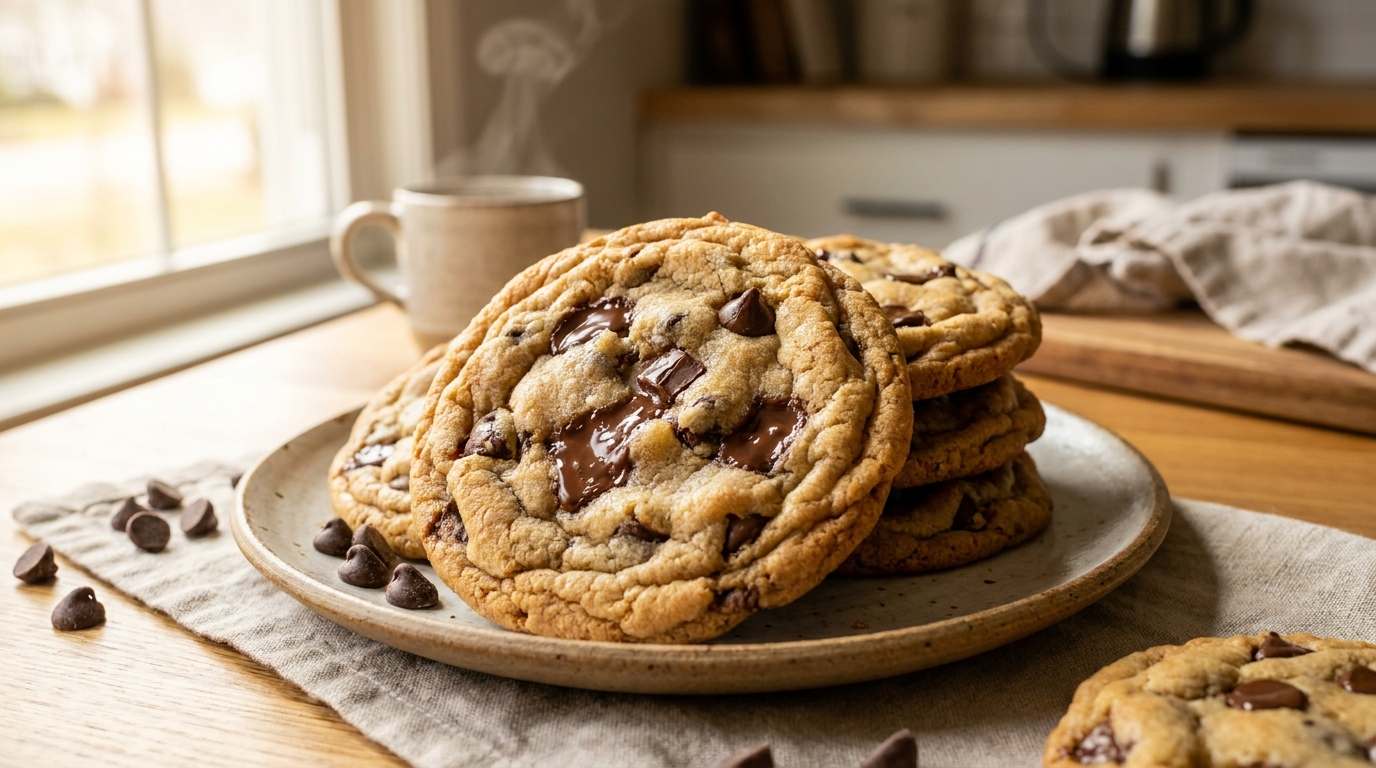

There is something especially satisfying about a big fat chewy chocolate chip cookie. The outside should have just enough golden color and crispness to provide contrast, while the center stays thick, soft, buttery, and wonderfully chewy. With the right balance of flour, butter, brown sugar, chocolate, and baking time, we can create bakery-style cookies at home without complicated techniques.
This recipe focuses on everything that makes a chocolate chip cookie memorable: a thick center, chewy texture, crisp edges, generous chocolate chips, and rich buttery flavor. We also use a few simple preparation techniques to help the cookies hold their shape and stay soft after cooling.
Table of Contents
What Makes a Big Fat Chewy Chocolate Chip Cookie So Good?
A truly excellent chewy chocolate chip cookie depends more on proportions and technique than on a long ingredient list.
We want enough flour to give the cookie structure without making it cakey. Brown sugar contributes moisture and chewiness, while granulated sugar encourages those lightly crisp edges. Butter provides richness and helps create the characteristic spread and browned flavor.
The chocolate is equally important. Large chocolate chips or chopped chocolate give us pockets of melted chocolate throughout the cookie rather than tiny pieces that disappear into the dough.
The goal is a cookie that looks substantial before we even take the first bite. Once baked, it should remain thick rather than becoming a thin, flat disc.
Ingredients for Thick Chewy Chocolate Chip Cookies
For approximately 10–12 large cookies, we need:
- 2 ¼ cups all-purpose flour
- 1 teaspoon baking soda
- ½ teaspoon salt
- 1 cup unsalted butter, softened
- ¾ cup packed brown sugar
- ½ cup granulated sugar
- 2 large eggs
- 2 teaspoons vanilla extract
- 2 cups chocolate chips or roughly chopped chocolate
- Optional: ½ cup chopped walnuts or pecans
- Optional: flaky sea salt for finishing
The combination of brown sugar and white sugar is particularly useful here. Brown sugar keeps the centers moist and chewy, while white sugar helps the edges develop a pleasant golden texture.
For an even richer cookie, we can replace part of the chocolate chips with chopped semisweet or bittersweet chocolate. Irregular pieces create a more bakery-style appearance because some chocolate melts into the dough while larger pieces remain as distinct pockets.
How to Make Big Fat Chewy Chocolate Chip Cookies
1. Prepare the Dry Ingredients
We begin by whisking the flour, baking soda, and salt together in a medium bowl.
This simple step distributes the baking soda and salt evenly throughout the flour. We do not want concentrated pockets of baking soda because they can affect both flavor and texture.
The mixture should be ready before we start combining the wet ingredients.
2. Cream the Butter and Sugars
In a large mixing bowl, beat the softened butter with the brown sugar and granulated sugar until the mixture becomes smooth and creamy.
We do not need to whip the mixture excessively. The objective is to combine the ingredients thoroughly while creating a smooth cookie base.
If the butter is too cold, the mixture can remain lumpy. If it is extremely soft or partially melted, the finished cookies may spread too quickly in the oven.
Softened butter—not hot melted butter—is the easiest choice when we want thick cookies with reliable shape.
3. Add the Eggs and Vanilla
Add the eggs one at a time, mixing after each addition. Then add the vanilla extract.
The mixture may look slightly loose at this stage, which is completely normal.
We should scrape down the sides of the bowl so that the butter and sugar mixture is evenly incorporated before adding the flour.
4. Add the Flour Mixture
Gradually add the dry ingredients to the wet mixture.
We mix only until the flour is incorporated. Overmixing can develop too much gluten and produce a tougher cookie.
Once there are no obvious streaks of flour, we stop mixing.
5. Fold in Plenty of Chocolate
Add the chocolate chips or chopped chocolate and fold them gently into the dough.
For big, fat chocolate chip cookies, we should not be shy with the chocolate. Generous chocolate distribution ensures that nearly every bite contains melted chocolate.
If we are adding nuts, fold them in at the same time.
The Secret to Thick Bakery-Style Cookies
One of the most important steps is chilling the dough.
After mixing, cover the dough and refrigerate it for at least 30 minutes. For an even deeper flavor and thicker texture, we can chill it for several hours or overnight.
Chilled dough is firmer and spreads more slowly in the oven. This helps us achieve the characteristic thick, chunky cookie shape.
If we bake very soft dough immediately, the butter can melt rapidly before the cookie has enough structure to hold itself together. The result can be flatter than intended.
Portion the Dough Generously
For large cookies, we divide the dough into substantial portions rather than making small tablespoon-sized balls.
We can use a large cookie scoop or kitchen scale to keep the portions consistent.
Shape each portion into a tall, rounded mound rather than a completely flattened ball. A slightly taller mound encourages a thicker center.
For an especially attractive bakery appearance, we can press a few extra chocolate chips onto the tops of the dough balls before baking.
How to Bake Big Fat Chewy Cookies
Preheat the oven to 350°F (175°C) and line a baking sheet with parchment paper.
Place the dough portions several inches apart because the cookies will spread as they bake.
Bake until the edges are golden brown and set while the centers still appear slightly soft.
This is one of the most important visual cues in the recipe.
We should not wait for the entire cookie to look completely baked. The residual heat from the baking sheet will continue cooking the center after the cookies come out of the oven.
For large cookies, baking time will depend on the exact size of the dough portions and the individual oven. We should begin checking early rather than relying entirely on the clock.
Why We Should Not Overbake the Cookies
A chewy cookie can quickly become hard if it stays in the oven too long.
When the edges are golden and the centers look slightly underdone, remove the baking sheet from the oven and allow the cookies to rest on it for several minutes.
During this resting period, the cookies continue to set.
This creates the contrast we want: slightly crisp edges with a soft, chewy middle.
If we bake until the centers look completely firm, the finished cookies may lose much of their softness once they cool.
Add Flaky Sea Salt for a Bakery-Style Finish
A small sprinkle of flaky sea salt can dramatically improve a chocolate chip cookie.
The salt balances the sweetness of the brown sugar and chocolate while emphasizing the buttery flavor.
We add it immediately after the cookies come out of the oven, while the chocolate is still soft enough for the flakes to adhere.
We do not need much. A light finishing sprinkle is enough.
How to Keep Chocolate Chip Cookies Soft
Freshly baked cookies are at their best when they remain soft and chewy in the center.
Once completely cooled, store them in an airtight container at room temperature.
A well-sealed container prevents moisture from escaping and helps preserve the chewy texture.
We should allow the cookies to cool before sealing them. Packing extremely hot cookies into a container can trap excessive condensation and change the texture.
For longer storage, the baked cookies can also be frozen in an airtight freezer-safe container.
Can We Freeze Chocolate Chip Cookie Dough?
Absolutely.
Freezing portions of cookie dough is one of the easiest ways to have fresh big chewy chocolate chip cookies whenever we want them.
We portion the dough first and arrange the pieces on a parchment-lined tray. Freeze them until firm, then transfer the portions to a freezer-safe bag or container.
When ready to bake, we can bake the portions directly from frozen, allowing additional baking time as needed.
This method is particularly useful when we want to prepare the dough in advance rather than baking the entire batch at once.
Common Mistakes That Make Cookies Flat
Using Warm or Melted Butter
Very warm butter can cause the dough to spread too quickly.
For thick cookies, softened butter is generally easier to control.
Skipping the Chilling Step
If the dough is extremely soft, chilling it can make a noticeable difference in the final shape.
A short refrigeration period allows the butter to firm up and gives the flour time to hydrate.
Adding Too Much Flour
It may be tempting to add additional flour when the dough feels soft, but too much flour can produce dense, dry cookies.
We should measure flour carefully and avoid packing it tightly into measuring cups.
Overbaking
This is perhaps the easiest mistake to make.
Cookies often look softer in the center than we expect when they are ready to come out of the oven. That softness is exactly what helps produce a chewy interior after cooling.
How to Make the Cookies Even More Chocolatey
For serious chocolate lovers, we can combine different forms of chocolate.
Try using:
- Semisweet chocolate chips
- Dark chocolate chunks
- Milk chocolate pieces
- Mini chocolate chips
- Chopped chocolate bars
A mixture of chocolate sizes creates a more interesting texture. Small chips distribute throughout the dough, while larger chunks create dramatic pools of melted chocolate.
For a sophisticated flavor, dark chocolate paired with flaky sea salt works especially well.
Optional Add-Ins for Big Chewy Cookies
Although a classic chocolate chip cookie is hard to beat, a few additions can create interesting variations.
Toasted pecans or walnuts add crunch and a nutty flavor.
Coconut gives the cookies a slightly chewy texture and subtle sweetness.
Espresso powder can intensify the chocolate flavor without making the cookies taste strongly like coffee.
A small amount of cinnamon can add warmth, especially when paired with dark chocolate.
The key is moderation. We want the additions to complement the cookie rather than overwhelm the buttery chocolate-chip base.
How to Get Perfectly Round Cookies
If the cookies spread into irregular shapes, we can gently reshape them while they are still hot.
Immediately after removing the baking sheet from the oven, place a round cookie cutter or similarly sized circular object around each cookie and gently nudge the edges inward.
Another simple technique is to use a spoon to push the edges toward the center.
This creates a neat, bakery-style appearance without changing the soft interior.
Best Way to Serve Big Fat Chewy Chocolate Chip Cookies
These cookies are excellent while still slightly warm, particularly when the chocolate remains melted.
For an indulgent dessert, serve one with a scoop of vanilla ice cream. The contrast between the warm cookie and cold ice cream makes a simple chocolate chip cookie feel like a complete dessert.
We can also serve them with coffee, tea, hot chocolate, or a cold glass of milk.
For a dessert platter, smaller versions can be made from the same dough and arranged with other homemade cookies.
Final Tips for the Best Chewy Chocolate Chip Cookies
The best results come from paying attention to a few simple details:
- Use softened butter rather than extremely warm butter.
- Measure flour accurately.
- Use plenty of good-quality chocolate.
- Chill the dough before baking.
- Make the dough portions large and tall.
- Leave enough space between cookies.
- Remove them while the centers are still slightly soft.
- Let the cookies finish setting on the baking sheet.
- Add flaky sea salt while they are warm if desired.
- Store completely cooled cookies in an airtight container.
The result is a big, thick, buttery, chewy chocolate chip cookie with golden edges and a soft center packed with melted chocolate. By controlling the dough temperature, portion size, and baking time, we can consistently create cookies with the substantial texture and appearance that make bakery-style chocolate chip cookies so appealing.








Leave a Reply