
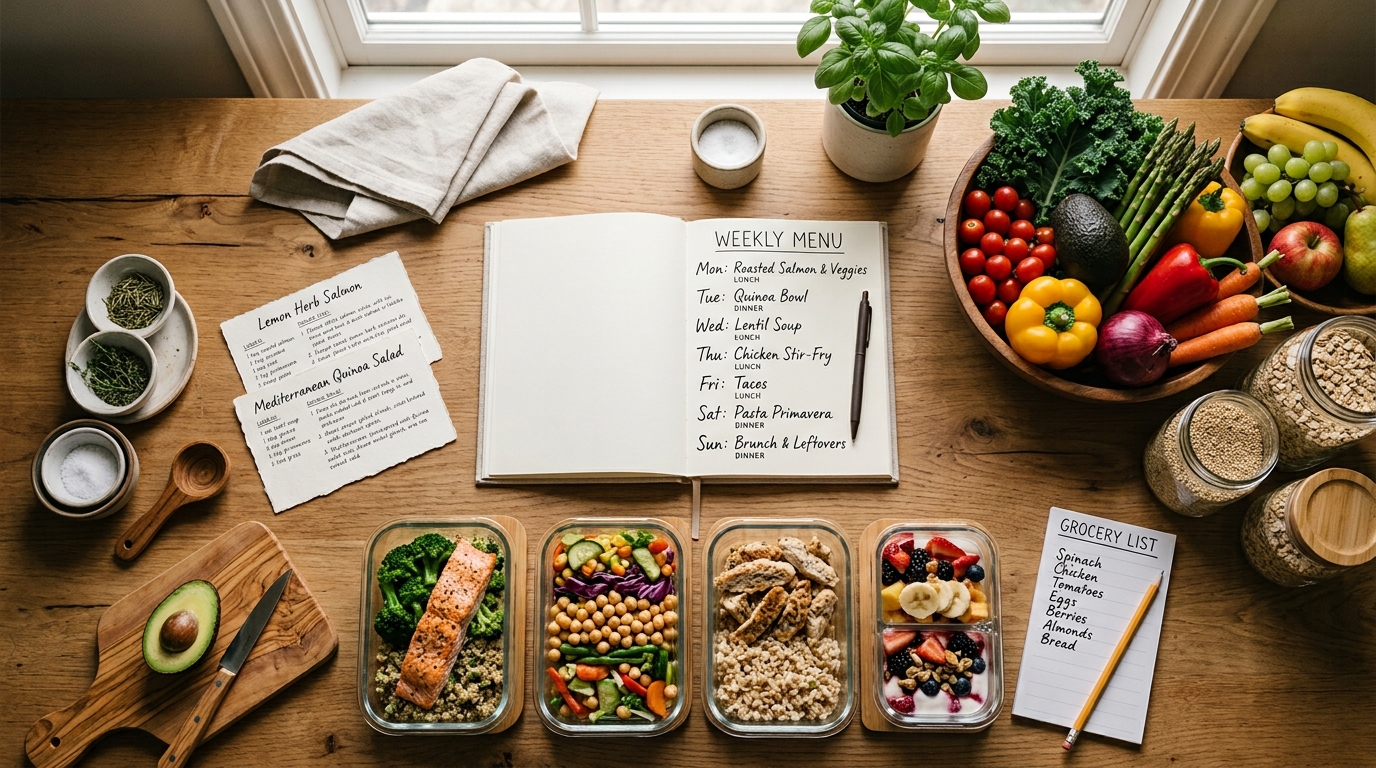

Creating a weekly meal plan gives us a practical way to organize meals, simplify grocery shopping, reduce food waste, and make everyday cooking less stressful. Instead of deciding what to eat every day, we can make those decisions once and build a realistic plan around our schedule, budget, preferences, and available ingredients.
A good meal plan does not need to include complicated recipes or seven completely different dinners. The most useful plan is one that we can actually follow. By combining familiar meals, planned leftovers, flexible ingredients, and a manageable grocery list, we can create a system that saves time without making meals feel repetitive.
Table of Contents
What Is a Weekly Meal Plan?
A weekly meal plan is a simple schedule that outlines what we intend to eat throughout the week. It can cover breakfast, lunch, dinner, snacks, or only the meals that require preparation.
For example, a basic weekly meal plan might include oatmeal or eggs for breakfast, prepared salads or leftovers for lunch, and several planned dinners throughout the week. We can also leave one or two meals flexible for busy evenings, dining out, or unexpected changes.
The goal is not perfection. The goal is to have enough structure that we rarely reach the end of the day wondering what to cook.
Start by Checking the Week Ahead
Before choosing recipes, we should look at the upcoming week.
Consider work schedules, school activities, appointments, social plans, travel, exercise routines, and evenings when there will be little time for cooking. This step makes the meal plan more realistic because it connects meals to the actual demands of the week.
For example, we might plan a slow-cooked meal on a day when dinner can be prepared in advance. On a particularly busy evening, we can choose a quick pasta dish, stir-fry, soup, or another meal that requires minimal preparation.
We should also identify nights when leftovers can be used. If we know Tuesday will be busy, cooking extra food on Monday can give us an easy lunch or dinner without requiring another full cooking session.
Take Inventory Before Planning Meals
One of the easiest ways to reduce grocery costs is to check what we already have.
Look through the refrigerator, freezer, pantry, and cupboards. Make a quick list of ingredients that should be used soon, including vegetables, cooked grains, canned foods, sauces, dairy products, frozen ingredients, and other perishables.
We can then build several meals around those ingredients.
For example, leftover vegetables might become part of a soup, omelet, grain bowl, casserole, or stir-fry. Cooked chicken can be used in sandwiches, salads, wraps, pasta, or rice bowls.
This approach helps us avoid buying ingredients that are already sitting in the kitchen.
Choose a Simple Meal Planning Structure
We do not need to plan every meal with the same level of detail.
A practical approach is to divide the week into breakfast, lunch, dinner, and optional snacks.
For breakfast, we can rotate a few reliable options such as:
- Oatmeal with fruit and nuts
- Eggs with whole-grain toast
- Yogurt with fruit
- Smoothies
- Overnight oats
- Whole-grain pancakes
Lunch can include leftovers, salads, sandwiches, wraps, soups, grain bowls, or prepared vegetables with a protein source.
Dinner can have more variety, but it is still useful to establish a simple rotation.
For example:
- Monday: Chicken and roasted vegetables
- Tuesday: Vegetable pasta
- Wednesday: Lentil soup and bread
- Thursday: Rice bowls with vegetables
- Friday: Homemade pizza
- Saturday: Grilled chicken salad
- Sunday: Casserole or slow-cooked meal
This structure gives us variety without requiring seven completely unrelated shopping lists.
Use a Weekly Meal Planning Template
A basic template can make the process much faster.
| Day | Breakfast | Lunch | Dinner |
|---|---|---|---|
| Monday | Oatmeal and fruit | Chicken salad | Roasted chicken and vegetables |
| Tuesday | Eggs and toast | Leftovers | Vegetable pasta |
| Wednesday | Yogurt and fruit | Soup | Lentil bowls |
| Thursday | Overnight oats | Grain bowl | Stir-fry |
| Friday | Smoothie | Leftovers | Homemade pizza |
| Saturday | Eggs and fruit | Salad | Grilled chicken and vegetables |
| Sunday | Pancakes | Soup or leftovers | Casserole |
We can customize this template according to our household, dietary preferences, cooking skills, and schedule.
The important part is having a clear plan before grocery shopping.
Plan Around Ingredients Instead of Individual Recipes
One of the most efficient meal planning techniques is to purchase ingredients that can work in multiple meals.
Instead of buying ingredients for seven unrelated recipes, we can choose a few versatile staples.
For example, a batch of roasted vegetables could be served with chicken one evening, added to a grain bowl the next day, and incorporated into an omelet later in the week.
Similarly, cooked rice can become a side dish, a stir-fry base, or part of a lunch bowl.
This approach reduces waste and makes cooking easier because ingredients are already prepared or familiar.
Plan for Leftovers
Leftovers are one of the biggest advantages of a weekly meal plan.
When preparing dinner, we can intentionally cook extra portions rather than treating leftovers as an accident. Those portions can become the next day’s lunch or provide a quick dinner later in the week.
However, we should avoid planning more leftovers than the household will actually eat. Food that remains untouched is still food waste.
A useful strategy is to designate specific meals for leftovers. For example, Monday dinner can provide Tuesday lunch, while Wednesday dinner can provide Thursday lunch.
This creates a predictable system without requiring additional cooking every day.
Create a Grocery List From the Meal Plan
Once the meals are selected, we can turn the plan into a grocery list.
Rather than writing ingredients randomly, grouping them by store section makes shopping easier.
Produce
- Fresh vegetables
- Leafy greens
- Potatoes
- Onions
- Garlic
- Fresh fruit
Protein
- Chicken
- Eggs
- Beans
- Lentils
- Fish or other preferred protein sources
Grains and Bakery
- Rice
- Pasta
- Oats
- Bread
- Tortillas
Dairy and Refrigerated Foods
- Yogurt
- Milk
- Cheese
- Other refrigerated staples
Pantry
- Canned tomatoes
- Beans
- Broth
- Spices
- Cooking oils
- Sauces
Before adding anything to the list, we should check whether we already have it at home.
Choose Meals That Match Our Cooking Time
A meal plan should reflect the amount of time we actually have available.
If we only have 20 minutes to cook on Tuesday, selecting a recipe that requires 90 minutes of preparation sets us up for failure.
Instead, we can divide meals into categories:
Quick meals: ready in approximately 15–30 minutes.
Make-ahead meals: prepared earlier and reheated when needed.
Slow-cooked meals: require longer cooking but little active preparation.
Batch meals: produce several portions at once.
Having different types of meals throughout the week keeps the plan practical.
Prepare Ingredients in Advance
Meal preparation does not mean cooking every meal for the entire week on one day.
Sometimes simply preparing ingredients makes a major difference.
We can wash and chop vegetables, cook grains, prepare sauces, portion snacks, marinate protein, or organize ingredients for upcoming recipes.
For example, preparing a container of cooked rice and washing several vegetables can make several meals easier to assemble during the week.
The goal is to reduce the amount of work required when we are actually hungry.
Keep One or Two Flexible Meals
A rigid seven-day meal plan can become frustrating when plans change.
Instead, we can deliberately leave one or two meals flexible.
A flexible meal might be leftovers, a simple sandwich, a salad, eggs, soup, frozen ingredients, or another easy option.
This gives us room to handle unexpected appointments, changes in appetite, restaurant meals, or ingredients that need to be used sooner than expected.
Flexibility makes a meal plan sustainable.
Build a Meal Rotation
We do not need to invent new meals every week.
Creating a rotation of favorite meals can make weekly planning significantly easier.
For example, we might maintain a list of:
- 5 favorite breakfasts
- 5 easy lunches
- 10 reliable dinners
- 5 quick meals
- 5 freezer-friendly meals
- Several favorite snacks
Each week, we can select from these lists and introduce new recipes occasionally.
This creates variety without forcing us to search for new recipes every Sunday.
Plan Meals According to the Season
Seasonal ingredients can make meal planning more affordable, flavorful, and interesting.
In warmer months, we might rely more heavily on salads, fresh vegetables, chilled grains, grilled foods, and lighter meals.
During colder months, soups, casseroles, roasted vegetables, stews, and slow-cooked dishes can become part of the weekly rotation.
Seasonal planning also helps us use ingredients when they are naturally abundant.
Consider the Household Budget
A weekly meal plan can also help control food spending.
Before shopping, we should establish an approximate grocery budget and prioritize the ingredients that will be used across multiple meals.
Affordable staples such as beans, lentils, rice, oats, pasta, potatoes, eggs, and seasonal vegetables can form the foundation of many meals.
We can also compare what we already have with what recipes require. Buying fewer specialty ingredients that will only be used once can significantly reduce unnecessary spending.
Avoid Planning Too Many Complicated Recipes
One common meal-planning mistake is making the schedule too ambitious.
If every dinner requires multiple sauces, special ingredients, extensive preparation, and complicated cooking techniques, the plan can quickly become exhausting.
Instead, we can balance the week with simple and more involved meals.
For example:
- Two very easy dinners
- Two standard home-cooked meals
- One batch meal
- One leftover night
- One flexible meal
This gives us structure while leaving enough breathing room.
Make Meal Planning Easier With a Reusable System
Once we have created several weekly meal plans, we can save the meals that worked particularly well.
A simple digital document, notebook, spreadsheet, or meal-planning app can store our favorite combinations.
We can organize them by categories such as quick dinners, budget meals, family meals, freezer meals, vegetarian meals, lunch ideas, and weekend recipes.
Over time, weekly meal planning becomes less about starting from scratch and more about selecting from a personal collection of proven meals.
A Simple Weekly Meal Planning Routine
A consistent routine can make the process take only a short amount of time.
Step 1: Check the schedule
Identify busy evenings, free evenings, social events, and days when leftovers will be useful.
Step 2: Check the kitchen
Look through the refrigerator, freezer, and pantry.
Step 3: Select meals
Choose meals that fit the schedule and use ingredients already available.
Step 4: Plan leftovers
Decide which dinners will provide lunches or another meal.
Step 5: Write the grocery list
List only the ingredients that are actually needed.
Step 6: Prepare what we can
Wash vegetables, cook grains, prepare sauces, or portion ingredients when convenient.
Step 7: Review at the end of the week
Notice which meals worked well and which ones created unnecessary work.
That final step is important because every week gives us information that can improve the next plan.
Common Weekly Meal Planning Mistakes
Planning without checking the schedule
A meal that takes an hour to prepare is difficult to manage on an evening packed with commitments.
Buying too many ingredients
A long grocery list can lead to waste when ingredients are used only once.
Ignoring leftovers
If leftovers are not assigned a purpose, they can easily remain forgotten in the refrigerator.
Making the plan too rigid
Unexpected changes are normal. A flexible meal should be part of the system.
Trying too many new recipes
Experimenting is useful, but several unfamiliar recipes in one week can create unnecessary work.
Forgetting breakfast and lunch
When only dinner is planned, busy mornings and afternoons can still lead to expensive or less satisfying food choices.
How to Make a Weekly Meal Plan Sustainable
The best weekly meal plan is the one we can repeat.
We should focus on simplicity, flexibility, familiar meals, efficient shopping, and realistic preparation times. A plan that saves 30 minutes every evening is more useful than an elaborate system that takes hours to maintain.
We can also adjust the plan according to the week. Some weeks may require more convenience foods and simple meals. Other weeks may allow more cooking and experimentation.
There is no requirement to create the same type of plan every week.
Final Thoughts
Learning how to create a weekly meal plan becomes much easier when we stop treating meal planning as a complicated project.
We can begin with the schedule, check the ingredients already available, choose a manageable selection of meals, plan leftovers, and build a grocery list around those decisions. From there, basic preparation can make cooking during the week considerably easier.
The most effective system is one that fits our real life. By keeping meals practical and allowing enough flexibility for unexpected changes, we can turn weekly meal planning into a simple routine that supports better organization, more efficient grocery shopping, and less food waste.







Leave a Reply