
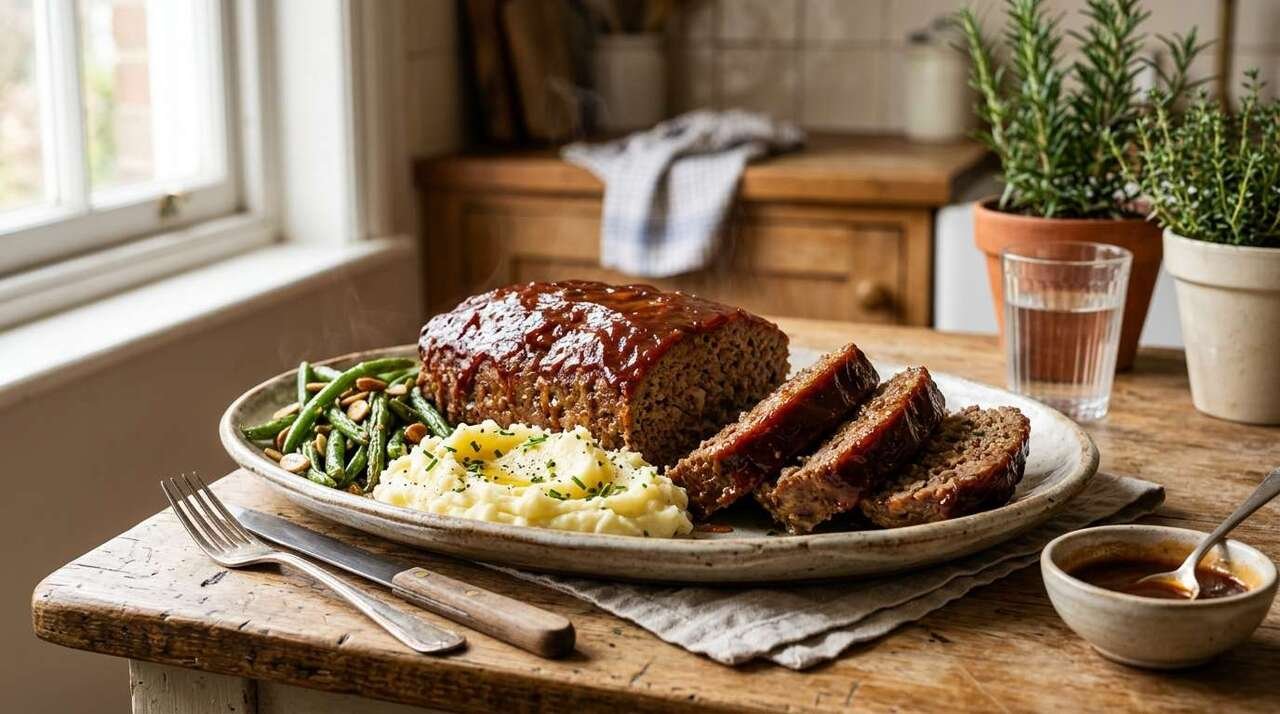

The best classic meatloaf recipe gives you a tender center, a browned crust, and a sweet-tangy glaze that clings to every slice. The trick comes down to a few simple choices: the right meat-to-binder ratio, gentle mixing, enough moisture, and cooking the loaf to the proper internal temperature.
This version keeps the familiar comfort-food flavor while fixing the problems that can make meatloaf dry, dense, or bland. You’ll get a loaf that slices neatly, stays juicy, and tastes even better the next day.
Table of Contents
The Best Classic Meatloaf Recipe at a Glance
Short answer: Combine ground beef with breadcrumbs, milk, egg, onion, garlic, Worcestershire sauce, and seasonings. Shape the mixture gently into a loaf, spread it with a ketchup-based glaze, and bake until the center reaches 160°F (71°C).
| Detail | Classic Meatloaf |
|---|---|
| Prep time | 15 minutes |
| Cook time | 55–70 minutes |
| Resting time | 10–15 minutes |
| Total time | About 1 hour 30 minutes |
| Servings | 6–8 |
| Oven temperature | 375°F (190°C) |
| Ground beef | 80–85% lean |
| Target internal temperature | 160°F (71°C) |
| Best texture | Tender and juicy |
| Main flavor | Savory, rich, slightly sweet |
Ingredients for Classic Meatloaf Recipe
You don’t need a long ingredient list. Each ingredient has a job.
For the meatloaf
- 2 pounds ground beef, preferably 80–85% lean
- 1 cup plain breadcrumbs
- ¾ cup whole milk
- 1 large egg
- 1 medium yellow onion, finely diced
- 2 cloves garlic, minced
- 2 tablespoons Worcestershire sauce
- 2 tablespoons ketchup
- 1 tablespoon Dijon mustard
- 1½ teaspoons kosher salt
- 1 teaspoon black pepper
- 1 teaspoon dried parsley
- ½ teaspoon dried thyme
- ½ teaspoon smoked paprika
For the glaze
- ½ cup ketchup
- 2 tablespoons brown sugar
- 1 tablespoon apple cider vinegar
- 1 tablespoon Worcestershire sauce
- 1 teaspoon Dijon mustard
The 80–85% lean ground beef range works especially well here. The fat provides flavor and moisture while the breadcrumbs and milk help keep the texture soft.
Very lean beef can produce a firmer, drier loaf.
Why This Classic Meatloaf Recipe Stays Juicy
The secret starts with the breadcrumbs and milk.
When breadcrumbs soak in milk, they become soft and hydrated. That mixture, often called a panade, helps retain moisture throughout the meatloaf as it cooks.
The egg helps bind everything together, while the ground beef supplies the structure and savory flavor.
Finely diced onion matters, too. Large chunks can create weak spots in the loaf and may remain noticeably crunchy. Small pieces distribute their flavor throughout the mixture.
Worcestershire sauce adds salty, savory depth with very little effort.
And the glaze brings the sweet, acidic contrast that classic meatloaf needs.
How to Make the Best Classic Meatloaf
1. Preheat the oven
Heat your oven to 375°F (190°C).
Line a rimmed baking sheet or loaf pan with parchment paper if desired. A baking sheet allows more of the outside to brown, while a loaf pan gives you a more compact shape.
2. Soak the breadcrumbs
Add the breadcrumbs and milk to a large bowl.
Stir them together and let the mixture sit for about 5 minutes.
The breadcrumbs should absorb most of the milk and become soft.
This small step has a big effect on the finished texture.
3. Prepare the onion and garlic
Finely dice the onion and mince the garlic.
For an especially soft meatloaf, sauté the onion in a small amount of oil over medium heat for about 5–7 minutes, until softened.
Let it cool briefly before adding it to the meat mixture.
Raw onion works, too, but sautéed onion gives the loaf a softer texture and sweeter flavor.
4. Mix the wet ingredients
Add the egg, ketchup, Worcestershire sauce, Dijon mustard, salt, pepper, parsley, thyme, and smoked paprika to the soaked breadcrumb mixture.
Stir until everything is evenly combined.
5. Add the ground beef
Place the ground beef in the bowl.
Use your hands or a large fork to gently combine everything.
This is where restraint pays off.
Mix only until the ingredients are evenly distributed. Pressing and kneading the meat too aggressively can make the finished meatloaf dense and chewy.
6. Shape the loaf
Transfer the mixture to your prepared baking sheet.
Shape it into a compact loaf about 8–9 inches long and 4–5 inches wide.
Keep the thickness reasonably even so the center cooks at the same rate as the rest of the loaf.
Avoid packing the mixture tightly.
7. Make the glaze
Whisk together the ketchup, brown sugar, apple cider vinegar, Worcestershire sauce, and Dijon mustard.
Taste it before applying it.
You want a balance of sweet, tangy, and savory flavors.
Spread about two-thirds of the glaze over the top of the meatloaf. Save the rest for later.
8. Bake the meatloaf
Place the meatloaf in the oven and bake for approximately 55–70 minutes.
Cooking time varies with the loaf’s shape, thickness, oven, and starting temperature of the meat.
The most reliable test is an instant-read thermometer inserted into the center.
The meatloaf should reach 160°F (71°C).
During the final 10–15 minutes, brush the remaining glaze over the top.
This creates a thicker, shinier coating without letting the sugars burn during the entire cooking time.
9. Let it rest
Remove the meatloaf from the oven and let it rest for 10–15 minutes before slicing.
This gives the juices time to settle back into the meat.
Cutting immediately can send more moisture onto the cutting board instead of keeping it inside each slice.
How to Tell When Meatloaf Is Done
A meat thermometer is the easiest way to get this right.
Insert the probe into the thickest part of the loaf, ideally from the side so the tip reaches the center.
| Test | What to Look For |
|---|---|
| Internal temperature | 160°F (71°C) |
| Exterior | Browned and glazed |
| Texture | Firm but springy |
| Juices | Mostly clear |
| Resting time | 10–15 minutes |
Color alone isn’t a reliable indicator of doneness.
A thermometer also prevents the opposite problem: leaving the meatloaf in the oven long after it has reached its target temperature.
Why Does Meatloaf Fall Apart?
Meatloaf usually needs more structure when it crumbles during slicing.
Several things can cause this.
Too much liquid
Milk helps create a tender loaf, but excessive liquid can weaken the structure.
Measure the ingredients rather than adding extra milk by eye.
Too few binders
Breadcrumbs and egg help hold the mixture together.
If you significantly reduce either one, the loaf may become difficult to slice.
Cutting too soon
A freshly baked meatloaf is soft and full of hot juices.
Give it 10–15 minutes to rest before slicing.
Overmixing
Overworking ground beef develops a tighter protein network, producing a dense texture.
Mix gently and stop as soon as everything comes together.
Why Is My Meatloaf Dry?
Dry meatloaf usually comes down to excessive cooking or meat that’s too lean.
Use moderately fatty ground beef
Ground beef around 80–85% lean works well because the fat contributes flavor and moisture.
Don’t rely on the clock alone
A recipe might say 60 minutes, but your loaf could be thinner, thicker, colder, or shaped differently.
Use the thermometer.
Keep the panade
The milk-and-breadcrumb mixture helps the meat retain moisture during baking.
Skipping it can produce a noticeably firmer loaf.
Don’t compress the mixture
Shape the loaf firmly enough to hold together while keeping the mixture relatively loose.
Should You Cook Meatloaf in a Loaf Pan or on a Baking Sheet?
Both methods work, but they produce slightly different results.
| Method | Result |
|---|---|
| Baking sheet | More browning around the exterior |
| Loaf pan | Compact shape and easier cleanup |
| Rack over baking sheet | Better drainage and exterior browning |
| Free-form loaf | Classic shape with more exposed surface |
For a classic meatloaf with a nicely browned exterior, I prefer a free-form loaf on a rimmed baking sheet.
The extra surface area gives the glaze more room to caramelize.
Classic Meatloaf Glaze
The glaze is one of the easiest ways to make this recipe taste finished rather than flat.
The combination of ketchup, brown sugar, vinegar, Worcestershire sauce, and Dijon mustard gives you several flavor notes at once.
Ketchup: tomato sweetness and acidity.
Brown sugar: caramel-like sweetness.
Apple cider vinegar: brightness and tang.
Worcestershire sauce: savory depth.
Dijon mustard: mild heat and sharpness.
For a less sweet glaze, reduce the brown sugar to 1 tablespoon.
For more tang, add another teaspoon of apple cider vinegar.
For a little heat, add a pinch of cayenne or a few drops of hot sauce.
Best Side Dishes for Classic Meatloaf Recipe
Meatloaf is especially good with simple sides that balance its rich flavor.
Creamy mashed potatoes
Mashed potatoes are the classic pairing for a reason. Their mild, buttery flavor works beautifully with the savory meatloaf and sweet glaze.
Roasted vegetables
Try carrots, broccoli, Brussels sprouts, or green beans.
Roasting brings out natural sweetness and adds a little crispness to the plate.
Green beans
Steamed or sautéed green beans provide a fresh, lighter contrast.
Macaroni and cheese
For a full comfort-food dinner, creamy macaroni and cheese makes the meal especially hearty.
Simple salad
A crisp green salad with a sharp vinaigrette can cut through the richness of the meatloaf.
Easy Variations on Classic Meatloaf Recipe
Once you’ve got the basic recipe right, small changes can create a different version without changing the cooking method.
Cheesy Meatloaf
Add 1 cup shredded cheddar cheese to the meat mixture.
You can also place a narrow strip of cheese through the center before shaping the loaf.
Bacon-Wrapped Meatloaf
Lay strips of bacon over the shaped loaf before adding the glaze.
The bacon renders as the meatloaf cooks and adds a smoky, savory flavor.
Watch the glaze near the end because the combination of rendered fat and sugar can brown quickly.
Italian-Style Meatloaf
Replace the thyme and smoked paprika with Italian seasoning.
Add grated Parmesan and use marinara instead of some or all of the ketchup glaze.
Spicy Meatloaf
Add crushed red pepper flakes, cayenne, or your favorite hot sauce to the meat mixture.
A spicy ketchup glaze works especially well with this version.
Turkey Meatloaf
Ground turkey can replace the beef, but it has less fat and can dry out more easily.
Use plenty of moisture from the panade, avoid overcooking, and consider adding a little olive oil to the mixture.
Common Meatloaf Mistakes
Mixing the meat too much
Gentle mixing produces a softer texture.
Using very lean beef
Lean beef has less fat available to keep the loaf moist.
Skipping the resting period
Resting improves slicing and helps retain moisture.
Adding too much milk
The panade should be moist and soft, while still working as part of the meat mixture.
Making the loaf too thick
An extremely thick loaf can take much longer to cook through while the outside becomes overly browned.
Adding the glaze too early
Sugar can darken quickly.
Applying some glaze during the final part of cooking gives you better control over the finish.
Can You Make Meatloaf Ahead of Time?
Yes.
You can prepare the meatloaf mixture, shape it, cover it, and refrigerate it until you’re ready to bake.
For the best texture, cook it within about a day.
You can also bake the meatloaf ahead of time and refrigerate leftovers in an airtight container.
When reheating slices, use moderate heat and add a little extra glaze or sauce to help keep them moist.
How to Store Leftover Meatloaf
Let leftover meatloaf cool and refrigerate it promptly in a covered container.
It will generally keep well in the refrigerator for several days when stored properly.
For longer storage, wrap individual slices tightly and freeze them in a freezer-safe container or bag.
Individual slices are convenient because you can thaw and reheat only what you need.
How to Reheat Meatloaf Without Drying It Out
The oven works well when you’re reheating several portions.
Place slices in a baking dish, add a spoonful of water or broth, and cover loosely with foil.
Heat at around 325°F (165°C) until warmed through.
For one or two slices, a microwave is faster.
Cover the slices with a microwave-safe lid or damp paper towel and heat in short intervals. This helps reduce moisture loss.
Key Takeaways
- Use 80–85% lean ground beef for a flavorful, juicy meatloaf.
- Soak breadcrumbs in milk before mixing them with the meat.
- Finely dice or sauté the onion for a softer texture.
- Mix the ingredients gently to avoid a dense loaf.
- Shape the meatloaf evenly so it cooks consistently.
- Bake at 375°F (190°C) and check the center with a thermometer.
- Cook ground-beef meatloaf to 160°F (71°C).
- Add a second layer of glaze during the final 10–15 minutes.
- Rest the meatloaf for 10–15 minutes before slicing.
- Serve it with mashed potatoes, vegetables, green beans, or a crisp salad.
The result is the kind of classic meatloaf that belongs in the regular dinner rotation: tender in the middle, nicely browned around the edges, and covered with a sweet-tangy glaze.
Frequently Asked Questions
What is the secret to moist Classic Meatloaf Recipe?
A milk-soaked breadcrumb mixture, moderately fatty ground beef, gentle mixing, and careful cooking help produce moist meatloaf. Cooking the loaf only until it reaches 160°F (71°C) also prevents unnecessary moisture loss.
Should I put ketchup on meatloaf before or after baking?
Ketchup glaze works best when applied before baking, with another layer added during the final 10–15 minutes. This gives the first layer time to cook while preserving a fresh, glossy glaze on top.
What temperature should classic meatloaf be cooked to?
Classic meatloaf made with ground beef should reach an internal temperature of 160°F (71°C). Check the thickest part of the loaf with an instant-read thermometer.
Why do you put milk in meatloaf?
Milk hydrates the breadcrumbs, creating a soft panade that helps retain moisture. It also contributes to a tender texture.
Is it better to use breadcrumbs or crackers in meatloaf?
Both can work. Plain breadcrumbs provide a consistent texture and are easy to measure. Crushed crackers can add a slightly different flavor and texture, but they may contain more salt.
Can I make meatloaf without eggs?
Yes. Eggs help bind the mixture, but other binders can work. You may need to adjust the breadcrumb and moisture levels to keep the loaf together.
Why does my meatloaf crumble when I slice it?
Common causes include too much liquid, insufficient binder, overcooking, or slicing immediately after baking. Let the classic meatloaf recipe rest for 10–15 minutes before cutting.
Can I freeze cooked meatloaf?
Yes. Cooked meatloaf freezes well when wrapped tightly and stored in a freezer-safe container. Individual slices make reheating easier.


Leave a Reply