
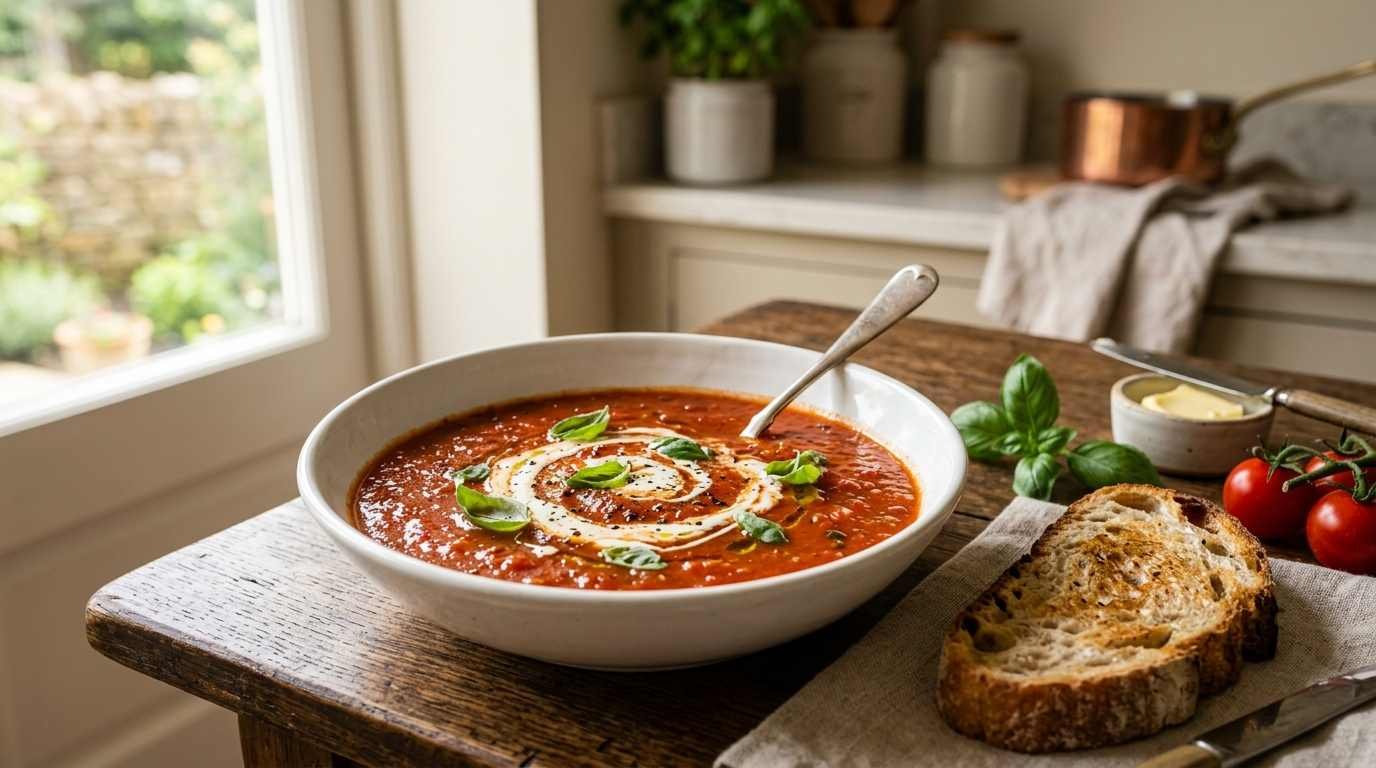

A tomato basil soup recipe should deliver more than a bowl of blended tomatoes. The best version balances ripe tomatoes, aromatic basil, savory garlic, sweet onion, rich olive oil, and a touch of creaminess without allowing any single ingredient to overpower the others.
This homemade tomato basil soup is simple enough for a weeknight dinner yet flavorful enough to serve as an elegant starter. It has a smooth, velvety texture, bright tomato flavor, and fresh basil aroma that makes every spoonful taste comforting and fresh at the same time.
Whether we serve it with crusty bread, a grilled cheese sandwich, or a simple green salad, this soup makes an excellent meal throughout the year.
Table of Contents
Why This Tomato Basil Soup Recipe Works
The secret to excellent tomato basil soup is layering flavor rather than simply cooking and blending everything together.
We begin by gently cooking onion and garlic in olive oil. This creates a savory foundation and brings out their natural sweetness. Tomatoes are then added along with broth and seasonings, allowing the ingredients to simmer until their flavors become concentrated.
Fresh basil is added toward the end rather than cooked for an extended period. This helps preserve its distinctive herbal character and gives the finished soup a fresh, aromatic quality.
For an especially smooth soup, we blend everything until silky. A small amount of cream can then be added for richness, although the soup can easily be prepared without dairy.
Ingredients for Homemade Tomato Basil Soup
For approximately 4–6 servings, we will need:
- 2 tablespoons extra-virgin olive oil
- 1 medium yellow onion, finely chopped
- 3–4 garlic cloves, minced
- 2 cans crushed tomatoes, approximately 28 ounces each
- 2 cups vegetable or chicken broth
- 1 teaspoon salt, plus more to taste
- ½ teaspoon freshly ground black pepper
- 1 teaspoon sugar, optional
- ½ teaspoon dried oregano
- 1–2 cups fresh basil leaves
- ½ cup heavy cream, optional
- 1 tablespoon butter, optional
- Fresh basil leaves for garnish
- Parmesan cheese, optional
Choosing the Best Tomatoes
Tomatoes are the foundation of this recipe, so their quality matters.
Canned tomatoes are particularly useful because they provide consistent flavor throughout the year. Whole peeled, crushed, or diced tomatoes can work well. If using whole tomatoes, we can crush them with a spoon as they cook or blend the soup later.
During tomato season, ripe fresh tomatoes can also be used. We should choose tomatoes that are deeply colored, fragrant, and fully ripe. Since fresh tomatoes vary considerably in sweetness and acidity, the seasoning may need to be adjusted during cooking.
How to Make Tomato Basil Soup
1. Sauté the Onion
Heat the olive oil in a large saucepan or Dutch oven over medium heat.
Add the chopped onion and cook for approximately 5–7 minutes, stirring occasionally. We want the onion to become soft and translucent without becoming deeply browned.
This first step is important because gently cooking the onion develops sweetness and creates a more rounded flavor.
2. Add the Garlic
Add the minced garlic and cook for approximately 30–60 seconds.
Garlic cooks quickly, so we should avoid leaving it over high heat. Once it becomes fragrant, we can immediately continue with the tomatoes.
3. Add Tomatoes and Broth
Pour in the crushed tomatoes and broth.
Add the salt, black pepper, and oregano. If the tomatoes taste particularly acidic, we can add a small amount of sugar. The sugar shouldn’t make the soup sweet; it simply helps balance excessive acidity.
Bring the mixture to a gentle simmer.
4. Simmer the Soup
Reduce the heat and allow the soup to simmer for approximately 20–30 minutes.
This gives the ingredients enough time to meld together. The tomatoes become softer, the onion practically disappears into the base, and the broth takes on a richer flavor.
We should avoid aggressively boiling the soup. A gentle simmer provides better control and reduces the risk of scorching the bottom of the pot.
5. Add Fresh Basil
Add the fresh basil during the final few minutes of cooking.
For a stronger basil flavor, we can reserve some fresh leaves for blending and save a few smaller leaves for garnish.
Fresh basil provides the characteristic flavor associated with classic tomato basil soup, so dried basil shouldn’t be relied upon as its primary substitute.
6. Blend Until Smooth
Remove the pot from the heat and blend the soup until smooth.
An immersion blender is particularly convenient because we can blend the soup directly in the pot. If using a countertop blender, we should work in batches and take care with the hot liquid.
The soup can be blended completely smooth or left slightly textured depending on preference.
7. Add Cream for Extra Richness
If we want a creamy tomato basil soup, stir in the heavy cream after blending.
We can also add a small amount of butter for extra richness and a smoother mouthfeel.
For a lighter version, the cream can simply be omitted. The blended tomatoes and olive oil already create a satisfying texture.
8. Taste and Adjust
Before serving, taste the soup carefully.
We may need to adjust:
- Salt for overall flavor
- Black pepper for gentle heat
- Sugar if the tomatoes are very acidic
- Basil for additional freshness
- Cream if a richer flavor is desired
- Broth if the soup is thicker than preferred
This final adjustment can make a significant difference.
How to Make Creamy Tomato Basil Soup
A creamy version doesn’t need to be extremely heavy.
The easiest method is to blend the cooked tomato mixture thoroughly and then stir in heavy cream at the end. This preserves the cream’s richness without requiring prolonged boiling.
For an even silkier consistency, we can blend in a tablespoon of butter.
Another option is to use a small amount of whole milk, although it won’t provide the same richness as heavy cream.
For a dairy-free tomato basil soup, use additional olive oil instead of butter and omit the cream. Coconut milk can technically be used, but its distinctive flavor can change the classic tomato-basil profile.
How to Balance Acidic Tomato Soup
Tomatoes naturally contain acidity, and some canned tomatoes can taste noticeably sharper than others.
We should first make sure the soup has enough salt. Proper seasoning often makes acidity feel more balanced.
If the soup still tastes excessively tart, add a small pinch of sugar and taste again. It is better to add sugar gradually than to add too much at once.
Caramelizing the onion more thoroughly can also contribute natural sweetness and create a deeper flavor.
Adding cream or butter provides another way to soften the perception of acidity while making the soup richer.
How to Make Tomato Basil Soup Without Cream
This recipe works beautifully without cream.
Simply prepare the soup using tomatoes, broth, onion, garlic, olive oil, basil, and seasonings. Blend it thoroughly until smooth.
For additional body, we can add a small amount of cooked carrot, white beans, or potato. These ingredients can naturally thicken the soup without dominating the tomato flavor.
Extra-virgin olive oil drizzled over each serving also adds richness while keeping the soup dairy-free.
Fresh Tomatoes vs. Canned Tomatoes
Both options can produce excellent soup, but they behave differently.
Canned tomatoes are convenient and reliable. They’re particularly useful when fresh tomatoes aren’t at their seasonal best.
Fresh tomatoes can provide a brighter, garden-fresh flavor when they’re genuinely ripe and flavorful.
When using fresh tomatoes, we can roughly chop them before adding them to the pot. There’s no need to achieve perfectly uniform pieces because everything will eventually be blended.
For the most consistent weeknight result, high-quality canned tomatoes are often the practical choice.
Tips for the Best Tomato Basil Soup
Don’t Burn the Garlic
Garlic becomes bitter when heavily browned. We should cook it only until fragrant.
Use Enough Basil
Basil should be noticeable without completely overwhelming the tomato flavor. Fresh leaves added toward the end provide the best aromatic quality.
Simmer, Don’t Rapidly Boil
A gentle simmer allows the flavors to develop without unnecessarily reducing the liquid or scorching the bottom.
Blend Thoroughly
For a restaurant-style texture, blend until completely smooth. An immersion blender makes this particularly easy.
Taste Before Serving
Tomatoes differ in acidity and sweetness. Always taste the finished soup and adjust the seasoning before serving.
What to Serve With Tomato Basil Soup
A warm bowl of tomato basil soup pairs naturally with grilled cheese.
The contrast between creamy, acidic tomato soup and crisp toasted bread with melted cheese is difficult to beat.
Other excellent options include:
- Crusty sourdough bread
- Garlic bread
- Toasted baguette
- Simple green salad
- Caprese salad
- Roasted vegetables
- Grilled chicken
- Cheese and herb toast
- Homemade croutons
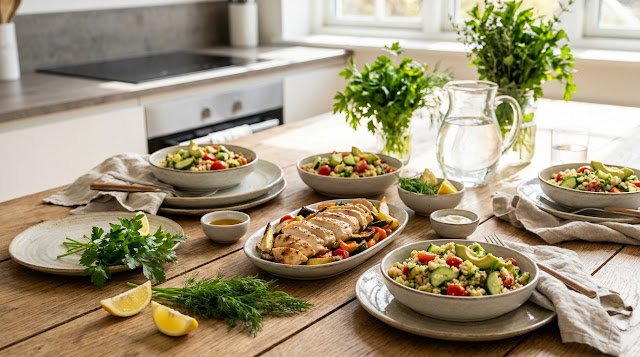
For a more substantial dinner, we can serve the soup alongside a grilled sandwich or a protein-rich salad.
Tomato Basil Soup Variations
Roasted Tomato Basil Soup
For deeper flavor, roast fresh tomatoes with olive oil and garlic before adding them to the soup base.
Roasting concentrates the tomatoes and introduces caramelized notes that create a richer version of the classic recipe.
Spicy Tomato Basil Soup
Add red pepper flakes, cayenne pepper, or a small amount of fresh chili for heat.
The spice works especially well with the natural sweetness of cooked tomatoes.
Tomato Basil Soup With Parmesan
Stir finely grated Parmesan into individual servings or add a Parmesan rind while the soup simmers.
The cheese provides additional savory depth.
Vegan Tomato Basil Soup
Use vegetable broth and replace butter and cream with extra-virgin olive oil.
The result remains rich and satisfying while being completely plant-based.
Tomato Basil Soup With Vegetables
Carrots, celery, roasted red peppers, or zucchini can be incorporated for additional flavor and texture.
Carrots are particularly useful when we want to naturally soften tomato acidity.
How to Store Tomato Basil Soup
Allow leftover soup to cool before transferring it to an airtight container.
It can generally be refrigerated for several days. For longer storage, freeze the soup in suitable freezer-safe containers, leaving enough space for expansion.
If we know we intend to freeze the soup, it can be helpful to leave the cream out until reheating. Dairy can sometimes change texture after freezing and thawing.
When reheating, warm the soup gently over medium-low heat and stir occasionally.
Can Tomato Basil Soup Be Frozen?
Yes. Tomato basil soup freezes well, particularly when it is prepared without cream.
Cool the soup completely, portion it into freezer-safe containers, and leave some headspace. Once frozen, the portions can be thawed in the refrigerator before reheating.
If cream was not added before freezing, stir it into the soup after reheating for a fresher, smoother texture.
Final Thoughts
A great tomato basil soup recipe doesn’t require complicated ingredients or elaborate techniques. The foundation is straightforward: flavorful tomatoes, aromatic onion and garlic, good broth, fresh basil, and thoughtful seasoning.
The biggest difference comes from how those ingredients are treated. Gently sautéing the aromatics, simmering the tomatoes, adding fresh basil at the right stage, and carefully balancing acidity creates a soup that tastes far more sophisticated than its simple ingredient list suggests.
Serve it piping hot with crusty bread, grilled cheese, fresh basil, or a drizzle of olive oil. Whether prepared as a quick weekday lunch, a cozy family dinner, or an elegant starter, homemade tomato basil soup is one of those recipes worth keeping in regular rotation.
Frequently Asked Questions
Can we use dried basil instead of fresh basil?
Yes, but fresh basil provides a brighter and more distinctive flavor. If dried basil is used, add it earlier during cooking so it has time to release its flavor.
Why does our tomato soup taste bitter?
Bitterness can come from burned garlic, overly browned ingredients, excessive herbs, or certain tomato varieties. Taste the soup and balance it with salt, a small amount of sweetness, or cream if appropriate.
How do we thicken tomato basil soup?
The simplest approach is to simmer the soup uncovered for a little longer. Blending in cooked vegetables or white beans can also increase thickness without using flour.
Can we make this soup ahead of time?
Absolutely. In fact, the flavors often become more integrated after resting. Prepare the soup, refrigerate it, and gently reheat it when ready to serve.
How do we make the soup smoother?
Blend it thoroughly with an immersion or countertop blender. For an exceptionally refined texture, pass the blended soup through a fine-mesh strainer.




Leave a Reply