
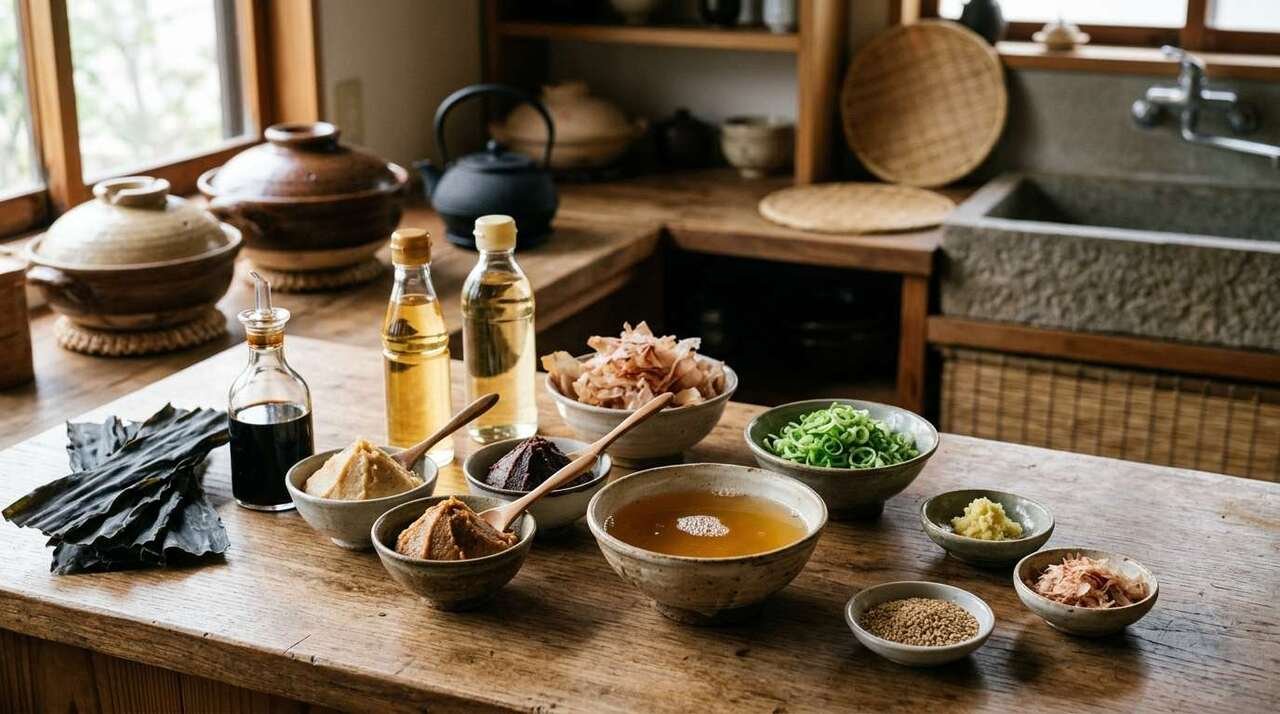

Japanese cooking has a remarkably simple way of making food taste layered, savory, fragrant, and deeply satisfying: build flavor with a small group of time-tested seasonings.
Shoyu, miso, mirin, sake, rice vinegar, dashi, and salt each play a different role. Once you understand what each one contributes, Japanese-style cooking becomes much easier. You can season a bowl of noodles, a pot of soup, grilled fish, vegetables, rice, or a quick stir-fry without needing a long ingredient list.
Table of Contents
What Are the Core Japanese Seasoning Traditions?
Japanese seasoning traditions center on balancing umami, saltiness, sweetness, acidity, and aroma. The most familiar ingredients include soy sauce, miso, mirin, sake, rice vinegar, dashi, and Japanese-style salts.
| Seasoning | Main role | Common uses |
|---|---|---|
| Shoyu | Salty, savory, aromatic | Sushi, noodles, marinades, sauces |
| Miso | Fermented umami | Soup, glazes, marinades, dressings |
| Mirin | Sweetness and gloss | Teriyaki, simmered dishes, sauces |
| Sake | Aroma and depth | Simmering, marinades, sauces |
| Rice vinegar | Gentle acidity | Sushi rice, pickles, dressings |
| Dashi | Brothy umami | Soups, noodles, sauces |
| Salt | Brings flavors into focus | Almost every Japanese dish |
Quick answer: Japanese seasoning traditions rely on carefully balanced fermented, salty, sweet, acidic, and umami-rich ingredients. Shoyu and miso provide much of the savory foundation, while mirin adds sweetness, rice vinegar adds brightness, sake contributes aroma, and dashi supplies a deep broth-like character.
Shoyu: The Everyday Japanese Soy Sauce
Shoyu is Japanese soy sauce, traditionally made through fermentation involving soybeans, wheat, salt, and koji.
It has a salty, savory flavor with a noticeable aroma and a rounded finish. A little can transform plain rice, steamed vegetables, grilled meat, tofu, or noodles.
Japanese cooking uses shoyu in several ways:
- As a dipping sauce
- As a soup seasoning
- In marinades
- In simmered dishes
- In stir-fries
- In noodle sauces
- As a finishing seasoning
Usukuchi vs. Koikuchi Shoyu
Two useful terms are usukuchi and koikuchi.
Koikuchi is the darker, more familiar style of Japanese soy sauce. It’s widely used for everyday cooking.
Usukuchi is lighter in color but can be quite salty. Its lighter appearance makes it useful when you want seasoning without adding as much dark color to a dish.
This distinction matters when following Japanese recipes. Replacing one with the other can change both the salt level and appearance of the finished food.
How to Use Shoyu Without Over-Salting Food
Add a small amount first, taste, then adjust.
Because shoyu contains substantial salt, adding several spoonfuls early in cooking can make a dish difficult to correct later. In soups and sauces, consider the other salty ingredients before reaching for more soy sauce.
Miso: Fermented Flavor in a Spoonful
Miso is a fermented paste traditionally made from soybeans, salt, and koji. Some varieties also contain rice or barley.
Its flavor can range from mild and sweet to rich, earthy, and intensely savory.
Common Types of Miso
| Type | Flavor | Good uses |
| Shiro miso | Mild, sweet, creamy | Dressings, sauces, soups |
| Awase miso | Balanced | Everyday soups and sauces |
| Aka miso | Strong, earthy, salty | Hearty soups, marinades, braises |
| Mugi miso | Rich, malty | Soups and rustic dishes |
Miso doesn’t belong only in miso soup.
Try mixing a spoonful with butter for vegetables, whisking it into a salad dressing, combining it with mirin for a glaze, or rubbing it onto salmon before roasting.
A Simple Miso Glaze
Mix:
- 1 tablespoon miso
- 1 teaspoon mirin
- 1 teaspoon sake
- ½ teaspoon sugar
- A few drops of sesame oil
Brush it over salmon, eggplant, mushrooms, tofu, or chicken before cooking.
Miso can burn because of its sugars and concentrated solids, so moderate heat works well for glazed dishes.
Mirin: Japanese Sweetness With a Savory Purpose
Mirin is a sweet Japanese rice wine used primarily for cooking.
Its sweetness helps balance salty ingredients such as shoyu and miso. It also gives sauces a glossy appearance and contributes a pleasant aroma.
Mirin commonly appears in:
- Teriyaki sauce
- Simmered vegetables
- Fish marinades
- Yakitori-style sauces
- Noodle sauces
- Japanese dipping sauces
A classic Japanese seasoning traditions combination is shoyu + mirin + sake.
This trio appears in many Japanese dishes because each ingredient contributes something different. Shoyu brings salt and savory flavor, mirin supplies sweetness, and sake adds aroma while helping round out the sauce.
Mirin vs. Rice Vinegar
These ingredients serve completely different purposes.
Mirin adds sweetness. Rice vinegar adds acidity.
Using rice vinegar when a recipe calls for mirin can make a sauce sharp rather than rounded. Using mirin instead of vinegar removes the acidic lift that makes a dressing or sushi rice taste fresh.
Sake: More Than a Drink
Cooking sake has a long history in Japanese kitchens.
When used in cooking, sake can add aroma and depth while helping balance sauces and marinades. It’s particularly useful with fish, meat, mushrooms, and simmered foods.
A small amount can be added to a pan with shoyu and mirin to create a quick sauce.
For cooking, check the label carefully because products sold as cooking sake can contain added salt. If you’re using a salted cooking sake, reduce the other salt in the recipe accordingly.
Rice Vinegar: The Bright Side of Japanese Seasoning Traditions
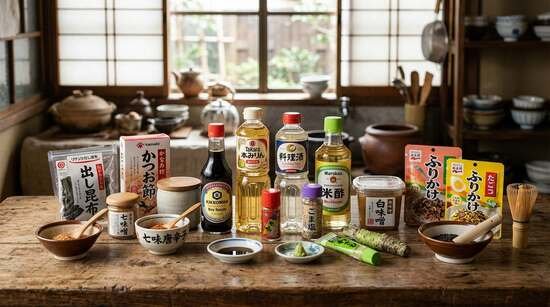
Rice vinegar has a softer acidity than many Western vinegars.
That gentle character makes it especially useful when you want brightness without overpowering delicate ingredients.
It’s traditionally associated with sushi rice, but its uses extend much further.
Try rice vinegar in:
- Cucumber salads
- Pickles
- Dipping sauces
- Slaws
- Sesame dressings
- Cold noodle dishes
- Marinades
A simple dressing can start with rice vinegar, shoyu, sesame oil, and a little sugar.
Taste it before adding more of any single ingredient. The best balance depends on the dish and the ingredients around it.
Dashi: The Foundation of Japanese Umami
Dashi is a Japanese stock traditionally made from ingredients such as kombu and katsuobushi.
Kombu contributes glutamate, while katsuobushi contributes compounds associated with savory depth. Together, they create a broth that tastes full without requiring a heavy mixture of spices.
Dashi is used in:
- Miso soup
- Clear soups
- Noodle broths
- Chawanmushi
- Simmered vegetables
- Sauces
- Japanese omelets
Vegetarian Dashi
Kombu and dried shiitake mushrooms can be used together to create a vegetarian dashi with substantial savory character.
This is useful for miso soup, noodle sauces, simmered vegetables, and other dishes where bonito flakes aren’t appropriate.
The Japanese Seasoning Trio: Shoyu, Mirin & Sake
One of the easiest ways to understand Japanese seasoning is to see how ingredients work together.
A basic sauce can use:
1 part shoyu + 1 part mirin + 1 part sake
Simmer it briefly and taste.
You can adjust the ratio according to the dish. More shoyu produces a saltier, deeper sauce. More mirin makes it sweeter. More sake creates a lighter, more aromatic result.
This simple mixture works as a starting point for chicken, fish, tofu, mushrooms, vegetables, and noodles.
Umami: Why Japanese Food Tastes So Deep
Umami is commonly described as a savory taste.
Japanese cuisine makes extensive use of naturally occurring glutamates and related compounds found in ingredients such as kombu, fermented soy products, mushrooms, and certain fish products.
The useful lesson for home cooks is simple: layer savory ingredients instead of relying on salt alone.
For example, miso soup can combine:
- Dashi
- Miso
- Tofu
- Wakame
- Green onion
Each ingredient contributes something different. The result tastes fuller than a broth seasoned with salt alone.
Fermentation Is Central to Japanese Seasoning Traditions
Many traditional Japanese seasonings owe their character to fermentation.
Koji, a culture commonly associated with rice, barley, and soy fermentation, plays a major role in the production of foods such as miso, shoyu, and sake.
Fermentation changes the flavor, aroma, texture, and chemical composition of ingredients over time.
That explains why a spoonful of miso can contribute far more than simple saltiness. It brings fermented aroma and savory complexity at the same time.
How Japanese Seasoning Changes With the Seasons
Traditional Japanese cooking often pays attention to seasonality.
Spring dishes may lean toward fresh greens and delicate flavors. Summer cooking can feature chilled noodles, cucumbers, vinegar-based preparations, and lighter sauces. Autumn brings mushrooms, root vegetables, and richer flavors. Winter favors warming soups, hot pots, and simmered dishes.
The seasonings remain familiar while their combinations change.
That flexibility is one reason these pantry staples remain useful year-round.
Common Japanese Seasoning Mistakes
Adding Soy Sauce Too Early
Soy sauce can become more concentrated as liquid evaporates.
If you’re making a simmered sauce, reserve some of the shoyu for later adjustment.
Treating All Miso as the Same
White miso and red miso can have dramatically different flavor profiles.
A recipe developed around a mild white miso may become much stronger when made with a salty red miso.
Confusing Mirin and Rice Vinegar
Remember the basic distinction:
Mirin = sweet.
Rice vinegar = acidic.
They can occasionally appear together, but they aren’t interchangeable.
Boiling Miso Aggressively
For miso soup, dissolve miso into warm dashi toward the end of cooking.
A hard boil can affect its delicate aroma and flavor. Many cooks therefore add miso after removing the pot from a strong boil.
Using Too Many Seasonings
Japanese cooking often depends on restraint.
When you have quality dashi, miso, shoyu, or mirin, you may need surprisingly little else. Add one seasoning at a time and taste as you go.
A Japanese Seasoning Pantry for Beginners
You don’t need to buy everything at once.
Start with these five:
- Japanese shoyu
- White or awase miso
- Mirin
- Rice vinegar
- Kombu or prepared dashi
Add sake, toasted sesame oil, dried shiitake mushrooms, bonito flakes, and additional regional seasonings as you cook more Japanese dishes.
For kitchen equipment, a small saucepan, fine-mesh strainer, measuring spoons, airtight storage containers, and a good whisk cover most basic seasoning tasks. If you’re shopping through Amazon, look for Japanese pantry ingredients from established brands and check labels carefully for the exact style of Japanese seasoning traditions.
How to Build a Balanced Japanese-Style Sauce
A practical formula is:
Savory + Sweet + Acid + Umami + Aroma
For example:
- Shoyu = savory and salty
- Mirin = sweet
- Rice vinegar = acid
- Dashi or miso = umami
- Sesame oil, ginger, or citrus = aroma
You don’t always need every component.
For grilled chicken, shoyu + mirin + ginger may be enough.
For a cucumber salad, rice vinegar + shoyu + sesame oil works beautifully.
For miso soup, dashi + miso is the foundation.
The goal is balance rather than complexity.
Japanese Seasonings Worth Exploring Beyond the Basics
Once your pantry has the fundamentals, several other ingredients are worth trying.
Ponzu
Ponzu is a citrus-forward seasoning sauce with salty and acidic notes. It’s especially good with grilled meats, seafood, tofu, and hot-pot dishes.
Yuzu Kosho
Yuzu kosho combines yuzu citrus with chili and salt. A tiny amount can add sharp citrus aroma and heat to soups, grilled meats, noodles, and sauces.
Shichimi Togarashi
This Japanese seven-spice blend commonly combines chili with ingredients such as sesame, citrus peel, and other aromatics.
Sprinkle it over noodles, rice, soups, grilled meats, or tofu.
Furikake
Furikake is a dry Japanese seasoning commonly sprinkled over rice. Varieties may contain sesame seeds, seaweed, fish, egg, or other ingredients.
It’s one of the easiest ways to give plain rice more character.
A Simple Japanese Seasoning Cheat Sheet
| If your dish tastes… | Try adding… |
| Flat | Dashi, miso, or a small amount of shoyu |
| Too salty | Dilute with unsalted liquid or add more main ingredients |
| Too sweet | Rice vinegar or a little shoyu |
| Too sharp | Mirin or a small amount of sugar |
| Too heavy | Rice vinegar or citrus |
| Lacking aroma | Ginger, sesame oil, citrus zest, or shiso |
| Bland but already salty | Dashi, mushrooms, or another umami-rich ingredient |
The key is to diagnose the flavor before adding another spoonful of salt.
Key Takeaways
- Japanese seasoning traditions are built around balance, fermentation, umami, salt, sweetness, acidity, and aroma.
- Shoyu is the everyday savory foundation for many Japanese dishes.
- Miso adds fermented depth and works well beyond soup.
- Mirin brings sweetness and helps create glossy sauces.
- Rice vinegar provides gentle acidity and freshness.
- Dashi supplies a savory broth foundation for soups and sauces.
- Shoyu, mirin, and sake form a useful starting point for many Japanese sauces.
- A small, carefully chosen pantry can cover a surprisingly wide range of Japanese cooking.
The beauty of these traditions is their practicality. Learn what each seasoning contributes, taste as you cook, and adjust one element at a time. A few bottles and jars can take a simple bowl of rice, a piece of fish, or a handful of vegetables in a completely different direction.
Suggested reads: Japanese Cooking Techniques: 5 Essential Methods, Delicious Baked Teriyaki Chicken That Everyone Requests
Frequently Asked Questions
What are the most important Japanese seasonings?
The most useful starting set is shoyu, miso, mirin, rice vinegar, and dashi. Sake is another valuable pantry ingredient, especially for sauces and marinades.
What is the difference between soy sauce and shoyu?
Shoyu is the Japanese style of soy sauce. Traditional varieties commonly use both soybeans and wheat, producing a distinctive aroma and flavor.
What seasoning gives Japanese food its umami flavor?
Several ingredients contribute umami, including kombu, katsuobushi, miso, shoyu, dried mushrooms, and other fermented or protein-rich ingredients.
Can I substitute soy sauce for shoyu?
Regular soy sauce can work in many recipes, although the flavor, salt level, and wheat content can vary between products. Japanese recipes are usually written with a particular style of shoyu in mind.
Is mirin the same as rice vinegar?
No. Mirin is sweet and aromatic, while rice vinegar provides acidity. They perform different jobs in Japanese cooking.
What is the best Japanese seasoning for beginners?
Shoyu is probably the easiest place to start because it works in sauces, marinades, soups, noodles, rice dishes, and vegetable preparations.
What gives miso soup its flavor?
Dashi provides the broth’s savory foundation, while miso supplies fermented soybean flavor and additional umami. Ingredients such as tofu, wakame, and green onion complete the soup.
How should Japanese seasonings be stored?
Follow the manufacturer’s storage instructions. Many unopened pantry seasonings can be stored at room temperature, while opened products may benefit from refrigeration depending on the product and label directions.







Leave a Reply