
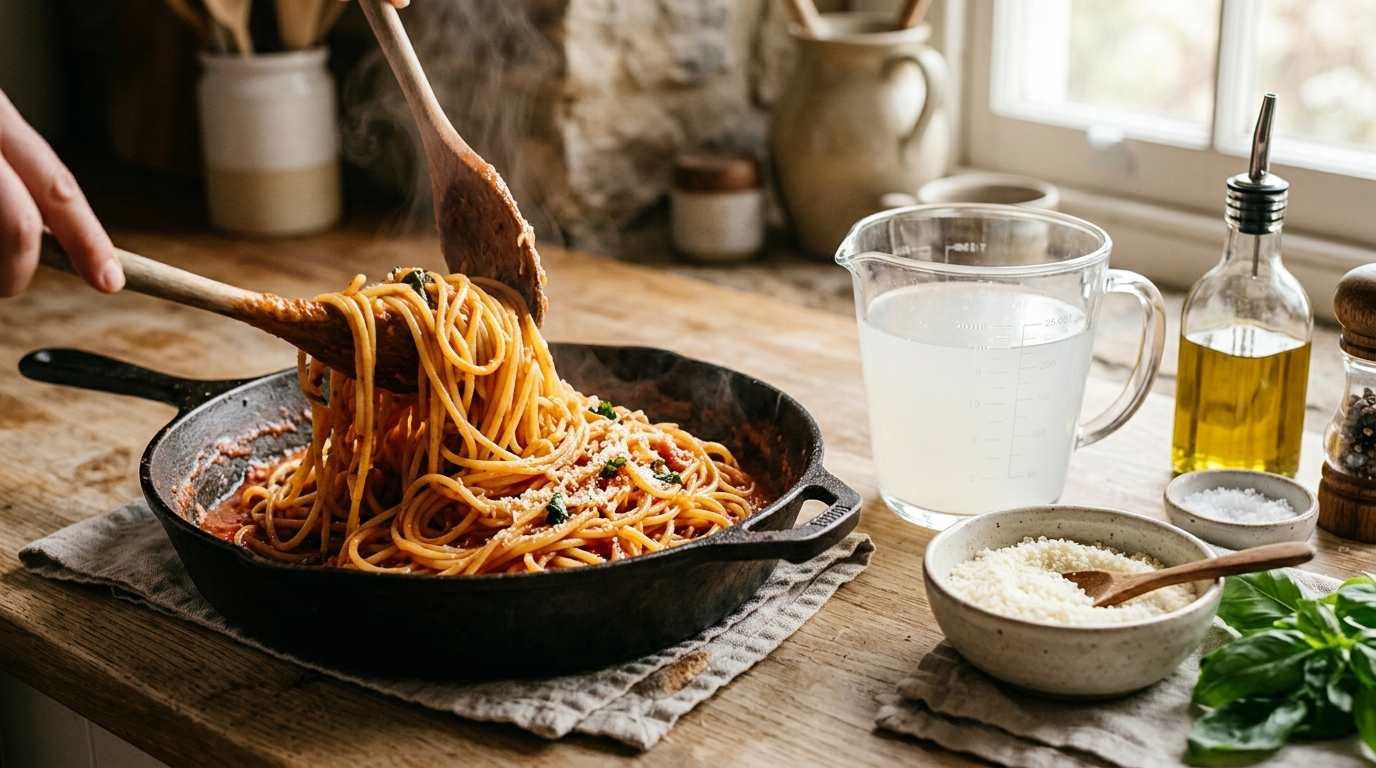

Saving pasta water is one of the simplest techniques we can use to make homemade pasta taste more polished, cohesive, and restaurant-worthy. Instead of draining every drop down the sink, we can reserve a small amount of the cloudy cooking water and use it to build a smoother, more flavorful sauce.
The technique is especially useful for sauces that need help emulsifying. Starchy pasta water can help sauce cling to noodles, loosen a thick sauce without making it watery, and bring together ingredients such as butter, cheese, olive oil, tomato, and cream.
It costs nothing, requires no special equipment, and takes only a few seconds to incorporate into the cooking process.
Suggested pasta recipe: Four Ingredient Pasta Sauce: Easy Homemade Recipe
Table of Contents
What Makes Pasta Water So Useful for Sauce?
When dried or fresh pasta cooks in boiling water, some of the starch from the pasta moves into the cooking liquid. As a result, properly cooked pasta water becomes slightly cloudy and contains dissolved starch.
That starch is the key.
When we combine a small amount of starchy pasta water with fat, cheese, or other sauce ingredients while tossing the pasta, the liquid can help create a more cohesive mixture. Rather than having sauce sitting separately from the noodles, the ingredients begin to bind together.
This is particularly important for pasta dishes where the sauce should coat every strand or piece.
The goal isn’t to flood the pasta with cooking water. We want to add small amounts gradually until the sauce reaches the desired consistency.
How Much Pasta Water Should We Save?
For most pasta dishes, saving about 1 to 2 cups of pasta water is more than enough.
We may only need a few tablespoons for the final sauce, but having extra available gives us more control.
A practical approach is:
- Cook the pasta until it reaches the desired doneness.
- Before draining, scoop out approximately 1 to 2 cups of cooking water.
- Transfer the water to a heatproof measuring cup or bowl.
- Drain the pasta.
- Finish the pasta directly in the sauce.
- Add reserved pasta water a little at a time while tossing.
The amount required depends on the sauce. A thick cheese sauce may need only a splash, while a pan sauce made primarily from olive oil may benefit from several tablespoons.
When Should We Save Pasta Water?
The most important rule is simple: save the pasta water before draining the pasta.
Once the cooking water has disappeared down the drain, it is too late.
We recommend keeping a measuring cup, ladle, or small heatproof container near the stove as the pasta approaches doneness. This makes it easy to reserve the water immediately.
For convenience, we can also use a pasta pot with an insert or carefully scoop the water directly from the pot.
If the pasta is being transferred directly into a skillet with sauce, the reserved water can be added during the final tossing stage.
How to Use Pasta Water for Sauce
The best results come from adding pasta water gradually rather than pouring in a large quantity at once.
Once the pasta is nearly cooked, we can transfer it into the pan containing the sauce. The pasta should finish cooking in the sauce while we toss it continuously.
Add 1 to 2 tablespoons of reserved pasta water and toss.
If the sauce remains too thick, add another splash.
Continue this process until the sauce becomes smooth and coats the pasta evenly.
This finishing technique allows the pasta, sauce, and cooking water to become one cohesive dish.
Why Tossing Matters
Simply pouring pasta water into a bowl of pasta isn’t enough to achieve the best texture.
Tossing helps distribute the water throughout the sauce. The movement encourages the ingredients to combine, while the starch helps the sauce adhere to the pasta.
For long pasta such as spaghetti, linguine, or bucatini, vigorous tossing can make a noticeable difference.
For shorter shapes such as rigatoni, penne, or fusilli, stirring and folding the pasta through the sauce works well.
Pasta Water for Tomato Sauce
Tomato-based sauces can benefit from reserved pasta water when they become too thick.
Instead of adding plain water, we can add a small amount of pasta water to loosen the sauce while maintaining its ability to cling to the noodles.
This works particularly well with simple tomato sauces made with tomatoes, garlic, olive oil, and herbs.
The important point is moderation. Tomato sauce that is already thin doesn’t need much additional liquid.
Add the pasta water gradually and allow the sauce to simmer briefly before deciding whether more is necessary.
Pasta Water for Creamy Sauces
Cream-based pasta sauces can become heavy or overly thick as they cook.
A small splash of reserved pasta water can help loosen the sauce and create a lighter coating without diluting it excessively.
This is useful for dishes containing ingredients such as cream, butter, Parmesan, garlic, or soft cheeses.
When cheese is involved, we should avoid adding large quantities of extremely hot liquid all at once. Instead, incorporate small amounts while tossing the pasta and sauce together.
The finished texture should be silky and cohesive rather than watery.
Pasta Water for Cheese-Based Pasta
Some of the most famous pasta preparations rely heavily on the interaction between pasta water, cheese, and fat.
Dishes such as cacio e pepe demonstrate why controlling temperature and liquid matters.
The reserved water provides moisture and starch, while vigorous mixing helps create a creamy-looking sauce without necessarily requiring cream.
For cheese-based pasta, we should add the cooking water gradually and avoid overheating the cheese.
A gentle finishing temperature gives us more control and reduces the risk of creating a clumpy or greasy sauce.
Pasta Water for Olive Oil Sauces
Even a simple olive oil pasta can benefit from reserved cooking water.
Oil and water naturally separate, but vigorous tossing combined with the starch in pasta water can help create a more unified sauce.
For a simple garlic-and-olive-oil pasta, we can combine cooked pasta with the flavored oil and add a small splash of pasta water.
Toss vigorously until the noodles are glossy and evenly coated.
This produces a sauce that feels more integrated rather than leaving a pool of oil at the bottom of the plate.
Does Pasta Water Make Sauce Thicker?
Pasta water can help create the perception of a thicker, more cohesive sauce, but it doesn’t behave exactly like adding flour or a traditional thickening agent.
Its value comes from the starch dissolved in the water.
When incorporated correctly, that starch can help emulsify the sauce and improve its ability to cling to pasta.
However, adding too much water can have the opposite effect.
If we add a large quantity at once, the sauce may become thin and diluted. That’s why small additions are preferable.
Should We Salt Pasta Water?
Yes. Pasta water is normally salted before the pasta is cooked.
However, the amount of salt matters because the reserved water will eventually become part of the finished dish.
If the cooking water is heavily salted, using too much of it can make the sauce excessively salty.
The best approach is to taste the sauce before adding additional salt.
We should also remember that ingredients such as Parmesan, olives, cured meats, anchovies, and prepared sauces can already contain substantial amounts of sodium.
Common Mistakes When Using Pasta Water
Adding Too Much
More pasta water isn’t automatically better. Start with a small splash and increase gradually.
Saving It After Draining
We should reserve the water before draining the pasta. Keeping a container ready near the stove makes this easy.
Using It Without Finishing the Pasta in the Sauce
Pasta water works most effectively when the pasta and sauce are actively combined.
Ignoring Salt Levels
Because the cooking water contains salt, we should account for it when seasoning the final dish.
Using Cold or Plain Water Instead
Plain water can loosen a sauce, but it doesn’t provide the same starchy quality as properly reserved pasta water.
Can We Save Pasta Water Ahead of Time?
Freshly reserved pasta water is the easiest option because it is already available while the pasta is cooking.
If we have leftover cooking water, it can be cooled and refrigerated promptly in a clean, covered container. However, there is usually little reason to deliberately store large quantities.
The simplest habit is to reserve what we need every time we cook pasta.
The Best Way to Finish Pasta With Reserved Water
For consistently good results, we can follow this simple sequence:
Cook → Reserve → Drain → Sauce → Toss → Adjust.
Cook the pasta until it is slightly under the desired final texture.
Reserve the pasta water.
Transfer the pasta to the skillet containing the sauce rather than simply pouring the sauce over drained noodles.
Add a small splash of reserved water.
Toss the pasta continuously over moderate heat.
If the sauce looks dry, add another splash.
If it becomes too loose, continue tossing for a short time so excess moisture can evaporate.
The final pasta should look glossy, evenly coated, and cohesive.
The Most Important Pasta Water Rule
The most useful rule to remember is this:
Always reserve pasta water before draining, then add it gradually while finishing the pasta in its sauce.
We don’t need to use the entire cup. In many recipes, just a few tablespoons are enough to transform the texture.
This small habit can make simple pasta dishes noticeably better because it helps the sauce cling to the noodles instead of separating from them.
Final Thoughts
Saving pasta water for sauce is a classic kitchen technique because it is practical, inexpensive, and remarkably versatile. The water contains starch released during cooking, giving us a useful ingredient for finishing everything from tomato sauces and creamy pastas to simple olive-oil preparations and cheese-based dishes.
The technique works best when we reserve the water before draining, add it gradually, and toss the pasta directly with the sauce.
Once this becomes part of our normal pasta routine, there is little reason to pour all that useful cooking liquid down the drain. A small splash can be the difference between pasta with sauce and pasta where the sauce truly clings to every bite.





Leave a Reply