
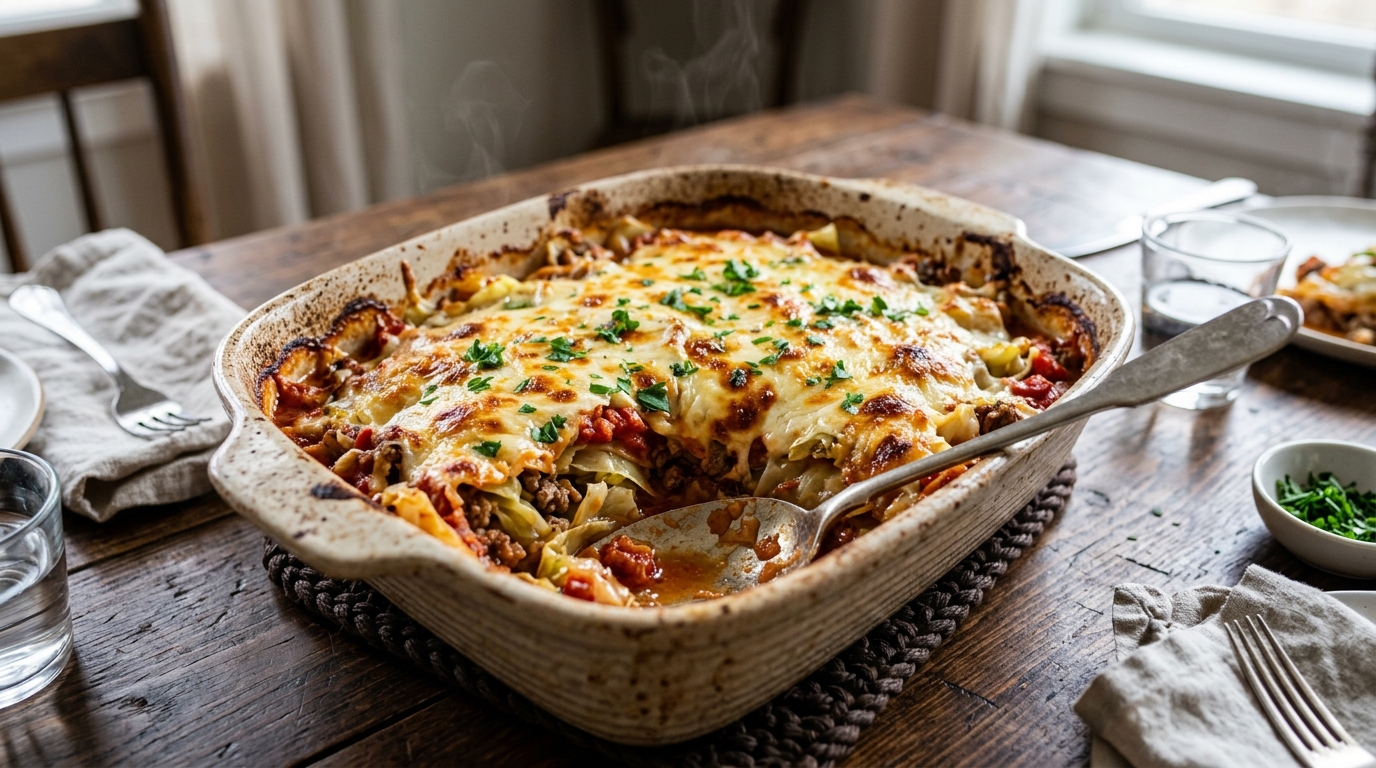

A cabbage casserole recipe is one of those comforting, practical dishes that turns simple ingredients into a hearty family meal. Tender cabbage, savory ground beef, aromatic onion, tomato sauce, and melted cheese come together in layers to create a casserole that is flavorful, filling, and easy to prepare.
This cabbage casserole is especially useful when we want a satisfying dinner without complicated cooking techniques. The cabbage becomes tender as it bakes, while the seasoned meat and tomato sauce add richness and depth. A generous layer of cheese on top creates a golden, bubbling finish that makes the dish especially inviting.
Whether we are preparing a weeknight dinner, feeding a family, or looking for a budget-friendly meal that can be prepared ahead of time, this easy cabbage casserole delivers plenty of comfort with relatively little effort.
Table of Contents
Why We Love This Cabbage Casserole Recipe
There are several reasons this recipe works so well for everyday cooking.
First, cabbage is affordable, versatile, and filling. One medium head can provide a substantial amount of food, making cabbage casserole an economical choice for family meals.
Second, the ingredients complement one another naturally. Cabbage provides a mild sweetness and tender texture, while ground beef contributes savory richness. Tomato sauce adds acidity and moisture, and cheese creates a creamy, satisfying finish.
Most importantly, the casserole is flexible. We can adjust the seasoning, use a different type of ground meat, add rice, or incorporate additional vegetables depending on what we have available.
Ingredients for Cabbage Casserole
For a traditional cabbage casserole, we will need:
- 1 medium head green cabbage, approximately 2 to 2½ pounds
- 1 pound ground beef
- 1 medium yellow onion, finely chopped
- 2 cloves garlic, minced
- 1 can diced tomatoes, approximately 14–15 ounces
- 1 can tomato sauce, approximately 15 ounces
- 1 teaspoon paprika
- 1 teaspoon Italian seasoning
- ½ teaspoon salt, plus more to taste
- ¼ teaspoon black pepper
- 1 tablespoon olive oil, if needed
- 1½ cups shredded cheddar or mozzarella cheese
- ½ cup beef or chicken broth, if additional moisture is needed
We can also add a pinch of red pepper flakes for heat or a small amount of Worcestershire sauce for additional savory flavor.
How to Make Cabbage Casserole
1. Prepare the Cabbage
We begin by removing any damaged outer leaves from the cabbage. After rinsing it thoroughly, we cut the cabbage into quarters and remove the tough central core.
Next, we slice the cabbage into relatively thin strips.
The cabbage does not need to be paper-thin. Pieces around ½ inch wide work well because they soften during cooking while retaining enough structure to keep the casserole from becoming mushy.
If we prefer exceptionally tender cabbage, we can briefly steam or boil the sliced cabbage before assembling the casserole. For a firmer texture, we can place it directly into the baking dish.
2. Brown the Ground Beef
We heat a large skillet over medium-high heat and add the ground beef.
As the beef cooks, we break it into small pieces with a wooden spoon or spatula. We continue cooking until it is browned throughout.
If there is a large amount of rendered fat, we carefully drain the excess.
We then add the chopped onion and cook for approximately 4–5 minutes, until it begins to soften. Garlic goes in next and cooks for about 30 seconds, just until fragrant.
3. Season the Meat Mixture
We add the paprika, Italian seasoning, salt, and black pepper to the skillet.
The seasoning should coat the beef and onions evenly. At this point, we add the diced tomatoes and tomato sauce.
We stir everything together and allow the mixture to simmer for approximately 5–8 minutes.
This brief simmer gives the ingredients an opportunity to blend while slightly thickening the sauce.
For a richer flavor, we can add a small splash of Worcestershire sauce. If we enjoy spicy food, red pepper flakes work particularly well.
4. Assemble the Cabbage Casserole
We preheat the oven to 375°F (190°C).
Next, we lightly grease a 9 × 13-inch baking dish.
We spread approximately half of the sliced cabbage across the bottom of the dish. We spoon half of the meat and tomato mixture over the cabbage.
We repeat the layers with the remaining cabbage and meat mixture.
If the casserole appears relatively dry, we can pour a small amount of broth around the edges of the dish. The cabbage will release additional moisture as it cooks, so we should avoid adding too much liquid.
Finally, we sprinkle the shredded cheese evenly over the top.
5. Bake the Casserole
We cover the baking dish tightly with aluminum foil and place it in the preheated oven.
The casserole should bake for approximately 35–40 minutes.
Covering the casserole initially helps trap steam, allowing the cabbage to become tender without drying out the meat mixture.
After 35–40 minutes, we remove the foil and continue baking for another 10–15 minutes, or until the cheese is melted, bubbling, and lightly golden.
For an especially browned cheese topping, we can place the casserole under the broiler for the final 1–2 minutes. We should watch it closely because cheese can go from golden to burnt very quickly.
Before serving, we allow the casserole to rest for approximately 5–10 minutes.
How to Tell When Cabbage Casserole Is Done
The most important sign is tender cabbage.
We can insert a fork into the center of the casserole. The cabbage should be soft enough to pierce easily without being completely mushy.
The meat mixture should be hot throughout, and the cheese should be completely melted.
If the cabbage remains firm after the recommended cooking time, we can cover the casserole again and bake it for another 10 minutes. Cooking times can vary depending on how thinly the cabbage was sliced and how densely the casserole was assembled.
Tips for the Best Cabbage Casserole
Slice the Cabbage Evenly
Uniform slices help the cabbage cook at approximately the same rate. Very thick pieces may remain crunchy while thin pieces become overly soft.
Do Not Add Too Much Liquid
Cabbage naturally releases water as it cooks. Too much broth or tomato sauce can turn the casserole watery.
We want enough sauce to keep the dish moist but not so much that the ingredients are swimming in liquid.
Season Each Component
Because cabbage has a mild flavor, proper seasoning makes a significant difference. We should season the meat mixture generously enough to complement the cabbage.
Let the Casserole Rest
Allowing the finished casserole to rest for several minutes helps the sauce settle and makes the portions easier to serve.
Easy Cabbage Casserole Variations
One of the best things about this recipe is its adaptability.
Cabbage Roll Casserole
For a shortcut version of traditional stuffed cabbage rolls, we can add cooked rice to the meat mixture. The combination of cabbage, seasoned beef, rice, and tomato sauce creates the familiar flavors of cabbage rolls without requiring individual leaves to be stuffed and rolled.
Cabbage and Sausage Casserole
Ground beef can be replaced with sliced smoked sausage, kielbasa, or another fully cooked sausage. The sausage adds a deeper smoky flavor.
Ground Turkey Cabbage Casserole
Ground turkey provides a lighter alternative to ground beef. Because turkey is typically leaner, we can add a little olive oil or use a flavorful tomato sauce to maintain moisture.
Cheesy Cabbage Casserole
For a particularly creamy version, we can combine cheddar with mozzarella. Cheddar provides a stronger flavor, while mozzarella contributes excellent melting qualities.
Low-Carb Cabbage Casserole
Cabbage is naturally low in carbohydrates, making this recipe easy to adapt for a lower-carb meal. We simply omit rice and use a suitable low-carbohydrate tomato sauce.
What to Serve With Cabbage Casserole
Cabbage casserole can serve as a complete meal, but simple side dishes can make dinner feel more substantial.
A fresh green salad provides crisp contrast to the warm casserole. Roasted vegetables, steamed green beans, or sautéed zucchini also work well.
For a traditional comfort-food meal, we can serve the casserole with crusty bread or dinner rolls to soak up the tomato sauce.
A spoonful of sour cream or plain Greek yogurt on top can also add a cool, creamy contrast.
Can We Make Cabbage Casserole Ahead of Time?
Yes. Cabbage casserole is particularly convenient for meal preparation because it can be assembled before baking.
We prepare the casserole according to the recipe, cover it tightly, and refrigerate it until we are ready to cook.
If the casserole has been refrigerated, we should allow additional baking time because it will begin from a colder temperature. We should also make sure it reaches a safe serving temperature throughout.
For the best texture, we can prepare the meat mixture in advance and assemble the casserole closer to baking time.
How to Store Leftover Cabbage Casserole
We allow leftovers to cool appropriately before transferring them to an airtight container or covering the baking dish securely.
Stored in the refrigerator, leftover cabbage casserole makes an excellent next-day lunch or dinner.
Individual portions can be reheated in the microwave, while larger portions can be warmed in the oven. When reheating in the oven, covering the dish helps prevent the cabbage and cheese from drying out.
The flavors often become even more developed after resting overnight.
Can We Freeze Cabbage Casserole?
Cabbage casserole can also be frozen, although the texture of the cabbage may become somewhat softer after thawing.
For the best results, we allow the casserole to cool completely before transferring it to a freezer-safe container. We can freeze it as a whole casserole or divide it into individual portions.
When ready to eat, we thaw it safely in the refrigerator and reheat it thoroughly.
If we know from the beginning that we intend to freeze the casserole, slightly undercooking the cabbage can help preserve a better texture after reheating.
Common Mistakes to Avoid
A few simple mistakes can affect the final result.
Using too much liquid can create a watery casserole. Since cabbage releases moisture naturally, we should add broth sparingly.
Overcooking the cabbage can produce a mushy texture. We should check the casserole toward the end of cooking rather than automatically extending the baking time.
Under-seasoning the meat mixture can leave the finished dish bland. Tomato sauce and cabbage both benefit from adequate seasoning.
Skipping the resting period can make the casserole more difficult to serve neatly. Even five minutes can make a difference.
Final Thoughts
This cabbage casserole recipe proves that affordable, familiar ingredients can create an exceptionally satisfying dinner. Tender cabbage, seasoned ground beef, rich tomato sauce, and melted cheese combine into a comforting dish that is simple enough for a weeknight yet hearty enough for a family gathering.
We can keep the recipe traditional or adapt it with rice, sausage, turkey, extra vegetables, or different cheeses. That flexibility makes cabbage casserole a useful recipe to keep in our regular meal rotation.
For the best results, we focus on evenly sliced cabbage, well-seasoned meat, moderate amounts of sauce, and enough baking time to make the cabbage tender without turning it mushy. Once the casserole has rested briefly, we can serve it warm with a crisp salad, vegetables, or fresh bread for a complete and comforting meal.
This cabbage casserole is an easy, budget-friendly comfort food that brings together simple ingredients, rich flavor, and satisfying textures in one family-friendly dish.
Frequently Asked Questions
Do we need to cook cabbage before putting it in the casserole?
No. Thinly sliced cabbage can be added directly to the baking dish. It will soften as it cooks and absorbs the flavors of the meat and tomato sauce.
Can we use pre-shredded cabbage?
Yes. Bagged shredded cabbage can save preparation time. We should check the pieces and cut any unusually large strips so everything cooks evenly.
Can we make this cabbage casserole without meat?
Absolutely. We can replace the ground beef with beans, lentils, mushrooms, or additional vegetables. A vegetarian version can still be hearty when combined with tomato sauce and cheese.
What cheese works best for cabbage casserole?
Cheddar, mozzarella, Monterey Jack, and Colby Jack are excellent choices. We can also combine two cheeses for a more complex flavor and better melting texture.
Why is my cabbage casserole watery?
Cabbage naturally releases moisture during cooking. Excess sauce, broth, or insufficient draining of the meat mixture can also contribute. Using a moderate amount of liquid and allowing the casserole to rest before serving usually helps.




Leave a Reply