
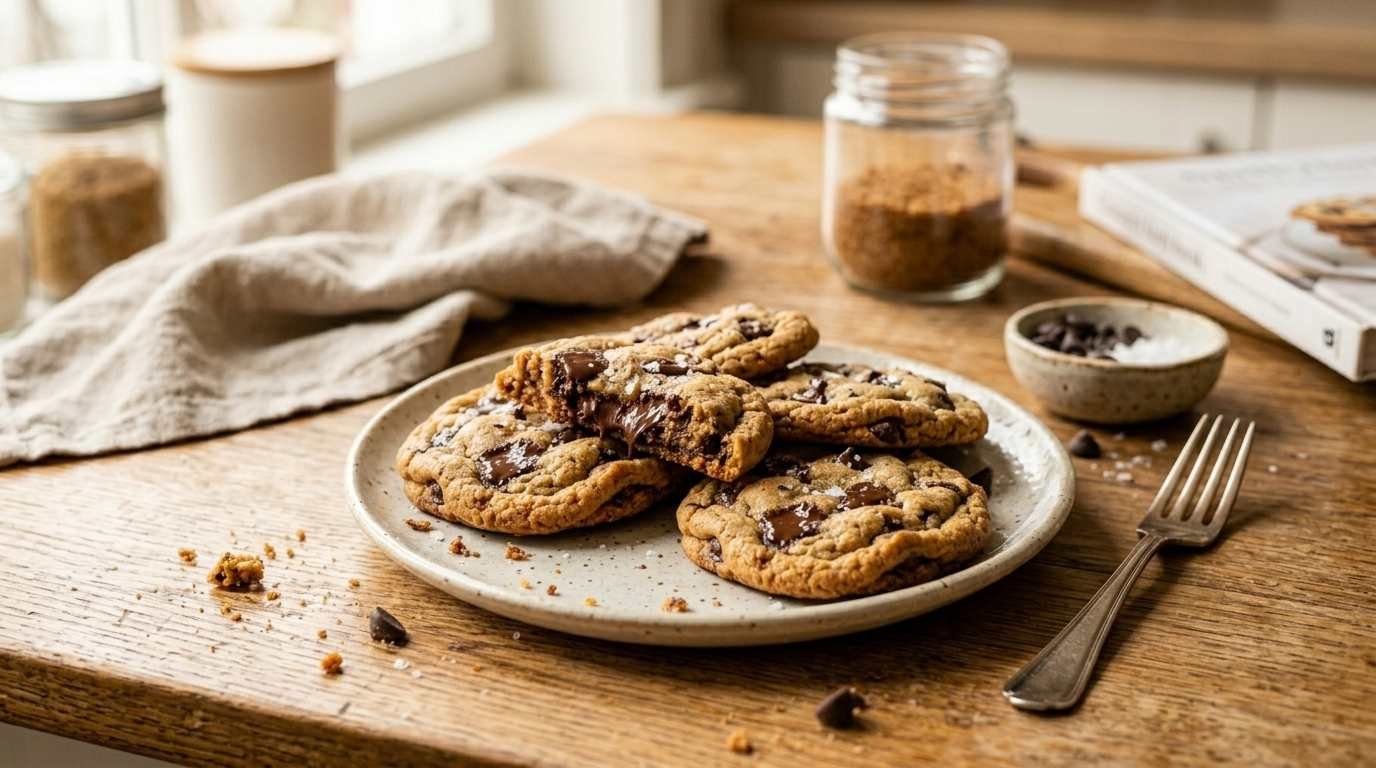

When we want a cookie that delivers everything we love about classic baking, few recipes can compete with the best chocolate chip cookies. We look for crisp, golden edges, a soft and chewy center, plenty of melted chocolate, and a rich buttery flavor that makes every bite irresistible.
The secret is not complicated. With the right balance of butter, brown sugar, granulated sugar, flour, eggs, vanilla, and chocolate chips, we can create bakery-quality cookies in our own kitchen. The most important details are controlling the dough consistency, avoiding overbaking, and giving the cookies enough room to spread properly.
Suggested biscuits recipe: Easy Halloween Biscuits Recipe: Simple & Fun Treats
Table of Contents
Why These Are the Best Chocolate Chip Cookies
A great chocolate chip cookie should have contrasting textures. The edges should be lightly crisp while the middle remains soft, chewy, and tender. The chocolate should melt into the dough without overwhelming its buttery flavor.
We use a combination of brown sugar and granulated sugar because each contributes something different. Brown sugar adds moisture and chewiness, while granulated sugar helps create lightly crisp edges.
Using softened butter also allows us to cream the butter and sugars properly. This incorporates air into the dough and creates a smooth, evenly mixed base.
For the chocolate, we can use traditional semisweet chocolate chips, dark chocolate chips, or chopped chocolate. Chopped chocolate is particularly appealing because it creates a mixture of large melted pockets and smaller pieces throughout the cookies.
Ingredients for the Best Chocolate Chip Cookies
For approximately 24 cookies, we need:
- 1 cup unsalted butter, softened
- 1 cup packed brown sugar
- 1/2 cup granulated sugar
- 2 large eggs
- 2 teaspoons vanilla extract
- 2 3/4 cups all-purpose flour
- 1 teaspoon baking soda
- 1/2 teaspoon salt
- 2 cups semisweet chocolate chips
- Optional: flaky sea salt for finishing
Using unsalted butter gives us better control over the final salt level. If salted butter is all we have available, we can reduce the additional salt slightly.
Fresh baking soda is also important. Since it contributes to the cookie’s spread, browning, and texture, an old or inactive leavening agent can produce disappointing results.
How to Make Chocolate Chip Cookies
1. Prepare the Butter
We begin by allowing the butter to soften at room temperature. It should be soft enough to press with a finger but should not be melted.
Melted butter produces a different cookie texture and can cause the dough to spread too quickly. Softened butter gives us a more controlled spread and helps create a tender interior.
2. Cream the Butter and Sugars
In a large mixing bowl, we beat the softened butter with the brown sugar and granulated sugar until the mixture becomes light, creamy, and fluffy.
This step should not be rushed. Properly creamed butter and sugar create the foundation for the cookie’s texture.
We then add the eggs one at a time, mixing well after each addition. The vanilla extract goes in with the eggs.
3. Combine the Dry Ingredients
In a separate bowl, we whisk together the flour, baking soda, and salt.
Combining these ingredients separately helps distribute the baking soda and salt throughout the flour. This prevents concentrated pockets of either ingredient from ending up in the finished cookies.
4. Make the Cookie Dough
We gradually add the dry ingredients to the butter mixture. We mix only until the flour is incorporated.
Overmixing is one of the easiest ways to make chocolate chip cookies tough. Once the flour disappears, we stop mixing.
We then fold in the chocolate chips until they are evenly distributed throughout the dough.
5. Chill the Dough for Better Cookies
Although we can bake the cookies immediately, chilling the dough can significantly improve the final result.
We refrigerate the dough for at least 30 minutes, or longer when we want a deeper flavor and thicker texture.
Chilling allows the flour to hydrate and gives the butter time to firm up. As a result, the cookies generally spread more slowly during baking.
For especially thick, bakery-style cookies, we can refrigerate the dough for several hours or overnight.
6. Portion the Cookies
We preheat the oven to 350°F (175°C) and line baking sheets with parchment paper.
Using a cookie scoop, we portion the dough into evenly sized balls. Keeping the portions similar in size ensures that the cookies finish baking at approximately the same time.
We place the dough balls several inches apart because they will spread as they bake.
For an extra attractive finish, we can press a few additional chocolate chips onto the tops of the dough balls before baking.
7. Bake Until Golden
We bake the cookies for approximately 10–12 minutes, depending on their size and our preferred texture.
The edges should look golden and set, while the centers can still appear slightly soft.
We should not wait for the centers to become completely firm in the oven. Cookies continue cooking from residual heat after they are removed.
This is one of the most important techniques for achieving a soft center.
We allow the cookies to rest on the baking sheet for several minutes before transferring them to a wire rack.
The Secret to Soft and Chewy Chocolate Chip Cookies
Several small details can make a significant difference.
Use More Brown Sugar
Brown sugar contains molasses, which contributes moisture, color, and chewiness. Increasing the proportion of brown sugar generally produces a softer cookie.
Don’t Overbake
If we want soft cookies, we remove them while the centers still look slightly underdone. They will firm up as they cool.
Measure Flour Correctly
Too much flour can make cookies dry and cakey. We get more consistent results by weighing the flour with a kitchen scale.
If we measure by volume, we should spoon the flour into the measuring cup and level it rather than scooping directly from the flour container.
Chill the Dough
Chilling helps control spreading and allows the flavors to develop. It is particularly useful when our kitchen is warm or when the dough feels unusually soft.
How to Get Crispy Edges and a Chewy Center
The ideal chocolate chip cookie does not have to be completely soft or completely crisp. We can aim for the best of both textures.
A combination of granulated sugar, brown sugar, softened butter, and careful baking helps create that contrast.
We bake until the outer edges are golden but remove the cookies before the centers become fully set. After several minutes of cooling, the edges become crisp while the centers remain chewy.
For even more texture, we can sprinkle a small amount of flaky sea salt over the cookies immediately after they come out of the oven.
Best Chocolate for Chocolate Chip Cookies
Semisweet chocolate chips are a classic choice because their sweetness balances the buttery dough.
For a more sophisticated cookie, we can use dark chocolate chunks. Chopped chocolate bars create irregular pieces that melt differently from standard chips, producing beautiful pools of chocolate.
Milk chocolate creates a sweeter cookie, while a combination of dark and semisweet chocolate gives us more complexity.
We can also mix chocolate chips with chopped chocolate to create different textures in every bite.
Common Chocolate Chip Cookie Mistakes
Using Melted Butter Without Adjusting the Recipe
Melted butter can make cookies spread dramatically. Unless the recipe is specifically designed for melted butter, softened butter is generally the safer option.
Adding Too Much Flour
Excess flour produces thick, dry cookies. Accurate measuring is essential.
Overmixing the Dough
Once the flour is incorporated, we should stop mixing. Excessive mixing can develop gluten and make the cookies less tender.
Overbaking
Cookies often look slightly underdone when they are actually ready. If we wait until the centers look completely baked, the finished cookies may become hard after cooling.
Crowding the Baking Sheet
Cookies need space to spread. Crowding them can cause the cookies to merge together and bake unevenly.
Easy Variations
Once we have a dependable chocolate chip cookie base, we can customize it in countless ways.
For double chocolate chip cookies, we can replace part of the flour with unsweetened cocoa powder.
For a nutty variation, we can add chopped pecans or walnuts.
For a salted chocolate cookie, we can use dark chocolate chunks and finish each cookie with flaky sea salt.
For a festive version, we can add colorful baking candies alongside the chocolate chips.
We can also add a small amount of espresso powder to intensify the chocolate flavor without making the cookies taste strongly of coffee.
How to Store Chocolate Chip Cookies
We store completely cooled cookies in an airtight container at room temperature. They are generally best enjoyed within several days.
To maintain softness, we can place a small piece of bread in the container. The cookies absorb some of the moisture from the bread, helping them stay tender.
For longer storage, baked cookies can be frozen in an airtight freezer-safe container.
Can We Freeze Chocolate Chip Cookie Dough?
Yes. Freezing cookie dough is one of the easiest ways to have freshly baked cookies whenever we want them.
We portion the dough into individual balls before freezing. Once firm, we transfer the portions to a freezer-safe bag or container.
When we’re ready to bake, we can place the frozen dough portions directly onto a lined baking sheet and add a few extra minutes to the baking time.
This approach is especially convenient for holidays, parties, unexpected guests, or weekend baking.
Final Tips for the Best Chocolate Chip Cookies
For consistently delicious results, we keep these principles in mind:
- Use good-quality butter and chocolate.
- Measure flour carefully.
- Cream the butter and sugars thoroughly.
- Avoid overmixing after adding the flour.
- Chill soft dough before baking.
- Leave enough space between cookies.
- Remove cookies when the edges are golden and the centers are still slightly soft.
- Let cookies cool briefly on the baking sheet.
- Finish with flaky sea salt for an elevated flavor.
The best chocolate chip cookies are ultimately about balance. We want buttery richness without excessive sweetness, crisp edges without a dry center, and enough chocolate to make every bite satisfying.
With a reliable ingredient ratio and careful attention to baking time, we can make cookies that are golden, chewy, soft, rich, and loaded with melted chocolate every time. Whether served warm with a glass of milk, packed into a lunchbox, or shared straight from the baking sheet, these classic cookies are a simple recipe worth keeping in our permanent baking rotation.





Leave a Reply