
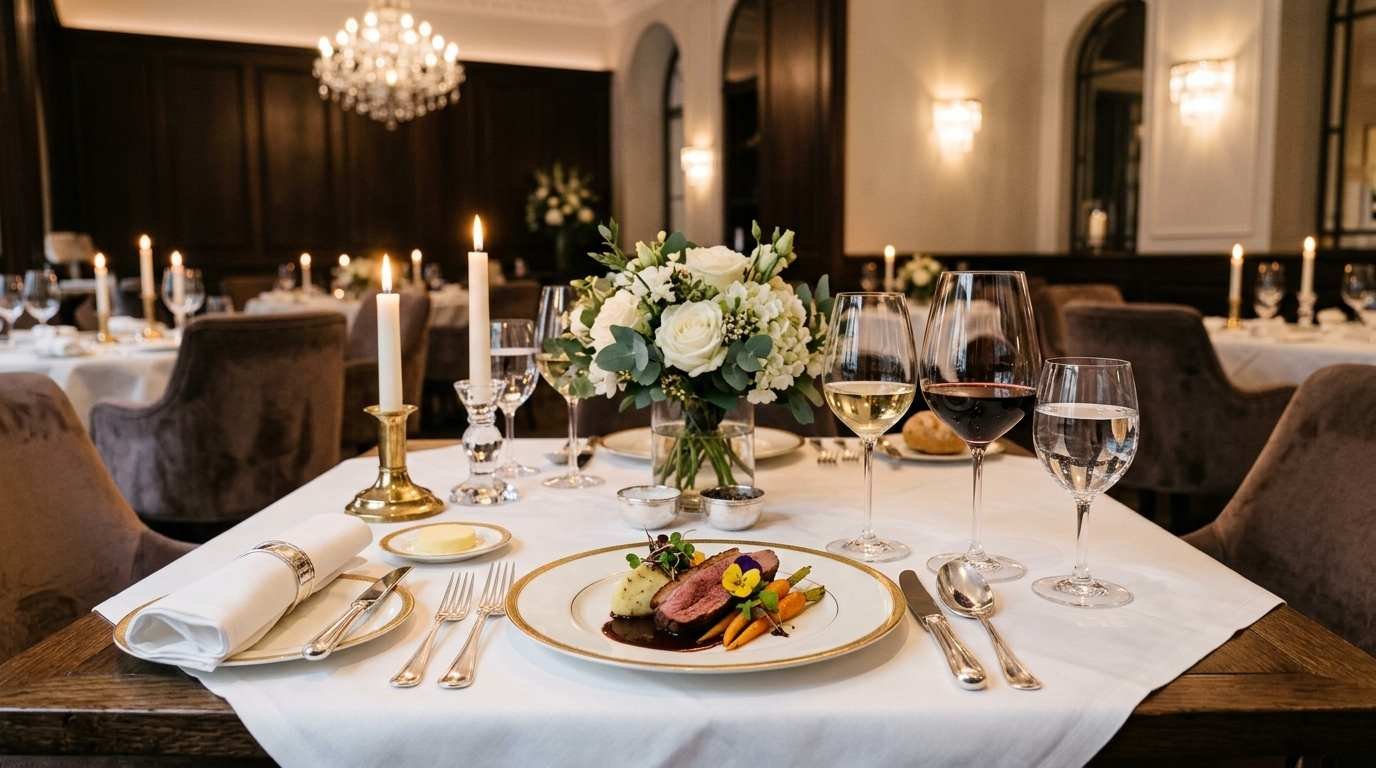

Fine dining is more than enjoying an expensive meal in a beautiful restaurant. It is a carefully designed experience that combines exceptional food, attentive service, elegant surroundings, thoughtful presentation, and proper dining etiquette. Whether we are visiting a Michelin-starred restaurant, celebrating a special occasion, or simply learning how to feel more comfortable in an upscale dining room, understanding the basic steps of fine dining allows us to enjoy the experience with confidence.
From choosing the right restaurant to understanding the menu, using table settings correctly, and interacting respectfully with restaurant staff, a few simple principles can make fine dining feel effortless rather than intimidating.
Table of Contents
1. Choose the Right Fine Dining Restaurant
Our fine dining experience begins before we arrive at the restaurant. We should choose a restaurant that matches the occasion, budget, cuisine preferences, and desired atmosphere.
Before making a reservation, we can review the restaurant’s menu, dress expectations, reservation policy, and dining format. Some restaurants specialize in traditional multi-course meals, while others offer tasting menus, chef’s tables, or contemporary interpretations of classic cuisine.
It is also useful to determine whether the restaurant has a dress code. Upscale establishments may expect smart casual, business attire, cocktail attire, or formal clothing.
For an important celebration, we should also mention the occasion when making the reservation. Restaurants may be able to provide a particularly suitable table or accommodate reasonable requests.
2. Make a Reservation in Advance
Fine dining restaurants often have limited seating and carefully planned service schedules. For that reason, reservations are an essential part of the experience.
We should make reservations as early as practical, particularly for weekends, holidays, special occasions, and highly regarded restaurants.
When booking, we should provide accurate information about:
- Number of guests
- Preferred date and time
- Dietary restrictions
- Allergies
- Special occasions
- Accessibility requirements
- Seating preferences when available
We should also understand the restaurant’s cancellation and late-arrival policy. Some fine dining restaurants prepare ingredients specifically according to reservations and may charge fees for cancellations or no-shows.
3. Dress Appropriately for Fine Dining
Appropriate clothing helps us feel comfortable while respecting the restaurant’s atmosphere.
A polished appearance is generally a safe choice. For many fine dining restaurants, this can mean a well-tailored jacket, elegant trousers, a sophisticated dress, a coordinated blouse and skirt, or another refined outfit appropriate to the venue.
We should avoid clothing that is excessively casual unless the restaurant specifically permits it.
Good grooming is equally important. Clean, polished shoes, neat hair, and understated accessories contribute to an elegant overall appearance.
The goal is not necessarily to wear the most expensive clothing. Well-fitted, clean, and coordinated clothing usually creates a more sophisticated impression.
4. Arrive on Time
Punctuality is particularly important in fine dining because the restaurant may operate with carefully coordinated courses and service timings.
We should aim to arrive approximately 10 to 15 minutes before the reservation. This gives us enough time to enter comfortably, check our coats if necessary, and settle into the dining room without rushing.
If we expect to be significantly late, contacting the restaurant is courteous. A late arrival can affect not only our meal but also the kitchen and service schedule.
5. Understand the Table Setting
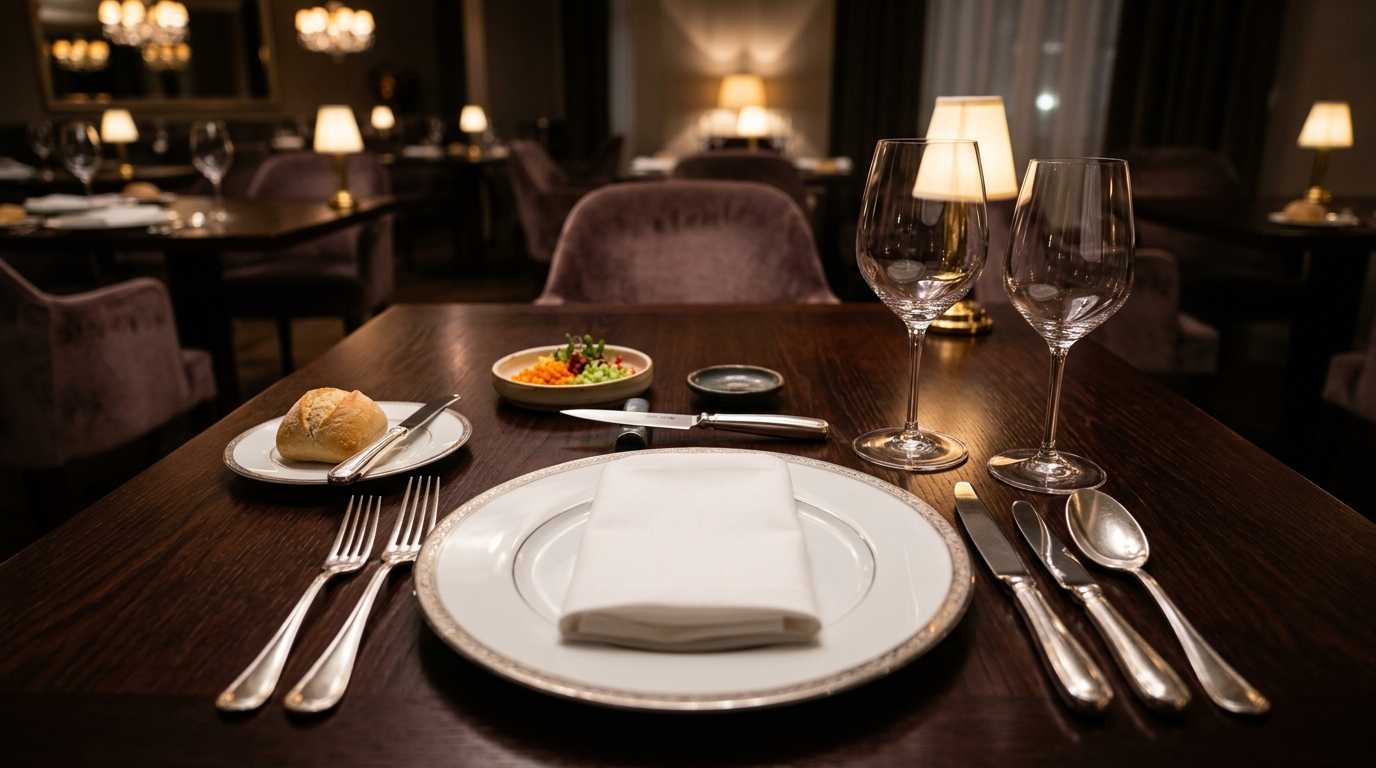
A formal table can initially appear complicated because it may include several forks, knives, spoons, glasses, and plates.
The simplest rule is to work from the outside toward the inside as each course is served.
Typically:
- Forks are positioned on the left.
- Knives and spoons are positioned on the right.
- Knife blades generally face inward toward the plate.
- Bread plates are commonly placed on the left.
- Water and wine glasses are generally positioned above the knives.
We do not need to memorize every possible table-setting variation. The utensils are normally arranged according to the courses being served, so following the meal naturally makes the setting much easier to understand.
6. Begin With the Bread and Drinks
At the beginning of a meal, we may be offered bread, water, an aperitif, or another beverage.
When eating bread in a formal setting, we should avoid biting directly from the entire piece. Instead, we can tear off a small, manageable portion with our hands and butter it individually.
If wine is being served, we should wait for the appropriate moment and listen to the sommelier or server’s recommendations. We can ask questions about the wine’s flavor profile, origin, or pairing without hesitation.
Fine dining is designed to be enjoyed, not endured. Asking knowledgeable questions is perfectly acceptable.
7. Read the Menu Carefully
Fine dining menus may contain unfamiliar ingredients, specialized culinary terminology, or several courses.
We should take our time reading the menu rather than ordering impulsively.
When something is unclear, we can ask the server to explain:
- Ingredients
- Preparation methods
- Portion sizes
- Allergens
- Side dishes
- Wine pairings
- Course substitutions
If we have allergies or strict dietary restrictions, we should communicate them clearly before ordering. We should never assume that a dish is safe simply because an ingredient is not visibly present.
8. Follow the Pace of the Meal
Fine dining is generally structured around a sequence of courses rather than a rushed meal.
A typical experience might include:
- An amuse-bouche or small welcome bite
- Appetizer
- Soup or intermediate course
- Fish or seafood course
- Main course
- Cheese course
- Dessert
- Coffee or petits fours
Not every restaurant follows this structure, and modern tasting menus can be considerably more creative.
We should allow the restaurant to guide the pace. Eating too quickly can make us feel rushed, while waiting patiently allows the kitchen and service team to maintain the intended progression.
9. Practice Good Fine Dining Etiquette
Proper etiquette does not require complicated rules. The most important principles are courtesy, moderation, attentiveness, and consideration for others.
We should:
- Keep our phone away or on silent.
- Avoid speaking excessively loudly.
- Chew with our mouth closed.
- Avoid reaching across other guests.
- Use utensils appropriately.
- Place napkins on our lap.
- Treat restaurant staff respectfully.
- Avoid placing personal belongings on the dining table.
- Keep conversations pleasant and appropriate for the setting.
If we accidentally use the wrong utensil, there is no reason to panic. We can simply observe the next course or discreetly follow the example of other diners.
10. Know How to Use the Napkin
Once seated, we can place the napkin on our lap. It should remain there throughout the meal.
If we need to leave the table temporarily, the napkin can be placed neatly on the chair according to the restaurant’s conventions. At the end of the meal, it is generally placed loosely to the side of the plate rather than folded as though it were unused.
We should use the napkin gently rather than wiping aggressively.
11. Enjoy Each Course Thoughtfully
One of the defining characteristics of fine dining is attention to detail.
Instead of eating quickly, we can take time to appreciate the aroma, temperature, texture, seasoning, presentation, and balance of each dish.
The chef may have designed several elements to be eaten together. If the server provides instructions for enjoying a particular course, listening carefully can enhance the experience.
Presentation is also an important part of fine dining. However, we should avoid spending so much time photographing food that the meal becomes secondary to the camera.
12. Understand Wine Pairings
Wine pairings can add another dimension to a fine dining experience.
A sommelier may select wines that complement individual courses based on acidity, sweetness, body, tannins, aroma, and preparation methods.
We do not need to be wine experts. We can simply explain our preferences and budget and ask for recommendations.
For example, we might say that we prefer dry white wines, lighter reds, aromatic wines, or something less alcoholic.
A knowledgeable sommelier can usually guide us toward an appropriate selection.
13. Handle Mistakes Gracefully
Unexpected situations can happen even in the finest restaurants.
A wrong dish, spilled drink, missing utensil, or misunderstood order should be handled calmly. We can politely notify the server rather than becoming frustrated.
Fine dining staff are trained to resolve service issues professionally. A respectful approach usually leads to a much better outcome.
Likewise, if we make an etiquette mistake, there is no reason to feel embarrassed. Confidence comes from remaining composed, not from being perfect.
14. Understand When the Meal Is Finished
At the conclusion of the meal, we may be offered coffee, tea, dessert wine, digestifs, or petits fours.
Once we have finished, we can place our utensils together on the plate according to standard dining conventions. This provides a visual indication to the service team that we have completed the course.
We should avoid pushing our plate away or stacking dishes ourselves unless the restaurant specifically encourages it.
15. Pay the Bill and Tip Appropriately
When the meal is complete, the server will generally provide the bill when requested.
We can review it carefully and make sure the charges correspond to what we ordered. In restaurants where service charges or gratuities are included, we should check the bill before adding anything further.
Tipping customs vary significantly by country, so we should follow the local practice rather than assuming that one international standard applies everywhere.
16. Leave With Courtesy
The final part of fine dining is leaving the restaurant respectfully.
We can thank the servers, sommelier, host, and other staff members who contributed to the experience. If we particularly enjoyed a dish or aspect of the service, a sincere compliment is always appreciated.
For restaurants we genuinely enjoyed, leaving a thoughtful review or recommending the establishment to friends can also be a meaningful way to show appreciation.
Fine Dining Made Simple
The basic steps of fine dining are ultimately about respect, awareness, patience, and enjoyment. We do not need extensive knowledge of etiquette or culinary terminology to have a sophisticated dining experience.
We can begin by choosing an appropriate restaurant, making a reservation, dressing suitably, arriving on time, and allowing the restaurant’s staff to guide us through the meal. From there, understanding basic table etiquette, reading the menu carefully, appreciating each course, and treating everyone respectfully will help us feel comfortable.
Most importantly, fine dining should not feel like a test. It is an opportunity to experience carefully prepared food, thoughtful hospitality, beautiful surroundings, and memorable moments.
When we approach the experience with curiosity rather than anxiety, fine dining becomes less about following rigid rules and more about appreciating the craftsmanship behind an exceptional meal.


Leave a Reply