
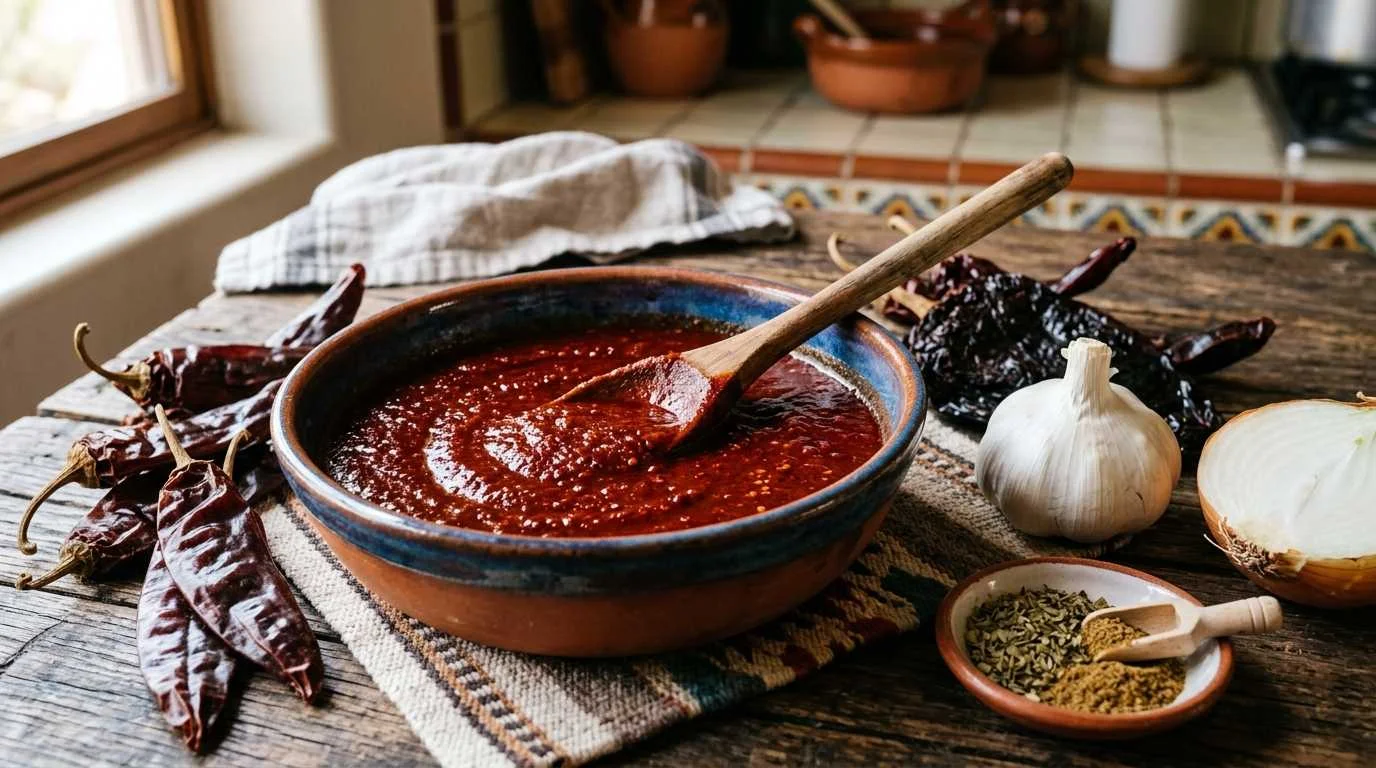

A good authentic enchilada sauce recipe should be deeply savory, lightly smoky, pleasantly earthy, and balanced without relying on unnecessary ingredients. The best homemade sauce starts with dried chiles, aromatics, spices, and a simple cooking method that allows every flavor to develop.
This easy enchilada sauce is rich enough for traditional enchiladas but versatile enough for tacos, burritos, casseroles, huevos rancheros, and other Mexican-inspired dishes. It can also be prepared ahead, refrigerated, or frozen, making it an excellent staple for busy weeknight cooking.
Unlike many quick versions made primarily with tomato sauce and chili powder, this recipe builds its flavor from dried Mexican chiles. The result is a smoother, more complex sauce with natural chile flavor, gentle heat, and a beautiful red color.
Table of Contents
What Makes an Authentic Enchilada Sauce?
Traditional Mexican enchilada sauces vary considerably by region and family. There isn’t one universal recipe, and many authentic versions don’t resemble the thick, tomato-heavy sauces commonly found in Americanized preparations.
A traditional-style sauce often begins with dried chiles, which are toasted or softened before being blended with garlic, onion, spices, and cooking liquid. The sauce is then strained and cooked until its flavors come together.
For a balanced homemade version, we want several elements working together:
- Dried chiles for depth, color, and character
- Garlic and onion for savory flavor
- Mexican oregano for an earthy herbal note
- Cumin for warmth
- Salt to bring everything into balance
- Broth or water to create the right consistency
- A small amount of oil for sautéing and finishing
The exact chile combination can be adjusted according to the desired heat level.
Ingredients for Easy Enchilada Sauce
Dried Chiles
For a flavorful red enchilada sauce, we recommend using dried guajillo chiles as the foundation. They have a rich red color, mild-to-medium heat, and fruity, slightly tangy flavor.
For additional depth, dried ancho chiles can be included. Ancho chiles are dried poblano peppers and contribute a darker, sweeter, raisin-like flavor.
A combination of guajillo and ancho chiles produces a particularly well-rounded sauce.
Garlic and Onion
Fresh garlic and onion provide the savory foundation of the sauce. They help soften the sharper chile flavors and add natural sweetness.
Yellow or white onion works well. Fresh garlic is preferable because its flavor is more pronounced and aromatic.
Mexican Oregano
Mexican oregano has a different flavor profile from Mediterranean oregano. It has citrusy, earthy notes that pair especially well with dried chiles.
If Mexican oregano isn’t available, regular oregano can be substituted, although the final flavor will be slightly different.
Cumin
Cumin should be used carefully. A small amount adds warmth and earthiness, while too much can dominate the delicate chile flavors.
Broth or Water
Chicken broth adds additional savory depth, while vegetable broth makes the sauce suitable for vegetarian dishes. Plain water works perfectly well when the chiles and aromatics are allowed to provide the primary flavor.
Salt
Salt is essential because dried chiles can taste flat without enough seasoning. Add it gradually and taste after blending and again after simmering.
How to Make Authentic Enchilada Sauce
1. Prepare the Dried Chiles
Remove the stems from the dried chiles. Open them and shake out most of the seeds.
The seeds aren’t necessarily the main source of heat, but removing them helps produce a smoother sauce and reduces bitterness.
If the chiles have visible dust or debris, wipe them gently with a clean kitchen towel.
2. Toast the Chiles Briefly
Heat a dry skillet over medium heat.
Add the dried chiles and toast them for a short time, turning frequently. They should become fragrant but should not burn.
This step is important because burnt chiles can introduce an unpleasant bitter flavor that is difficult to correct later.
Once fragrant, remove the chiles from the pan.
3. Soften the Chiles
Place the toasted chiles in a bowl and cover them with very hot water.
Let them soak until softened, usually around 15 to 20 minutes.
The softened chiles will blend much more easily and create a smoother sauce.
Reserve some of the soaking liquid if desired, although fresh water or broth can also be used when blending.
4. Cook the Aromatics
While the chiles soften, heat a small amount of oil in a skillet.
Add chopped onion and cook until softened. Add the garlic toward the end so it becomes fragrant without burning.
Remove the pan from the heat once the aromatics are tender.
5. Blend the Sauce
Drain the softened chiles and transfer them to a blender.
Add the cooked onion and garlic, Mexican oregano, cumin, salt, and enough broth or water to create a smooth consistency.
Blend until the mixture becomes as smooth as possible.
Because dried chile skins can remain slightly fibrous, straining the blended sauce is an important step when a restaurant-quality texture is desired.
6. Strain the Enchilada Sauce
Place a fine-mesh strainer over a bowl or saucepan.
Pour the blended sauce through the strainer and use a spoon or spatula to press the mixture through.
Discard the remaining solids.
The strained sauce should be smooth, vibrant, and pourable.
7. Simmer Until Flavorful
Heat a little oil in a saucepan and carefully add the strained chile mixture.
Simmer gently for approximately 10 to 15 minutes, stirring occasionally.
The sauce will darken slightly and become more cohesive as it cooks.
Taste and adjust the seasoning. If the sauce is too thick, add a little broth or water. If it tastes too sharp, additional simmering can help mellow the flavors.
How to Adjust the Heat
One of the advantages of making enchilada sauce at home is having complete control over the spice level.
For mild enchilada sauce, use mostly ancho and guajillo chiles and avoid hotter varieties.
For medium heat, add a small amount of a hotter dried chile.
For a spicy sauce, incorporate dried chiles known for higher heat, but do so gradually.
The easiest approach is to start conservatively. You can always increase heat, but removing excessive chile heat is much more difficult.
How to Make the Sauce Smoother
A blender can create a smooth sauce, but straining remains one of the best techniques for achieving a silky consistency.
If the sauce seems too thick during blending, add liquid one tablespoon at a time.
Avoid adding too much liquid immediately. A watery sauce can be reduced later, but starting with the right consistency gives greater control.
For an especially smooth result, strain the sauce twice.
How to Fix Common Enchilada Sauce Problems
The Sauce Tastes Bitter
Bitterness usually comes from burned chiles or overly aggressive toasting.
If the sauce is only slightly bitter, additional broth, salt, or a small amount of sweetness may help balance it. However, severely burned chiles can make the sauce difficult to rescue.
The Sauce Is Too Spicy
Mix in additional mild chile sauce, broth, or another batch of sauce made with mild chiles.
Adding more ingredients rather than simply adding sugar generally produces a better-balanced result.
The Sauce Is Too Thin
Simmer it uncovered for several minutes to allow excess moisture to evaporate.
Avoid adding large amounts of flour unless the specific style of sauce calls for it.
The Sauce Is Too Thick
Simply whisk in warm broth or water until it reaches the desired consistency.
For enchiladas, the sauce should generally be fluid enough to coat tortillas easily without being watery.
How to Use Homemade Enchilada Sauce
This sauce is obviously perfect for homemade enchiladas, but its uses go well beyond that.
Try it with:
- Cheese enchiladas
- Chicken enchiladas
- Beef enchiladas
- Vegetable enchiladas
- Bean and cheese enchiladas
- Enchilada casseroles
- Burritos
- Tacos
- Huevos rancheros
- Breakfast skillets
- Mexican-inspired rice
- Layered tortilla casseroles
It can also be spooned over roasted vegetables, grilled chicken, or beans when you want a quick boost of chile flavor.
How to Store Enchilada Sauce
Allow the sauce to cool before transferring it to an airtight container.
Store homemade enchilada sauce in the refrigerator and use it within several days.
For longer storage, freeze the sauce in practical portions. Small containers or freezer-safe bags make it easy to thaw only what is needed.
Frozen sauce can be thawed overnight in the refrigerator or gently reheated in a saucepan.
If the sauce separates slightly after storage, simply stir or whisk it while reheating.
Can Enchilada Sauce Be Made Ahead?
Absolutely.
In fact, preparing the sauce ahead of time can improve convenience because the flavors have additional time to settle.
Make the sauce one or two days before preparing enchiladas and keep it refrigerated in a sealed container.
When ready to cook, gently warm the sauce. If it has thickened in the refrigerator, loosen it with a small amount of broth or water.
Tips for the Best Authentic Enchilada Sauce
Don’t burn the chiles. Toast them just until fragrant.
Use good-quality dried chiles. Old, stale chiles can produce muted flavor.
Taste before adding more spices. The chile combination should remain the dominant flavor.
Strain the sauce. This creates a noticeably smoother texture.
Simmer after blending. This helps combine and deepen the flavors.
Season gradually. Salt should enhance the sauce without overwhelming it.
Control the consistency. Add liquid slowly so the finished sauce remains rich rather than watery.
Final Thoughts
A truly satisfying authentic enchilada sauce recipe doesn’t need a long list of ingredients. The foundation is simple: quality dried chiles, fresh aromatics, carefully chosen spices, enough liquid to blend everything smoothly, and a gentle simmer to bring the flavors together.
The most important technique is treating the dried chiles carefully. Brief toasting develops their aroma, soaking softens them, blending releases their flavor, and straining transforms the mixture into a smooth sauce.
Once this easy homemade enchilada sauce becomes part of the cooking routine, enchiladas become much more convenient to prepare. A batch can be made ahead, stored in the refrigerator or freezer, and used whenever a meal needs rich chile flavor.
Whether we use it for traditional-style enchiladas, a quick casserole, breakfast eggs, or roasted vegetables, homemade enchilada sauce brings a depth and freshness that packaged sauces often can’t match.
Frequently Asked Questions
Is enchilada sauce better with or without tomatoes?
Both styles exist. Some recipes use tomatoes or tomato products, while many traditional chile-based sauces rely primarily on dried chiles, aromatics, and spices.
For a sauce with a stronger authentic dried-chile character, tomatoes aren’t necessary.
Can we use chili powder instead of dried chiles?
Yes, especially when convenience is the priority. However, dried whole chiles provide a more layered flavor and allow us to control the chile combination.
Chili powder can also vary significantly between brands, so the final result may be less predictable.
Can we make this enchilada sauce vegetarian?
Yes. Simply use water or vegetable broth instead of chicken broth.
Is homemade enchilada sauce gluten-free?
The basic ingredients in a chile-based sauce are naturally gluten-free, but packaged ingredients such as broth and spice blends should always be checked for potential gluten-containing additives or cross-contact if gluten avoidance is important.
Can we make enchilada sauce ahead of time?
Yes. Homemade sauce is particularly convenient for meal preparation because it can be refrigerated for short-term use or frozen for longer storage.


Leave a Reply