
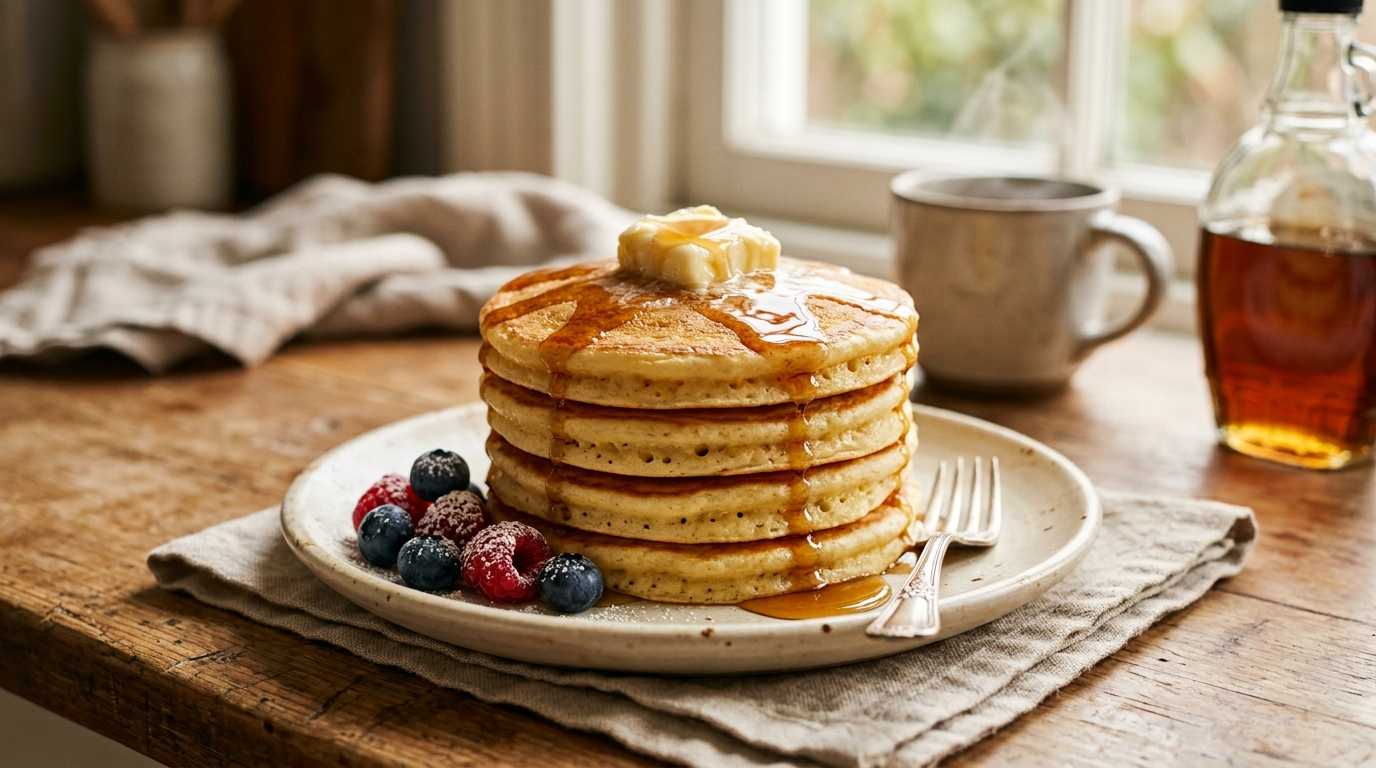

A reliable pancake recipe does not need a long list of ingredients or complicated techniques. Once we understand the basic pancake formula, we can make a dependable stack from simple pantry staples and adjust it for different textures, flavors, and occasions.
The beauty of a formula is that we do not have to memorize one rigid recipe. Instead, we learn how the ingredients work together. Flour provides structure, liquid creates the batter, eggs add richness and binding, fat improves tenderness, and a leavening agent gives pancakes their lift. Sugar and salt balance the flavor.
Once we know these relationships, making pancakes becomes much easier.
Table of Contents
What Is the Basic Pancake Formula?
A simple pancake formula can be built around the following proportions:
- 1 cup all-purpose flour
- 1 cup milk
- 1 large egg
- 2 tablespoons melted butter or neutral oil
- 1 tablespoon sugar
- 1½ teaspoons baking powder
- ¼ teaspoon salt
- ½ teaspoon vanilla extract, optional
This formula produces roughly 6 to 8 medium pancakes, depending on how much batter we use for each pancake.
The exact amount of milk may need slight adjustment because different flours absorb different amounts of liquid. Rather than treating the measurements as completely fixed, we should look for the right batter consistency.
The finished batter should be thick enough to coat a spoon but loose enough to spread naturally when poured onto a hot pan.
The Role of Each Pancake Ingredient
Understanding each ingredient helps us troubleshoot pancakes when the result is too dense, dry, thin, or chewy.
Flour Provides Structure
Flour is the foundation of the pancake. All-purpose flour is particularly convenient because it contains enough protein to provide structure without producing an excessively chewy pancake.
When flour is mixed with liquid, its proteins begin forming gluten. Some gluten is necessary because it gives the pancake enough structure to hold together. However, too much gluten development can make pancakes tough.
This is why we should mix pancake batter gently and stop as soon as the dry ingredients are incorporated.
Milk Creates the Batter
Milk provides the liquid needed to hydrate the flour and dissolve ingredients such as sugar and salt. It also contributes flavor and tenderness.
Whole milk creates a richer batter, while low-fat milk produces a slightly lighter result. We can also use alternatives such as oat milk, almond milk, or soy milk when appropriate.
The amount of liquid is one of the easiest parts of the formula to adjust. If our batter looks excessively thick, we can add milk one tablespoon at a time.
Egg Adds Structure and Richness
Eggs serve several purposes. They help bind the ingredients, contribute fat and protein, and give pancakes a richer texture.
One large egg works well with approximately one cup of flour. Adding significantly more egg can produce a richer, more custard-like pancake, while reducing the egg can make the pancake somewhat more fragile.
Butter Adds Tenderness
Melted butter adds flavor and richness while helping create a tender texture. Neutral oil can also be used.
Butter is especially useful when we want a classic, rich pancake flavor. Oil can be convenient when we want a slightly lighter-tasting pancake or need a dairy-free option.
We can also use a small amount of butter in the batter and reserve additional butter for cooking.
Baking Powder Creates Lift
Baking powder is the primary leavening ingredient in this basic formula. It releases gas when hydrated and heated, helping the pancakes rise.
Without enough leavening, pancakes can become flat and heavy. Too much, however, can leave an unpleasant chemical or bitter taste.
For this reason, measuring baking powder accurately matters.
Sugar Balances the Flavor
A small amount of sugar gives pancakes a subtle sweetness and helps with browning.
We do not need a large quantity because pancakes are often served with fruit, maple syrup, honey, powdered sugar, yogurt, or other toppings.
For savory pancakes, we can reduce or omit the sugar.
Salt Makes the Flavors Clearer
Salt may seem like a minor ingredient, but it plays an important role. A small amount prevents the pancakes from tasting flat and helps balance the sweetness.
Even when we are making sweet pancakes, we should not automatically leave salt out.
How to Mix Pancake Batter
We begin by combining the flour, baking powder, sugar, and salt in a large bowl.
In a second bowl, we whisk together the milk, egg, melted butter, and vanilla if we are using it.
We then pour the wet mixture into the dry ingredients.
The most important rule is simple: do not overmix the batter.
We stir just until the flour disappears. A few small lumps are completely acceptable. In fact, trying to eliminate every lump often leads to excessive mixing and tougher pancakes.
Once mixed, the batter can rest for approximately 5 to 10 minutes. This gives the flour time to hydrate and allows the batter to settle.
What Consistency Should Pancake Batter Have?
Correct consistency is more important than following a measurement blindly.
If the batter is too thick, the pancakes may remain raw in the center while becoming overly brown on the outside. We can loosen it with a small amount of milk.
If the batter is too thin, the pancakes may spread too widely and become flat. We can add a small amount of flour and mix gently.
The ideal batter should flow slowly from a spoon or measuring cup rather than pouring like water.
When dropped onto the pan, it should spread into a round shape without requiring much assistance.
How to Cook the Basic Pancake Formula
We heat a lightly greased skillet or griddle over medium heat.
The cooking surface should be hot enough that a small drop of batter begins cooking immediately, but not so hot that the outside browns before the interior has time to cook.
We pour approximately ¼ cup of batter for each medium pancake.
The first side usually needs several minutes. We watch for bubbles forming across the surface and for the edges to begin looking set.
When the underside is golden brown and the top is no longer completely wet, we flip the pancake.
We then cook the second side until golden and fully cooked.
We should resist the temptation to press down on the pancake with a spatula. Pressing forces out some of the air that gives the pancake a light texture.
Understanding Pancake Ratios
The basic pancake formula is also a useful example of how essential cooking ratios make everyday cooking easier. Instead of memorizing dozens of separate recipes, we can learn the relationships between ingredients and use those relationships to adjust a dish.
For pancakes, the important relationship is between flour, liquid, eggs, fat, and leavening. Once we understand how those ingredients interact, we can scale the recipe up for a larger breakfast or reduce it when cooking for one or two people.
This approach also makes substitutions easier. If we change the flour or use a different type of milk, we can judge the batter and make small adjustments rather than starting over with a completely different recipe.
How to Make Pancakes Fluffier
For especially fluffy pancakes, we can focus on three things: fresh leavening, gentle mixing, and correct heat.
Fresh baking powder provides reliable lift. Gentle mixing limits gluten development. Proper pan temperature allows the batter to rise before the exterior becomes too dark.
We can also separate the egg, whip the white until lightly foamy, and fold it into the batter for a more airy texture. This is not necessary for an everyday pancake, but it is a useful variation when we want extra height.
Another option is replacing some of the milk with buttermilk. The acidity of buttermilk can work particularly well with baking soda-based formulas and produces a distinctive tangy flavor.
How to Adjust the Pancake Formula
The basic formula is flexible.
For thicker pancakes, we can use slightly less milk or add a little more flour.
For thinner pancakes, we increase the liquid gradually.
For richer pancakes, we can add another tablespoon of butter.
For less sweet pancakes, we reduce the sugar.
For whole-wheat pancakes, we can replace part of the all-purpose flour with whole-wheat flour. Because whole-wheat flour absorbs more liquid, we may need to add additional milk.
For dairy-free pancakes, we can use plant-based milk and neutral oil instead of butter.
For egg-free pancakes, mashed banana, applesauce, yogurt alternatives, or commercial egg replacers can provide binding, although the texture will differ from the classic formula.
Flavor Variations Using the Same Formula
Once the basic pancake formula works, we can create many variations without rebuilding the recipe from scratch.
Blueberry Pancakes
We can fold fresh or frozen blueberries into the finished batter. It is best to add them gently so the berries do not release excessive juice into the mixture.
Banana Pancakes
Mashed ripe banana adds sweetness, moisture, and a strong banana flavor. Because banana contributes additional liquid, we may need slightly less milk.
Chocolate Chip Pancakes
A handful of chocolate chips turns the basic batter into a richer breakfast. Mini chips distribute particularly well throughout the pancakes.
Cinnamon Pancakes
Ground cinnamon can be whisked directly into the dry ingredients. A small amount of vanilla complements the spice.
Lemon Pancakes
Lemon zest gives pancakes a fresh citrus flavor without significantly changing the batter consistency.
Common Pancake Problems and Simple Fixes
Why Are My Pancakes Dense?
Dense pancakes often result from overmixing, insufficient leavening, or batter that is too thick.
We should mix only until combined and check that the baking powder is still active.
Why Are My Pancakes Flat?
Flat pancakes may be caused by old baking powder, excessively thin batter, or a pan that is not hot enough.
Checking the leavening and batter consistency is a good starting point.
Why Are the Outside and Inside Cooking Unevenly?
If the outside becomes dark while the middle remains undercooked, the pan is probably too hot.
Reducing the heat allows the center to cook before the exterior becomes overly brown.
Why Are My Pancakes Chewy?
Excessive mixing is one of the most common causes. Once flour meets liquid, gluten begins developing. The more aggressively we mix, the more structure develops.
For tender pancakes, mix less rather than more.
A Simple Pancake Ratio to Remember
For everyday cooking, we can remember the basic structure as:
1 part flour + 1 part milk + 1 egg + a little fat + leavening + salt + optional sugar.
The exact measurements can change according to the style we want, but this foundation gives us a dependable starting point.
The more we make pancakes, the easier it becomes to judge the batter visually. Eventually, we can make small adjustments without reaching for a measuring cup every time.
Final Thoughts on the Basic Pancake Formula
The real advantage of the basic pancake formula is its flexibility. We are not limited to one recipe or one set of toppings. Once we understand the relationship between flour, liquid, eggs, fat, leavening, sugar, and salt, we can adapt the mixture to suit different ingredients and preferences.
The key is to keep the batter gently mixed, maintain the right consistency, and cook over moderate heat.
From there, blueberries, bananas, chocolate chips, cinnamon, citrus zest, nuts, or other additions can turn the same dependable foundation into an entirely different breakfast.
A good pancake formula gives us more than a recipe. It gives us a simple framework we can remember, adjust, and reuse whenever we want a reliable stack of homemade pancakes.




Leave a Reply