
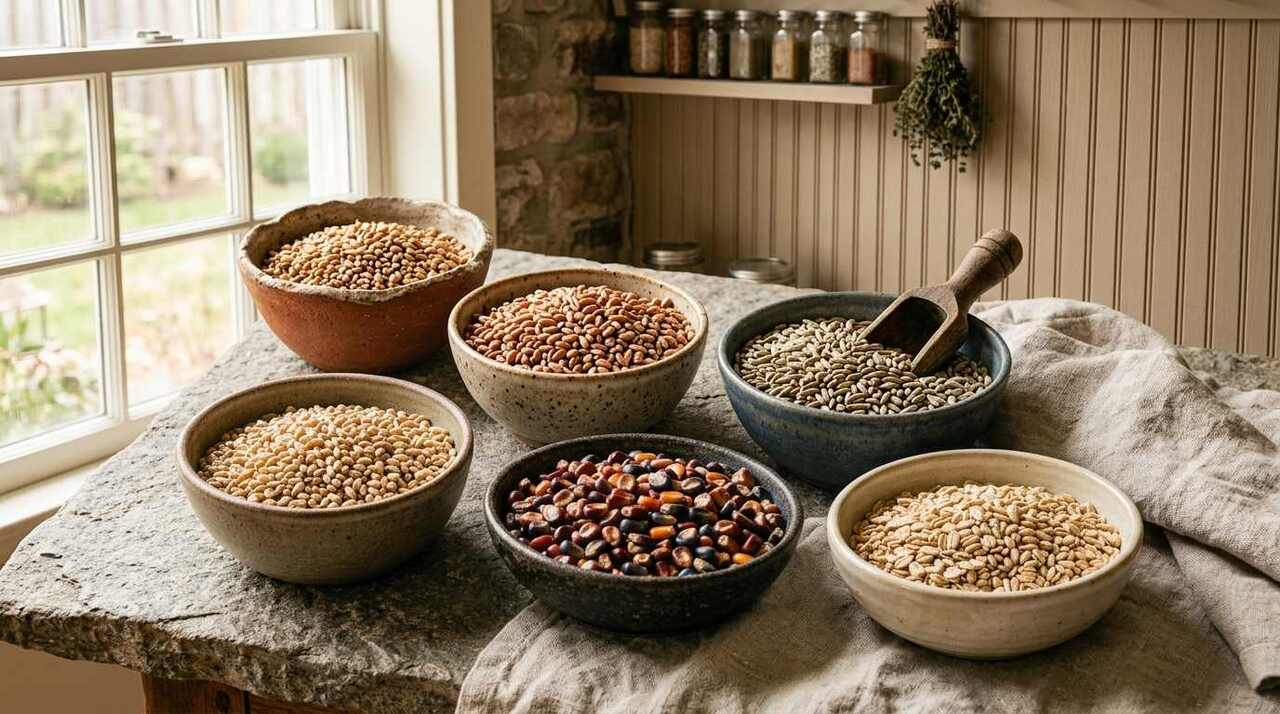

For generations, grains have been far more than basic ingredients. They have been the foundation of traditional diets, agricultural communities, regional food cultures, and family recipes passed from one generation to the next. Today, heirloom grains are finding a renewed place on our tables as we look for foods with deeper agricultural roots, distinctive flavors, and stronger connections to culinary heritage.
Our renewed interest in these grains is not simply about bringing old ingredients back into fashion. It is about rediscovering varieties that were developed, cultivated, and adapted long before modern agriculture narrowed the range of grains commonly available to consumers.
This growing collection of traditional varieties can be thought of as a new heritage alley—a culinary path connecting forgotten crops with modern kitchens. From ancient wheat varieties to heritage corn, rye, barley, oats, and other traditional grains, each offers a different story and a different way to cook.
Table of Contents
What Are Heirloom Grains?
Heirloom grains are traditional grain varieties that have been preserved and cultivated over long periods rather than being replaced entirely by newer commercial varieties.
The term heirloom generally refers to varieties valued for their history, distinctive characteristics, regional importance, or preservation within farming communities. Unlike many highly standardized modern crops, heirloom grains can display considerable variation in flavor, texture, color, growing characteristics, and culinary performance.
Some varieties have survived because farmers continued saving their seed. Others have been preserved by agricultural organizations, seed banks, specialty growers, and communities interested in maintaining regional food traditions.
This diversity is part of their appeal. A loaf made with an old wheat variety may have a different aroma and texture from one made with conventional modern wheat. Heritage corn can bring deeper sweetness or a distinctive color to traditional dishes. Old varieties of rye, barley, and oats can contribute their own flavors and textures to breads, porridges, soups, and baked goods.
Why Are Heirloom Grains Returning to Our Kitchens?
Our renewed interest in heirloom grains reflects several changes in the way we think about food.
We increasingly want to understand where our ingredients come from, how they are grown, and what agricultural traditions stand behind them. At the same time, cooks are searching for ingredients that provide something different from standardized supermarket staples.
Heirloom grains answer both interests.
They give us an opportunity to explore traditional foods while expanding the range of flavors available in everyday cooking. They can also introduce us to agricultural histories that might otherwise disappear from public awareness.
For home cooks, the appeal is particularly practical. A traditional grain can transform a familiar recipe without requiring an entirely new cooking technique.
A bowl of porridge, a loaf of bread, a grain salad, or a simple side dish can become a way to experience a different variety while keeping the overall meal familiar.
Ancient Wheat and Heritage Wheat Varieties
Wheat is perhaps the most recognizable example of the renewed interest in traditional grains.
Varieties such as emmer, einkorn, and spelt are often associated with ancient or heritage wheat traditions. They have distinctive histories and characteristics, although the terms “ancient,” “heritage,” and “heirloom” are not always interchangeable.
Einkorn, for example, is an ancient form of wheat known for its small kernels and distinctive flavor. Emmer has a long agricultural history and remains important in traditional food cultures. Spelt has also experienced renewed popularity among bakers and cooks interested in older wheat varieties.
These grains can be used in breads, porridges, grain bowls, salads, and baked goods.
Their appeal comes partly from their flavor and texture. Rather than treating grain as a neutral background ingredient, we can make it part of the character of the dish.
Heritage Corn Brings Color and Character
Corn has an especially rich history of regional and traditional varieties.
Long before supermarkets offered mostly standardized yellow or white corn, communities cultivated corn in many colors, shapes, sizes, and textures. Blue, red, black, speckled, and multicolored corn varieties remain important examples of agricultural diversity.
Heritage corn can be milled into flour or meal, cooked as a grain, incorporated into breads, or used in traditional dishes.
Different varieties can behave differently in the kitchen. Some are particularly suited to grinding, while others work better for specific preparations. Their colors can also make an otherwise simple dish visually striking.
Using heritage corn allows us to experience an ingredient not only as food but also as a reflection of agricultural history.
Heritage Rye, Barley, and Oats
The world of heirloom grains extends well beyond wheat and corn.
Rye has long been central to breads and food traditions across parts of Europe and other regions. Its characteristic flavor makes it particularly valuable in hearty breads, while whole rye grains can also be cooked and incorporated into salads or grain-based dishes.
Barley has an equally long history. It can be used in soups, stews, salads, porridges, and rustic side dishes. Traditional barley varieties can add a satisfying chewiness and earthy flavor.
Oats are another familiar grain with a history extending far beyond the instant oatmeal found in modern supermarkets. Whole oat groats can provide a substantially different eating experience, with a firmer texture and more pronounced grain flavor.
Exploring these grains gives us more opportunities to move beyond the same small collection of ingredients we use repeatedly.
The Flavor of Heritage Grains
One of the most compelling reasons to explore heirloom grains is their culinary personality.
Modern food production often values consistency. That consistency is useful, especially when ingredients need to perform predictably at a large commercial scale. But it can also mean that consumers encounter a relatively narrow selection of grain varieties.
Heirloom grains can offer greater sensory variety.
Depending on the grain and growing conditions, we may encounter flavors described as nutty, earthy, sweet, grassy, toasted, buttery, or robust. Textures can range from tender and creamy to firm and pleasantly chewy.
The differences may be subtle, but they can become particularly noticeable when the grain is allowed to remain the focus of the dish.
A simple cooked grain with olive oil, herbs, roasted vegetables, and a little salt can reveal much more about its character than a heavily seasoned preparation.
How We Can Cook With Heirloom Grains
We do not need complicated recipes to begin using heirloom grains.
One of the easiest approaches is to replace a familiar grain with a traditional variety in a recipe we already know.
For example, we can use cooked heritage wheat berries in a grain salad, serve barley alongside roasted vegetables, prepare a porridge from whole grains, or incorporate heritage cornmeal into baked goods.
1. Grain Bowls
Grain bowls are particularly flexible.
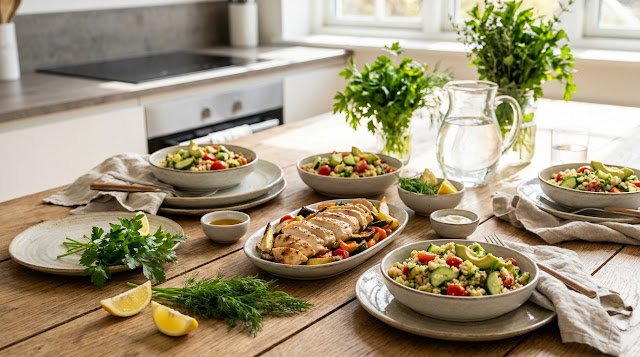
We can combine cooked heirloom grains with seasonal vegetables, legumes, herbs, nuts, seeds, and a simple dressing. The grain provides the foundation while the other ingredients add contrasting textures and flavors.
2. Traditional-Style Breads
Heritage wheat and rye can be especially interesting for bread baking.
Because different grains contain different amounts and types of gluten-forming proteins, they should not always be substituted one-for-one without adjusting a recipe. Hydration, fermentation time, flour strength, and mixing technique may all need attention.
That is part of the attraction for serious home bakers: each grain can teach us something new about the baking process.
3. Soups and Stews
Whole barley, rye berries, and other grains can make soups and stews more substantial.
Instead of relying entirely on pasta or potatoes for body, we can add cooked or simmered grains. Their texture remains interesting even after longer cooking, depending on the variety.
4. Breakfast Porridge
Heirloom grains can also change the way we approach breakfast.
Whole grain porridge made from oats, wheat, barley, or other traditional grains can be topped with fruit, nuts, seeds, yogurt, spices, or a small amount of honey.
The result can be considerably more textured than conventional instant cereal.
Heirloom Grains and Agricultural Diversity
The importance of heirloom grains extends beyond the kitchen.
Agricultural diversity provides farmers and food systems with a broader genetic resource. Traditional varieties can carry characteristics that may become valuable as growing conditions, consumer preferences, and agricultural challenges change.
Preserving different varieties means preserving options for the future.
This does not mean that every heirloom variety will outperform modern crops or that traditional grains are automatically better for every farm or kitchen. Modern varieties have important advantages of their own, including yield, disease resistance, consistency, and suitability for large-scale production.
Instead, maintaining a wider agricultural gene pool gives future farmers, breeders, researchers, and communities more resources to work with.
Supporting Farmers Who Preserve Traditional Varieties
Buying heirloom grains from specialty growers and mills can be one practical way to support their continued cultivation.
Small-scale producers often play an important role in keeping less-common varieties commercially available. Local mills and regional grain projects can also connect consumers directly with varieties associated with a particular place.
When purchasing these grains, we can look beyond the name on the package and learn about the farmer, growing region, milling method, and variety.
That information adds another dimension to the food.
A bag of grain is no longer simply an ingredient. It becomes a connection between the farm, the mill, the kitchen, and the agricultural history behind the crop.
Are Heirloom Grains Healthier?
It is tempting to assume that an heirloom grain is automatically healthier because it is traditional or less common. That conclusion is too simple.
Nutritional value depends on the specific grain, variety, growing conditions, processing method, serving size, and overall diet. Whole grains generally retain more of the grain’s original components than refined grains, regardless of whether the variety is modern or heirloom.
For that reason, we should focus on the whole-grain characteristics and overall dietary pattern rather than treating the word “heirloom” as a nutritional guarantee.
The strongest reason to include these grains is often their combination of culinary diversity, agricultural heritage, and the opportunity to eat a wider range of minimally processed whole grains.
The New Heritage Alley
Our new heritage alley is not a rejection of modern food.
It is an invitation to broaden our choices.
Modern agriculture has given us enormous convenience and reliable access to staple foods. At the same time, centuries of farming have left us with an extraordinary collection of traditional varieties that deserve attention.
Heirloom grains allow us to bring some of that diversity back to the table.
They can make familiar meals more interesting, encourage us to experiment with traditional cooking methods, and introduce us to regional food histories. They also remind us that the ingredients we consider ordinary today are the result of generations of cultivation, selection, adaptation, and cultural exchange.
How to Start Exploring Heirloom Grains
We do not need to buy a dozen varieties at once.
We can begin with one grain that fits the way we already cook. A heritage wheat berry is a useful starting point for salads and grain bowls. Barley works naturally in soups. Heritage cornmeal can be explored through breads and other baked dishes. Traditional oats or whole grains can become a simple breakfast.
From there, we can experiment with different varieties and compare their flavor, aroma, texture, cooking time, and versatility.
Keeping simple notes can even turn the process into a small culinary project.
Which grain remains pleasantly chewy? Which produces the most aromatic porridge? Which works best in a salad? Which creates the most interesting bread?
These questions make cooking more engaging while helping us understand the ingredients we use.
A Heritage Worth Keeping
Heirloom grains give us a different way to think about everyday food.
They connect the modern kitchen with older agricultural traditions without requiring us to abandon convenience or contemporary cooking. They encourage variety, curiosity, and a deeper appreciation for the ingredients behind our meals.
Our new heritage alley is therefore more than a collection of old grain varieties. It represents a living connection between agricultural history and modern cooking.
By growing, milling, cooking, and eating a wider range of traditional grains, we help keep their stories alive.
And sometimes, rediscovering the future of food begins by looking at what we almost forgot.


Leave a Reply