
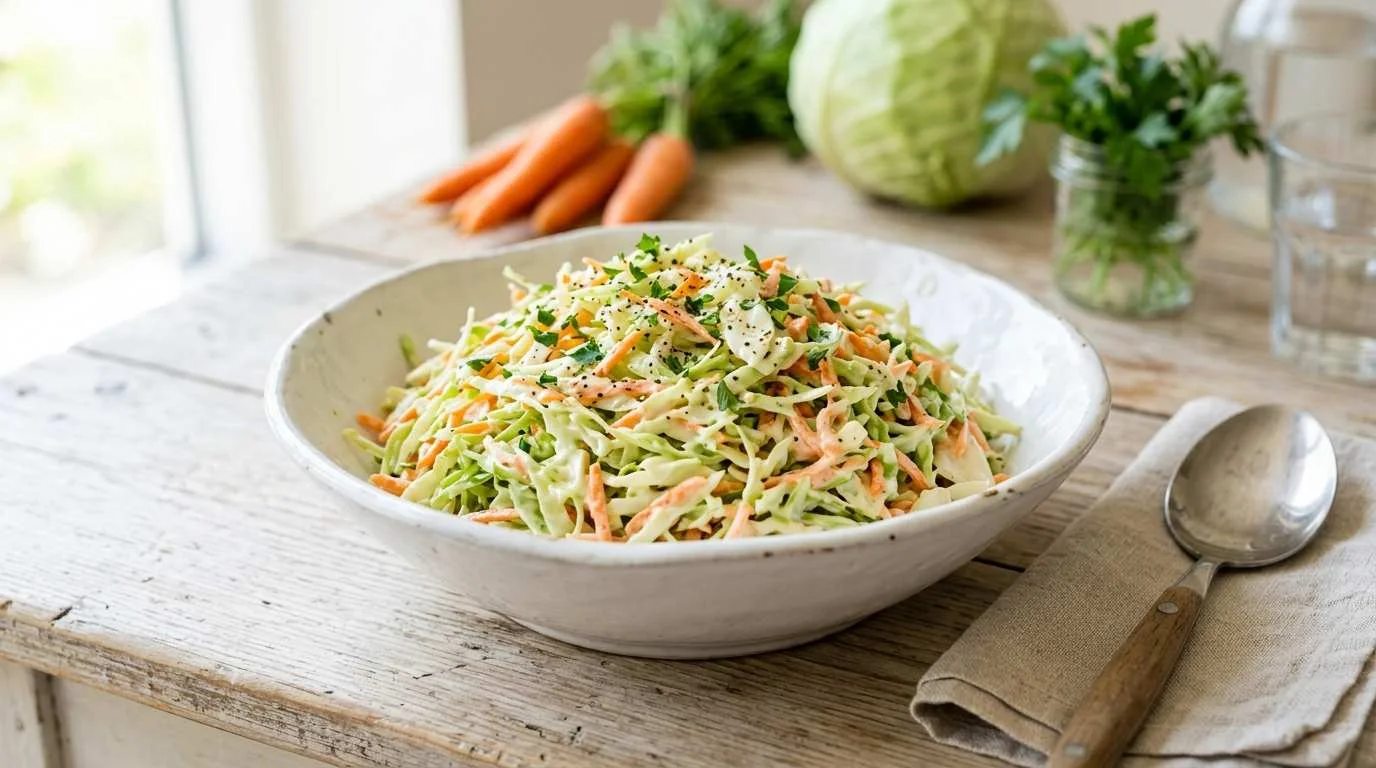

A good coleslaw recipe should deliver the perfect balance of crisp vegetables, creamy dressing, tangy acidity, and just enough sweetness. Whether served alongside grilled meats, burgers, fried chicken, sandwiches, or summer barbecue favorites, homemade coleslaw is one of the easiest side dishes to prepare.
The best part is that we don’t need complicated ingredients or advanced cooking techniques. With fresh cabbage, carrots, a simple homemade dressing, and a few minutes of preparation, we can make a crisp and flavorful coleslaw that tastes far better than many store-bought versions.
This easy homemade coleslaw recipe is creamy without being heavy, crunchy without being dry, and tangy enough to keep every bite interesting.
Table of Contents
What Makes a Great Coleslaw Recipe?
The foundation of excellent coleslaw is balance.
We want the cabbage and carrots to remain crisp while the dressing coats them evenly. The dressing should be creamy, but it shouldn’t completely overpower the fresh vegetables.
A well-balanced coleslaw typically combines:
- Crunchy green cabbage
- Fresh carrots
- Creamy mayonnaise
- Tangy vinegar or lemon juice
- A touch of sweetness
- A little mustard for depth
- Salt and black pepper
The proportions can easily be adjusted depending on personal preference. For a sharper slaw, we can increase the vinegar. For a sweeter version, a little more sugar works beautifully.
Ingredients for Homemade Coleslaw
For approximately 6 servings, we need:
For the Coleslaw
- ½ medium head green cabbage, finely shredded
- 1 large carrot, peeled and grated
- ¼ small red cabbage, finely shredded, optional
- 2 tablespoons finely chopped fresh parsley, optional
For the Creamy Coleslaw Dressing
- ¾ cup mayonnaise
- 2 tablespoons apple cider vinegar
- 1 tablespoon fresh lemon juice
- 1–2 tablespoons granulated sugar
- 1 teaspoon Dijon mustard
- ½ teaspoon salt
- ¼ teaspoon freshly ground black pepper
The red cabbage is optional, but it adds beautiful color and a slightly different texture. Fresh parsley is also optional, although it provides a pleasant herbal note.
How to Make Coleslaw
1. Prepare the Cabbage
Remove any damaged outer leaves from the cabbage. Cut the cabbage into quarters and remove the tough central core.
Using a sharp knife, finely slice the cabbage into thin strips.
The thinner the cabbage is sliced, the more evenly it will combine with the dressing. We should avoid cutting it into large, chunky pieces because thick pieces can make the finished coleslaw difficult to eat.
If preferred, we can also use a mandoline slicer. When doing so, we should always use the safety guard and work carefully.
2. Prepare the Carrots
Peel the carrot and grate it using the large holes of a box grater.
We want the carrot to be fine enough to distribute throughout the cabbage but not so finely grated that it becomes mushy.
If we’re using red cabbage, slice it just as thinly as the green cabbage.
3. Make the Coleslaw Dressing
Add the mayonnaise, apple cider vinegar, lemon juice, sugar, Dijon mustard, salt, and black pepper to a small bowl.
Whisk until the mixture becomes smooth and creamy.
Taste the dressing before adding it to the vegetables.
This is an important step because the dressing should taste slightly stronger on its own than we might expect. Once it coats the cabbage, the flavor becomes more subtle.
If it tastes too sharp, add a little more sugar. If it tastes too sweet, add another small splash of vinegar or lemon juice.
4. Combine the Vegetables
Place the shredded cabbage and grated carrots in a large mixing bowl.
If we’re using red cabbage and parsley, add them as well.
Pour the dressing gradually over the vegetables rather than adding it all at once.
Toss everything together using large spoons or salad tongs until the vegetables are evenly coated.
We don’t need to crush or squeeze the cabbage. A gentle toss is enough.
5. Chill Before Serving
For the best flavor, cover the bowl and refrigerate the coleslaw for at least 30 minutes before serving.
This resting period allows the dressing to work its way through the vegetables and gives the flavors time to blend.
For an especially flavorful coleslaw, we can refrigerate it for 1–2 hours before serving.
The cabbage will soften slightly while still maintaining plenty of crunch.
Should We Salt the Cabbage First?
Salting cabbage is optional, but it can be useful when we want particularly crisp coleslaw with less excess moisture.
Fresh cabbage naturally contains a considerable amount of water. As it sits in the dressing, some of that water can be released and make the coleslaw thinner.
To reduce this effect, we can lightly salt the shredded cabbage and let it sit for about 15–20 minutes. Then rinse it briefly and drain it extremely well before mixing it with the other ingredients.
For a quick everyday coleslaw, however, we can skip this step.
How to Keep Coleslaw Crunchy
One of the biggest challenges with homemade coleslaw is maintaining its texture.
Fortunately, a few simple techniques make a noticeable difference.
Use fresh cabbage. Older cabbage tends to lose some of its natural crispness.
Slice the cabbage thinly. Thin slices absorb dressing without becoming excessively bulky.
Don’t overdress the slaw. We can always add more dressing, but removing it is much harder.
Chill before serving. Refrigeration allows the flavors to develop while keeping the vegetables pleasantly cool and crisp.
Serve it reasonably soon. Coleslaw generally becomes softer the longer it sits.
Easy Variations on This Coleslaw Recipe
One reason coleslaw is so versatile is that the basic recipe can be changed in countless ways.
Classic Sweet Coleslaw
For a sweeter Southern-style variation, increase the sugar slightly and use a mild vinegar. This creates a creamy dressing with a more pronounced sweet-and-tangy flavor.
Tangy Coleslaw
For a sharper version, reduce the sugar and increase the apple cider vinegar or lemon juice.
This style works particularly well with rich foods such as pulled pork, fried chicken, and barbecue.
Vinegar Coleslaw
We can replace much of the mayonnaise with additional vinegar and a small amount of oil.
The result is lighter, brighter, and less creamy than traditional coleslaw.
Red Cabbage Coleslaw
Using a combination of green and red cabbage creates a colorful side dish that’s especially attractive on a summer table.
Creamy Carrot Coleslaw
For more sweetness and color, we can increase the amount of grated carrot. Raisins or finely chopped apples can also be added for a fruitier variation.
Spicy Coleslaw
A little hot sauce, cayenne pepper, or finely chopped jalapeño can transform a basic coleslaw into a spicy side dish.
What to Serve With Coleslaw
A versatile coleslaw recipe can accompany almost any casual meal.
It pairs particularly well with:
- Pulled pork sandwiches
- Grilled chicken
- Fried chicken
- Burgers
- Hot dogs
- Barbecue ribs
- Grilled sausages
- Fish sandwiches
- Fried fish
- Tacos
- Sliders
- Baked beans
- Potato salad
The creamy, acidic dressing provides a refreshing contrast to rich, smoky, salty, and fried foods.
Coleslaw is also useful as a topping. We can spoon it directly onto pulled pork sandwiches, burgers, tacos, or crispy chicken sandwiches for extra crunch and freshness.
How Far in Advance Can We Make Coleslaw?
Coleslaw is an excellent make-ahead side dish.
We can prepare the dressing a day in advance and keep it refrigerated in an airtight container. The vegetables can also be shredded ahead of time and stored separately.
For the best texture, we recommend combining the dressing and vegetables several hours before serving rather than days in advance.
Once fully dressed, the cabbage will gradually soften and release moisture.
If we’re preparing coleslaw for a party or barbecue, making it a few hours before serving is usually an excellent approach.
How to Store Homemade Coleslaw
Store leftover coleslaw in an airtight container in the refrigerator.
Because the recipe contains mayonnaise and fresh vegetables, it should remain properly chilled and shouldn’t be left sitting at room temperature for extended periods.
Before serving leftovers, stir the coleslaw thoroughly. If some liquid has collected at the bottom of the container, this is usually caused by moisture released from the cabbage.
The texture may be softer the following day, but the flavor can actually become more developed.
Common Coleslaw Mistakes to Avoid
Using Too Much Dressing
A common mistake is adding all the dressing immediately.
Instead, add it gradually and toss as we go. This gives us better control over the final consistency.
Not Balancing the Dressing
Mayonnaise alone can taste heavy. Vinegar and lemon juice provide acidity, while a small amount of sugar rounds out the flavor.
The goal isn’t for any single ingredient to dominate.
Cutting the Cabbage Too Thick
Large cabbage pieces don’t distribute the dressing as evenly and can make the slaw feel bulky.
Thin, even slices produce a much better texture.
Skipping the Resting Time
Coleslaw tastes noticeably better after it has rested for a little while.
Even 30 minutes in the refrigerator can make the finished dish more cohesive.
Overmixing
We want to coat the vegetables, not crush them.
A gentle toss is all that’s necessary.
Frequently Asked Questions
Final Tips for the Best Homemade Coleslaw
The secret to an excellent homemade coleslaw recipe isn’t complicated. It comes down to fresh vegetables, a balanced dressing, and the right amount of chilling time.
We should keep the cabbage thinly sliced, avoid drowning the vegetables in dressing, and always taste the dressing before combining everything.
For the most classic result, we can stick with green cabbage, carrots, creamy mayonnaise, apple cider vinegar, lemon juice, Dijon mustard, sugar, salt, and black pepper.
Once we have mastered that basic combination, it’s easy to customize the recipe with red cabbage, herbs, apples, jalapeños, hot sauce, or a lighter vinegar-based dressing.
Whether we’re preparing a backyard barbecue, a family dinner, or simply looking for a quick side dish, this easy coleslaw recipe delivers the creamy texture, fresh crunch, and tangy flavor that make homemade slaw such a reliable favorite.
What is coleslaw made of?
Traditional coleslaw is made primarily from shredded cabbage and carrots combined with a dressing. A creamy version commonly uses mayonnaise, vinegar, sugar, mustard, salt, and pepper.
Can we make coleslaw without mayonnaise?
Yes. We can make a lighter vinegar-based coleslaw using vinegar, lemon juice, oil, seasonings, and a small amount of sugar.
Why does homemade coleslaw become watery?
Cabbage naturally contains water. As it sits in the dressing, salt and acidity can draw moisture from the vegetables. Salting and draining the cabbage beforehand can help reduce excess liquid.
Can we make coleslaw the night before?
Yes. Preparing coleslaw several hours ahead can improve its flavor. However, the vegetables will gradually become softer, so it is best consumed within a reasonable period for the freshest texture.
How do we make coleslaw less sweet?
Simply reduce the amount of sugar in the dressing. We can also add a little extra vinegar or lemon juice to create a sharper flavor.
Can we use bagged shredded cabbage?
Absolutely. Pre-shredded cabbage or coleslaw mix can make this recipe considerably faster. We should still check the vegetables for freshness before using them.


Leave a Reply