
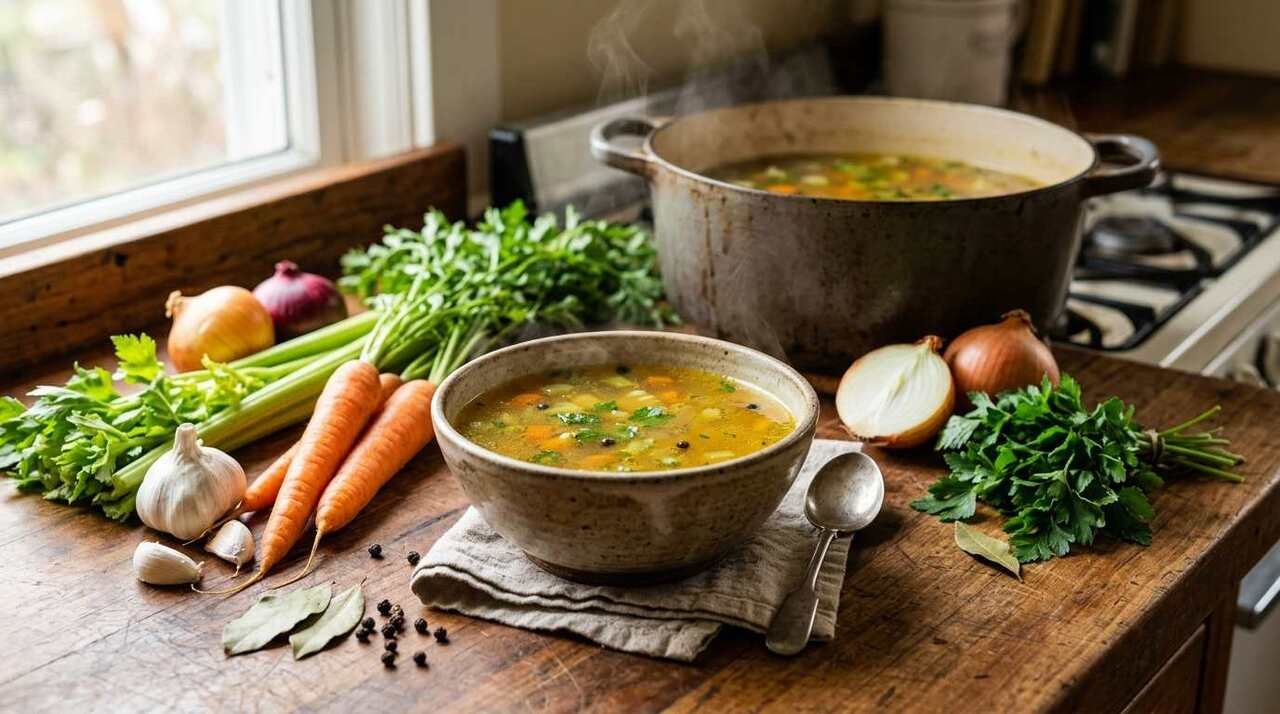

Vegetable broth is one of the most useful foundations in everyday cooking. It adds depth to soups, stews, sauces, grains, risottos, gravies, and countless other dishes without relying on meat or complicated ingredients.
A good homemade vegetable broth doesn’t need to be difficult. With a few basic vegetables, aromatic herbs, water, and gentle simmering, we can create a broth that tastes considerably fresher and more balanced than many packaged alternatives.
The key is understanding how different vegetables contribute flavor, how long to simmer them, and how to season the finished broth properly.
Whether we’re preparing a comforting soup, cooking rice, making risotto, or simply looking for a flavorful liquid to keep in the refrigerator, this homemade vegetable broth recipe gives us a versatile kitchen staple.
Table of Contents
What Is Vegetable Broth?
Vegetable broth is a flavorful liquid made by gently simmering vegetables, herbs, aromatics, and water. The vegetables release their natural flavors, creating a savory liquid that can be used as a cooking ingredient.
Unlike a vegetable stock made with a specific focus on concentrated body, vegetable broth is generally intended to be flavorful enough to serve or use directly. In everyday cooking, however, the terms “vegetable broth” and “vegetable stock” are often used interchangeably.
A classic vegetable broth commonly includes:
- Onions
- Carrots
- Celery
- Garlic
- Fresh herbs
- Black peppercorns
- Water
- Salt
We can also add mushrooms, leeks, tomatoes, parsley stems, or other suitable vegetables to create additional layers of flavor.
Ingredients for Homemade Vegetable Broth
The beauty of homemade broth is its flexibility. We don’t need an exact collection of vegetables every time.
Basic Vegetable Broth Ingredients
2 large onions, roughly chopped
3 carrots, roughly chopped
3 celery stalks, roughly chopped
3 garlic cloves, lightly crushed
1–2 bay leaves
A handful of fresh parsley stems
1 teaspoon black peppercorns
8–10 cups water
Salt, to taste
Optional additions include:
- Leeks
- Mushrooms
- Fennel stems
- Fresh thyme
- Rosemary
- Parsnip
- Tomato
- Green onion
- Celery leaves
We should think of these ingredients as a flavor framework rather than an inflexible recipe.
How to Make Vegetable Broth
1. Prepare the Vegetables
Begin by washing the vegetables thoroughly and removing any damaged portions.
We don’t need to dice everything finely. Rough chunks are ideal because the vegetables will eventually be strained from the broth.
Onions can be quartered, carrots can be cut into large pieces, and celery can be chopped into several sections.
If the vegetables are clean, some skins and trimmings can also contribute useful flavor and color. However, anything dirty, spoiled, excessively bitter, or heavily damaged should be discarded.
2. Sauté the Vegetables for More Flavor
For a deeper and more complex vegetable broth, we can begin by heating a little olive oil in a large pot.
Add the onions, carrots, and celery and cook them over medium heat for approximately 5–10 minutes.
The goal isn’t to fully cook the vegetables. We’re looking for light browning and caramelization.
This extra step creates a richer flavor profile and gives the finished broth more depth.
For a lighter broth, we can skip sautéing and place the vegetables directly into the pot with the water.
3. Add the Aromatics
Add the garlic, bay leaves, parsley stems, peppercorns, and any additional herbs we’re using.
Fresh herbs generally work particularly well because they provide a cleaner aroma than large quantities of dried herbs.
We should avoid adding too many strongly flavored herbs at once. Rosemary, for example, can quickly dominate a delicate broth.
4. Add Water
Pour the water into the pot and bring everything to a gentle boil.
Once the water begins boiling, reduce the heat.
A gentle simmer is better than aggressive boiling.
A hard boil can make the broth cloudy and can cause delicate vegetables and herbs to break down excessively.
5. Simmer the Broth
Allow the vegetable broth to simmer gently for approximately 45–60 minutes.
During this time, the vegetables release their flavor into the water.
We don’t necessarily improve the broth by simmering it for several hours. Unlike some meat-based stocks, vegetable broth can become unpleasantly bitter or overly vegetal if delicate vegetables and herbs are cooked for too long.
For a balanced homemade broth, about an hour is usually sufficient.
6. Strain the Vegetable Broth
Place a fine-mesh strainer over a large bowl or another clean pot.
Carefully pour the broth through the strainer, separating the liquid from the vegetables and herbs.
We can gently press the vegetables with the back of a spoon to extract additional liquid, but there’s no need to aggressively mash them.
Straining carefully gives us a cleaner, more versatile broth.
7. Season to Taste
Salt should be added according to how we intend to use the broth.
If we’re drinking the broth or serving it as a soup base, we may want a more noticeable level of seasoning.
If we’re using the broth to cook rice, grains, sauces, or a heavily seasoned recipe, keeping the broth moderately salted gives us greater control later.
Freshly ground black pepper can also be added at this stage.
Should We Roast Vegetables for Vegetable Broth?
Roasting vegetables is an excellent option when we want a darker, richer broth.
Place onions, carrots, celery, and mushrooms on a baking sheet and roast them until they develop noticeable golden-brown edges.
The browning process creates deeper savory flavors and subtle sweetness.
Roasted vegetable broth works particularly well in:
- Mushroom soup
- Lentil soup
- Bean stews
- Gravy
- Risotto
- Mushroom sauces
- Vegetarian casseroles
For delicate soups and lighter dishes, however, a simple simmered broth may be preferable.
Best Vegetables for Vegetable Broth
Not every vegetable contributes equally to broth.
Onions provide sweetness, savory depth, and aroma.
Carrots contribute natural sweetness and color.
Celery adds a characteristic savory vegetable flavor.
Leeks create a delicate onion-like flavor and work beautifully in lighter broths.
Mushrooms are especially valuable when we want a more pronounced umami character.
Parsley stems provide fresh herbal notes without overwhelming the broth.
Garlic adds savory complexity, although it should be used moderately.
We can also experiment with parsnips, fennel, tomato, and other vegetable trimmings.
Vegetables to Use Carefully
Some vegetables can make homemade broth overly bitter, muddy, or strongly flavored.
Large amounts of cabbage, Brussels sprouts, broccoli, cauliflower, kale, and other cruciferous vegetables aren’t always ideal for a basic broth.
They can be useful in small quantities, but excessive amounts may create flavors that overpower the other ingredients.
We should also avoid using spoiled vegetables simply because they’re going into broth. Broth can rescue vegetable trimmings, but it cannot transform spoiled food into something safe or pleasant.
Can We Make Vegetable Broth From Scraps?
Yes. Vegetable scraps can be an economical way to make homemade broth.
Useful scraps may include:
- Carrot ends and peels
- Celery leaves and ends
- Onion skins
- Leek tops
- Parsley stems
- Mushroom stems
- Herb stems
The important distinction is between clean, edible trimmings and unwanted waste.
We should wash scraps thoroughly and avoid anything moldy, rotten, or heavily contaminated.
Keeping a freezer container for suitable vegetable scraps can make homemade broth particularly convenient.
How to Make Vegetable Broth More Flavorful
If our broth tastes weak, several techniques can improve it.
Add More Aromatics
Onion, celery, garlic, herbs, and mushrooms can increase complexity without requiring excessive salt.
Roast the Vegetables
Roasting creates caramelized flavors and a deeper color.
Use Mushrooms
Mushrooms are one of the easiest ways to add umami to vegetarian broth.
Simmer Without Excessive Water
Too much water can dilute the flavor. If the finished broth is weak, we can gently reduce it after straining.
Season Properly
A broth can taste flat simply because it lacks enough salt. Add it gradually and taste as we go.
How to Store Homemade Vegetable Broth
Once the broth has been strained, it should be cooled promptly and transferred to clean, airtight containers.
For short-term storage, keep it refrigerated.
For longer storage, freeze the broth in practical portions. Ice cube trays are particularly useful when we only need a small amount for a sauce or pan of vegetables.
Larger freezer-safe containers are better when preparing soup, risotto, or other recipes requiring several cups.
Always leave adequate space when freezing liquids because they expand as they freeze.
How Long Does Vegetable Broth Last?
Homemade vegetable broth is perishable because it contains water and organic ingredients without the preservatives found in some commercial products.
For best quality, refrigerate it promptly and use it within several days. If we won’t use it soon, freezing is the better option.
When storing homemade broth, we should rely on safe food-handling practices rather than simply judging it by appearance.
Ways to Use Vegetable Broth
One of the biggest advantages of homemade vegetable broth is its versatility.
We can use it as the liquid for vegetable soup, lentil soup, bean soup, or noodle soup.
It can replace water when cooking:
- Rice
- Quinoa
- Couscous
- Bulgur
- Barley
- Other grains
It is also excellent for risotto, where the broth is gradually incorporated to build flavor.
Vegetable broth can form the base of sauces, gravies, stews, casseroles, and vegetable braises.
Even mashed potatoes can benefit from a small amount of flavorful broth when we want to reduce the amount of dairy while maintaining moisture.
Vegetable Broth vs. Vegetable Stock
The difference between vegetable broth and vegetable stock isn’t always consistent across recipes or food brands.
Generally, broth is designed to be flavorful and potentially served on its own, while stock is often treated as a foundational ingredient for other recipes.
In home kitchens, the distinction is less important than the actual flavor and intended use.
A well-made vegetable broth can function perfectly as a stock substitute in most everyday recipes.
Common Vegetable Broth Mistakes
Boiling Too Aggressively
A violent boil isn’t necessary. Gentle simmering helps preserve a cleaner flavor.
Using Too Many Vegetables
More ingredients don’t automatically mean better broth. Too many competing flavors can produce a muddy result.
Overusing Strong Herbs
Rosemary, sage, and similar herbs can quickly dominate a delicate vegetable base.
Adding Too Much Salt
If the broth will be reduced later, excessive salt can become concentrated and difficult to correct.
Cooking for Too Long
Vegetables don’t need an all-day simmer. Excessive cooking can introduce bitterness and dull flavors.
Easy Variations for Homemade Vegetable Broth
Mushroom Vegetable Broth
Add several cups of mushrooms for a darker, more savory broth with pronounced umami.
Herb Vegetable Broth
Increase the amount of parsley and add a modest amount of thyme for a fresh, aromatic profile.
Roasted Vegetable Broth
Roast the onions, carrots, celery, and mushrooms before simmering them for a deeper, more robust flavor.
Light Vegetable Broth
Use onions, celery, carrots, parsley, and a small amount of garlic without roasting. This creates a clean broth suitable for delicate soups and grains.
Frequently Asked Questions
Is homemade vegetable broth healthy?
Homemade vegetable broth can be a flavorful, low-fat cooking ingredient. Its nutritional profile depends on the ingredients used and how much of the vegetables’ soluble nutrients remain in the liquid.
Can we make vegetable broth without salt?
Absolutely. Preparing the broth without salt gives us greater control when using it in recipes. We can season each finished dish separately.
Can vegetable broth be frozen?
Yes. Freezing is one of the most convenient ways to preserve homemade vegetable broth for later use. Portioning it before freezing makes it easier to use exactly what a recipe requires.
Can we use frozen vegetables?
Yes. Frozen vegetables can be used, although fresh vegetables and suitable vegetable scraps can provide excellent flavor as well.
Can vegetable broth replace chicken broth?
In many recipes, yes. Vegetable broth is an excellent substitute when we want to make a recipe vegetarian or simply don’t have chicken broth available.
Final Thoughts
Homemade vegetable broth is one of the simplest ways to add depth and flexibility to everyday cooking.
The basic method is straightforward: combine flavorful vegetables and aromatics, simmer gently, strain carefully, and season according to how the broth will be used.
From a comforting bowl of soup to creamy risotto, savory grains, sauces recipe, and hearty stews, a well-made vegetable broth can quietly improve an enormous range of dishes.
The best approach is to keep the foundation balanced. Onions, carrots, celery, herbs, garlic, and pepper provide a dependable starting point, while mushrooms, roasted vegetables, leeks, and other additions allow us to customize the flavor.
Once homemade broth becomes part of our kitchen routine, it can also become a practical way to use clean vegetable trimmings and reduce unnecessary food waste—while giving everyday meals a richer, more satisfying foundation.






Leave a Reply