
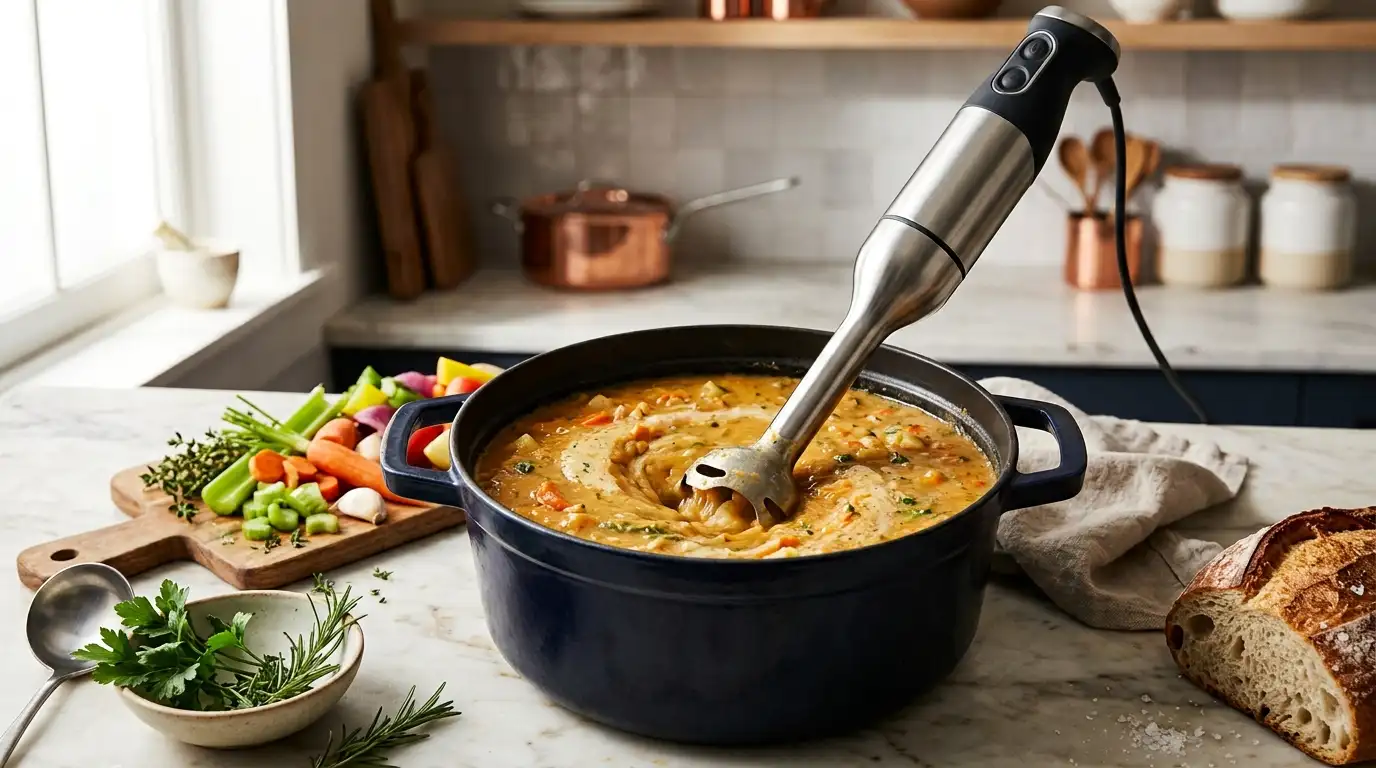

A good immersion blender for soup can transform the way we prepare homemade meals. Instead of transferring hot soup in batches to a countertop blender, we can blend everything directly in the cooking pot, creating smooth soups with less mess, fewer dishes, and much better control over texture.
Whether we are making creamy tomato soup, butternut squash soup, potato leek soup, lentil soup, or a silky vegetable purée, the right stick blender should deliver enough power to process cooked ingredients smoothly without becoming difficult or uncomfortable to use.
But not every immersion blender is equally suited to soup. Motor power, blade design, speed control, ergonomics, shaft construction, cleaning, and heat resistance all matter.
This guide explains the features we should look for when choosing the best immersion blender for soup and how to use one safely and effectively.
Table of Contents
What Is the Best Immersion Blender for Soup?
The best immersion blender for soup is one that combines sufficient motor power with good blade performance, comfortable handling, variable speed control, and a durable blending shaft.
For everyday soup making, we don’t necessarily need the most expensive or most powerful model available. A well-designed immersion blender with a strong motor and effective blade guard can produce excellent results.
The ideal model should:
- Blend vegetables and other cooked ingredients smoothly.
- Handle thick soups without excessive straining.
- Offer multiple speed settings or variable-speed control.
- Feel comfortable during several minutes of blending.
- Have a stainless-steel or heat-resistant blending shaft.
- Be easy to clean after use.
- Minimize splashing when submerged correctly.
- Reach deep into large pots and saucepans.
- Provide enough power for both delicate and dense soups.
A powerful motor is helpful, but power alone doesn’t determine blending quality. Blade geometry and the way the blender creates circulation inside the soup can be just as important.
Why Use an Immersion Blender for Soup?
The biggest advantage is convenience.
With a traditional countertop blender, we have to let ingredients cool somewhat, transfer hot soup into a blender jar, blend in batches, and then return the soup to the pot. That process takes time and creates additional cleanup.
An immersion blender eliminates most of those steps.
Once the vegetables are properly cooked, we can place the blender directly into the pot and blend until the desired consistency is reached.
This makes an immersion blender particularly useful for large batches of homemade soup.
It’s also easier to control texture. We can blend continuously for an ultra-smooth soup or use short pulses when we want to retain small pieces of vegetables.
Key Features to Look for in an Immersion Blender
Motor Power
Motor power is one of the first specifications worth considering.
For basic soups containing well-cooked vegetables, a moderately powerful immersion blender can be perfectly adequate. However, thicker mixtures require more torque because the blades have to move through greater resistance.
If we regularly prepare dense soups, purées, sauces, or hummus, choosing a stronger model gives us greater versatility.
Rather than focusing exclusively on the highest advertised wattage, we should consider how efficiently the motor transfers power to the blade.
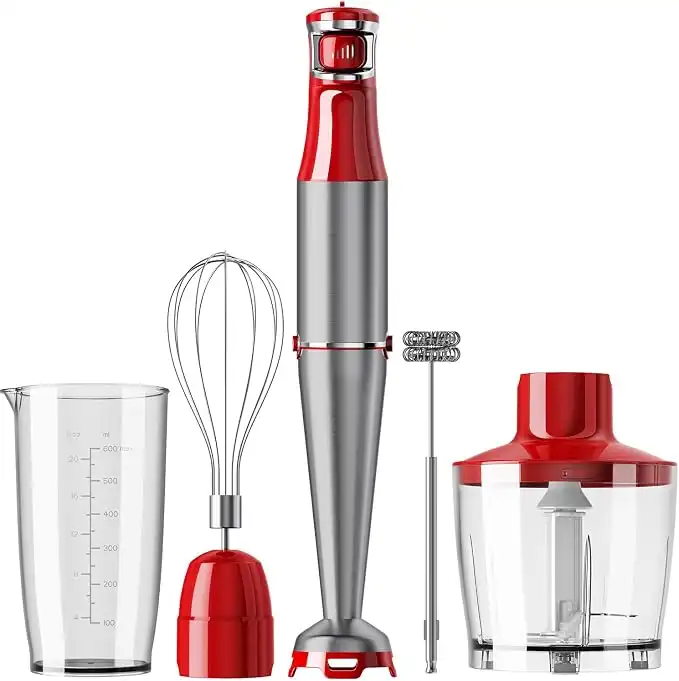
Stainless-Steel Blending Shaft
A stainless-steel shaft is particularly useful when making soup.
It is durable, resistant to staining, and generally better suited to contact with hot ingredients than many inexpensive plastic components.
A removable stainless-steel shaft is even more convenient because it can make cleaning considerably easier.
The shaft should also be long enough for the type of cookware we normally use. A short shaft can be inconvenient when blending soup in a deep stockpot.
Variable Speed Control
Different soups benefit from different blending speeds.
A low speed can help us start blending without immediately creating a cloud of splashes. Once the ingredients begin circulating, we can gradually increase the speed.
High speed is useful when we want a smoother consistency or need to break down stubborn pieces of cooked vegetables.
Variable-speed control gives us much more precision than a simple on/off button.
Blade Design
The blade assembly is where much of the actual blending performance happens.
A well-designed blade should create circulation, pulling ingredients toward the cutting area instead of simply spinning around inside the soup.
The protective blade guard is also important. A good guard can help reduce splashing while still allowing ingredients to reach the blades.
For soup, we should prioritize a design that combines effective circulation with easy cleaning.
Ergonomic Handle
Soup can take several minutes to blend, particularly when preparing a large batch.
An uncomfortable handle can make the process surprisingly tiring.
The best immersion blenders generally have a handle that allows us to maintain a secure grip without squeezing excessively. Controls should also be positioned where they can be reached naturally.
A lightweight design can be especially appealing for frequent cooking, although a slightly heavier model may sometimes feel more substantial and durable.
Best Immersion Blender for Smooth Soup
If our priority is silky, restaurant-style soup, blending performance becomes particularly important.
Soups made with squash, carrots, cauliflower, pumpkin, or potatoes can become extremely smooth when blended correctly.
However, the final texture also depends on preparation.
Vegetables should be cooked until they are genuinely tender. If a carrot or potato is still firm in the center, even a powerful immersion blender may struggle to produce a completely smooth result.
For the smoothest soup:
- Cook vegetables until completely tender.
- Add enough liquid to allow circulation.
- Submerge the blade before switching the blender on.
- Start at a low speed.
- Gradually increase the speed.
- Move the blender slowly around the pot.
- Tilt the blender slightly when necessary to improve circulation.
- Continue until the desired consistency is reached.
For an exceptionally silky result, we can finish the soup with cream, olive oil, butter, or another suitable ingredient and blend again briefly.
Best Immersion Blender for Thick Soup
Thick soups present a different challenge.
Potato soup, bean soup, split pea soup, and thick vegetable purées can place significantly more resistance on the motor.
In these situations, we should prioritize high torque, multiple speed settings, and a durable blade assembly.
It’s also important not to force the blender through an extremely thick mixture. If the blades aren’t circulating properly, adding a small amount of stock, water, milk, or another appropriate liquid can improve movement.
This can actually produce better results than simply choosing a more powerful blender.
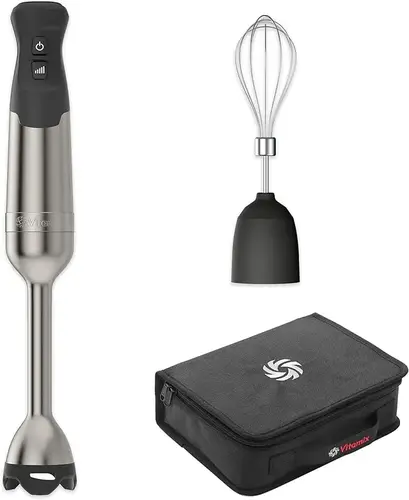
Can We Blend Hot Soup With an Immersion Blender?
Yes, immersion blenders are commonly used for hot soups, but we should follow the manufacturer’s instructions carefully.
The biggest concern isn’t simply the heat itself. It’s splashing.
Hot soup can cause serious burns if it splashes onto exposed skin.
For safer blending, keep the blade fully submerged before activating the motor. We should also avoid lifting the running blender above the surface of the soup.
A tall, deep pot is preferable to a shallow pan because it gives the soup more room around the blade and reduces the likelihood of splashing.
If the manufacturer’s instructions specify a maximum temperature, that limit should always be followed.
How to Prevent Soup From Splattering
Even a good immersion blender can splash when used incorrectly.
The simplest technique is to start slowly.
Place the blending head near the bottom of the pot before turning the motor on. Use a low speed initially, then increase the speed gradually.
We can also move the blender slowly rather than rapidly lifting it up and down.
Avoid repeatedly pulling the blade completely out of the liquid while it is running. This introduces air and can send hot liquid across the kitchen.
A deeper cooking pot can also provide considerably better control.
Immersion Blender vs. Countertop Blender for Soup
Both appliances can make excellent soup, but they offer different advantages.
| Feature | Immersion Blender | Countertop Blender |
|---|---|---|
| Directly blends in pot | Yes | No |
| Cleanup | Easier | More involved |
| Large batches | Excellent | Usually requires batches |
| Texture control | Excellent | Excellent |
| Storage | Compact | Requires more space |
| Hot soup handling | Convenient with proper technique | Requires careful transfer |
| Smooth finishing | Very good | Excellent |
| Everyday convenience | Excellent | Moderate |
For someone who makes soup frequently, an immersion blender is often the more practical choice.
A countertop blender may still have an advantage when we want extremely fine, restaurant-style textures or need to process large quantities at very high speed.
How to Make Soup Extra Smooth With an Immersion Blender
The blender isn’t the only factor that determines texture.
Preparation matters enormously.
We should cut vegetables into relatively uniform pieces so they cook at approximately the same rate. Ingredients that require longer cooking should go into the pot earlier.
Once everything is tender, we can blend while the soup is still hot according to the blender’s instructions.
For an especially smooth soup, we can blend for longer at a controlled speed rather than immediately operating at maximum speed.
After blending, taste the soup and adjust the seasoning. Salt, acidity, herbs, spices, cream, butter, or olive oil can dramatically change the final character.
If a recipe demands an exceptionally refined texture, passing the finished soup through a fine-mesh sieve can provide the final level of smoothness.
Cleaning an Immersion Blender After Making Soup
Cleaning should be considered before purchasing an immersion blender.
Food can become trapped around the blade guard, particularly after blending thick soups.
If the shaft is removable, cleaning is generally easier. We should follow the manufacturer’s instructions regarding whether individual components are dishwasher-safe.
A simple approach after blending is to rinse the shaft immediately before food has a chance to dry around the blade.
Never immerse an electrical motor housing in water unless the manufacturer specifically states that it is designed for such use.
Common Mistakes When Blending Soup
Even a high-quality immersion blender can perform poorly when used incorrectly.
Starting at Maximum Speed
Immediately selecting maximum speed can cause unnecessary splashing.
Starting low and increasing gradually provides much better control.
Blending Before Ingredients Are Tender
A blender isn’t a substitute for proper cooking.
Hard vegetables can overwhelm the blending process and leave us with an uneven texture.
Using Too Little Liquid
Extremely thick soup may prevent proper circulation around the blades.
Adding a little more liquid can make blending dramatically easier.
Moving the Blender Too Aggressively
Rapid movement isn’t necessary.
Slow, controlled movement usually produces better circulation and reduces splashing.
Ignoring the Pot Shape
A shallow pot gives hot liquid more opportunity to splash.
A deeper pot is generally preferable when using an immersion blender.
What Size Immersion Blender Do We Need?
For occasional soup preparation, a compact immersion blender is often enough.
For families, frequent batch cooking, or large stockpots, a model with a longer blending shaft may be more practical.
The important point is to choose a blender that can safely reach the ingredients without requiring us to tilt or manipulate a large pot unnecessarily.
For everyday cooking, comfort and practicality often matter more than maximum specifications.
Are Expensive Immersion Blenders Worth It?
A premium immersion blender can be worthwhile for people who use one frequently.
Higher-end models may provide stronger motors, better ergonomics, more precise speed control, improved blade assemblies, and additional attachments.
However, we shouldn’t assume that the most expensive model automatically makes the best soup.
If soup is our primary use, a reliable model with a good blending head, comfortable handle, variable speed, and durable construction may provide everything we need.
The right choice depends on how frequently we cook, what types of soup we prepare, and whether we want additional functionality.
Final Verdict: Choosing the Best Immersion Blender for Soup
The best immersion blender for soup isn’t necessarily the model with the highest wattage or the longest list of accessories.
We should look for a combination of effective blade design, sufficient power, variable-speed control, comfortable handling, durable construction, and easy cleaning.
For smooth vegetable soups, a good immersion blender can save considerable time while eliminating the need to transfer hot ingredients between containers.
For thicker soups, stronger motor performance and good blade circulation become more important.
And for everyday cooking, ease of use may ultimately matter more than impressive specifications.
Choose a model that matches the way we actually cook, use it carefully around hot liquids, and an immersion blender can become one of the most useful tools in the kitchen—from a simple weeknight tomato soup to an elegant, velvety purée worthy of a dinner party.

Leave a Reply