
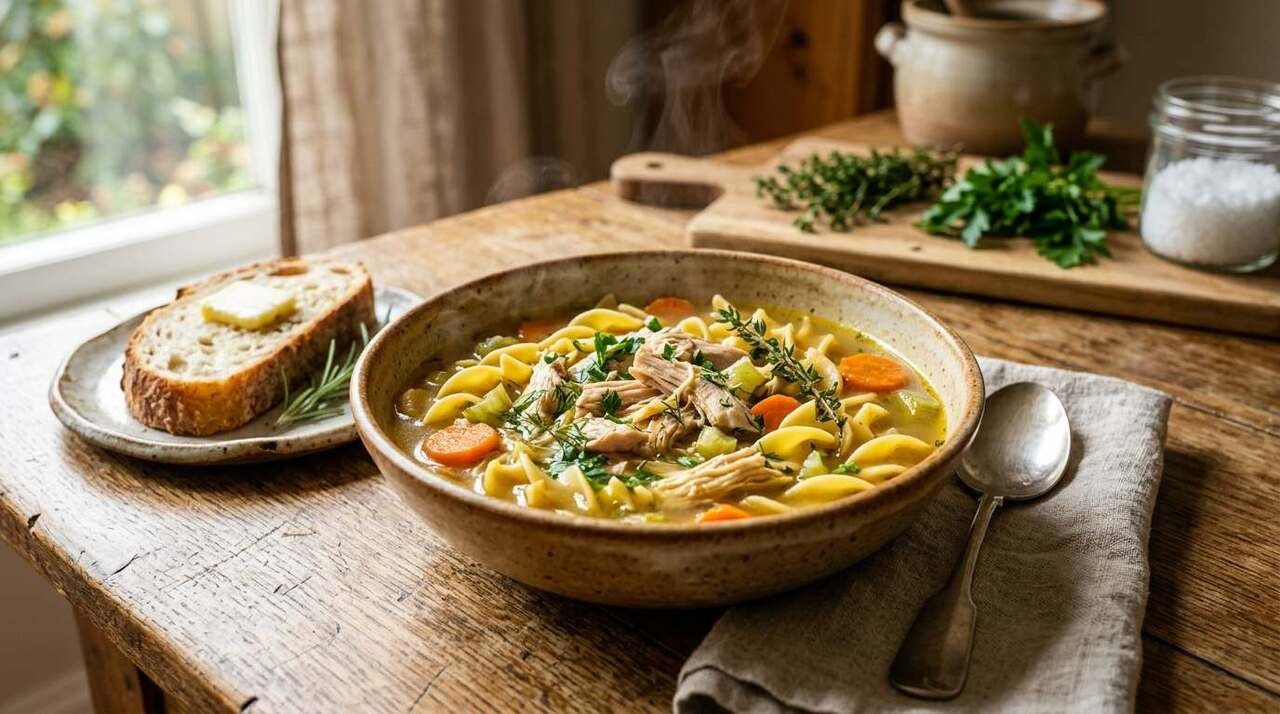

There are few meals as comforting, satisfying, and universally loved as a steaming bowl of ultimate chicken noodle soup. Tender chicken, hearty vegetables, delicate noodles, and a deeply flavorful broth come together in one simple pot to create a meal that feels both nourishing and indulgent.
Our recipe focuses on building flavor at every stage rather than relying on complicated ingredients. We use a combination of aromatic vegetables, herbs, quality chicken, and a rich broth to create a soup with a balanced flavor and satisfying texture. Whether we are preparing dinner for the family, making a cozy weekend meal, or freezing portions for later, this homemade chicken noodle soup is an excellent recipe to keep in regular rotation.
Table of Contents
Why This Is the Ultimate Chicken Noodle Soup
The best chicken noodle soup needs more than chicken, noodles, and broth. The difference comes from the way those ingredients are prepared and combined.
We begin with a classic aromatic base of onion, carrots, and celery. These vegetables provide sweetness, freshness, and savory depth. Garlic adds another layer of flavor, while herbs such as thyme and parsley give the broth a fragrant finish.
Chicken provides the heartiness we expect from a substantial soup, while egg noodles create the soft, comforting texture that makes chicken noodle soup so appealing.
The result is a soup that is:
- Rich and flavorful without being heavy
- Packed with tender chicken and vegetables
- Comforting and satisfying
- Easy enough for a weeknight dinner
- Excellent for meal preparation
- Suitable for freezing
- Customizable with different herbs, vegetables, and noodles
Ingredients for Homemade Chicken Noodle Soup
For the best results, we recommend using fresh vegetables and good-quality chicken stock whenever possible.
Main Ingredients
- 2 tablespoons olive oil or butter
- 1 medium yellow onion, diced
- 3 carrots, peeled and sliced
- 3 celery stalks, sliced
- 3 garlic cloves, minced
- 8 cups chicken broth or stock
- 1 pound boneless, skinless chicken breasts or thighs
- 2 teaspoons fresh thyme leaves
- 1 bay leaf
- 1 teaspoon dried parsley
- 1/2 teaspoon black pepper
- 1/2 teaspoon salt, or to taste
- 2 cups egg noodles
- 2 tablespoons fresh parsley, chopped
- 1 tablespoon fresh lemon juice, optional
The quantities can be adjusted depending on how brothy or hearty we want the soup to be.
How to Make the Ultimate Chicken Noodle Soup
1. Prepare the Vegetables
We begin by preparing the onion, carrots, celery, and garlic. Cutting the vegetables into relatively uniform pieces helps them cook evenly.
For a traditional texture, we slice the carrots and celery into thin pieces rather than chopping them too finely. This allows them to remain tender while still providing texture in every spoonful.
2. Build the Aromatic Base
Heat the olive oil or butter in a large soup pot over medium heat.
Add the diced onion, carrots, and celery. Cook for approximately 5 to 7 minutes, stirring occasionally, until the vegetables begin to soften.
Add the minced garlic and cook for another 30 to 60 seconds.
This step is important because gently cooking the vegetables before adding the broth develops a more rounded flavor than simply placing everything into the pot at once.
3. Add the Chicken and Broth
Pour in the chicken broth and add the chicken breasts or thighs.
Add the thyme, bay leaf, parsley, black pepper, and salt. Bring the mixture to a gentle boil, then reduce the heat.
We want the soup to simmer rather than boil aggressively. A gentle simmer helps keep the chicken tender and produces a cleaner, more pleasant broth.
Cover the pot partially and cook until the chicken reaches an internal temperature of 165°F (74°C).
4. Shred the Chicken
Once the chicken is cooked, carefully remove it from the pot and place it on a cutting board.
Allow it to rest briefly before shredding or chopping it into bite-sized pieces.
Chicken thighs are especially flavorful and remain juicy during simmering, while chicken breasts provide a leaner option. Either works beautifully in this recipe.
Return the shredded chicken to the pot.
5. Add the Noodles
Add the egg noodles to the simmering broth.
Cook according to the package instructions, usually for approximately 6 to 8 minutes, until the noodles are tender but not mushy.
We recommend avoiding overcooking the noodles because they continue absorbing liquid after the soup is removed from the heat.
6. Finish with Fresh Herbs
Remove the bay leaf and taste the soup.
Adjust the salt and pepper as needed, then stir in fresh parsley. A small squeeze of lemon juice can also brighten the broth and balance its richness.
Serve immediately while the soup is hot.
The Best Chicken for Chicken Noodle Soup
We can use either chicken breasts or chicken thighs, depending on the texture and flavor we prefer.
Chicken breasts have a mild flavor and lean texture. They are ideal when we want a lighter soup with clearly defined pieces of chicken.
Chicken thighs contain more fat and connective tissue, which gives them a richer flavor and particularly tender texture after simmering.
For the most flavorful version, we can even combine both.
Leftover roasted chicken or rotisserie chicken also works exceptionally well. When using pre-cooked chicken, we simply add it toward the end of cooking so it warms through without becoming dry.
How to Make the Broth More Flavorful
The broth is the foundation of excellent chicken noodle soup. If the broth tastes flat, the finished soup will taste flat as well.
Several simple techniques can make a noticeable difference.
Use Good-Quality Chicken Stock
A flavorful stock provides a stronger foundation than a weak broth. Homemade chicken stock is excellent when available, but a quality store-bought stock can also produce delicious results.
Cook the Aromatics First
Sautéing the onion, carrots, celery, and garlic before adding the liquid creates more developed flavor.
Use Fresh Herbs
Fresh parsley and thyme provide brightness and fragrance. Dried herbs are convenient, but fresh herbs can make the finished soup taste noticeably fresher.
Finish with Lemon
A small amount of lemon juice does not make the soup taste strongly of lemon. Instead, it adds acidity that helps bring the other flavors into balance.
Best Noodles for Chicken Noodle Soup
Traditional egg noodles are one of our favorite choices because they are tender, comforting, and absorb the flavorful broth beautifully.
However, we can easily substitute other noodles.
Good options include:
- Wide egg noodles
- Thin egg noodles
- Rotini
- Fusilli
- Small shells
- Ditalini
- Orzo
- Homemade noodles
If we plan to store the soup for several days, cooking the noodles separately can be useful. This prevents them from absorbing too much broth and becoming overly soft.
How to Prevent Mushy Noodles
Noodles are one of the easiest parts of chicken noodle soup to overcook.
The key is to avoid cooking them longer than necessary.
If we are serving the soup immediately, the noodles can cook directly in the broth. If we are preparing the soup for meal prep, we can cook the noodles separately and add them to individual portions when serving.
This approach keeps the noodles pleasantly firm while allowing the broth, chicken, and vegetables to store well.
Vegetable Variations
The classic combination of onion, carrots, and celery creates the familiar flavor of traditional chicken noodle soup, but we can easily add other vegetables.
Consider adding:
- Peas
- Corn
- Spinach
- Kale
- Mushrooms
- Green beans
- Zucchini
- Leeks
Leafy greens should generally be added near the end of cooking so they retain some freshness and color.
How to Make Chicken Noodle Soup Creamy
For a richer variation, we can transform the classic soup into a creamy chicken noodle soup.
After the chicken and vegetables are cooked, add a small amount of heavy cream or half-and-half. Keep the heat low and avoid boiling vigorously after adding dairy.
Another option is to create a light flour-and-butter roux before adding the broth. This produces a thicker, more substantial soup with a silky texture.
Easy Ways to Customize the Recipe
One advantage of homemade chicken noodle soup is its versatility.
For a garlic-forward version, increase the amount of fresh garlic.
For a herb-rich version, add rosemary, dill, or additional thyme.
For a spicy variation, add crushed red pepper flakes or a small amount of cayenne.
For a lemon chicken soup, increase the lemon juice and add fresh dill.
For a protein-rich soup, use additional chicken or incorporate beans alongside the vegetables.
These small adjustments allow us to create a different version without changing the basic cooking method.
Tips for the Best Homemade Chicken Noodle Soup
Do Not Rush the Vegetable Base
Allowing the vegetables to soften gently gives the soup more depth.
Keep the Broth at a Gentle Simmer
Aggressive boiling can make chicken tougher and cause the broth to become cloudy.
Taste Before Serving
Broths vary significantly in saltiness. Always taste the soup near the end and adjust the seasoning gradually.
Add Fresh Herbs at the End
Fresh parsley and similar delicate herbs retain more of their flavor when added toward the end of cooking.
Do Not Overcook the Noodles
Remove the soup from the heat as soon as the noodles reach the desired texture.
How to Store Chicken Noodle Soup
Allow leftover soup to cool before transferring it into airtight containers.
Store it in the refrigerator for approximately 3 to 4 days.
When reheating, warm the soup gently on the stovetop or in the microwave. If the broth has been absorbed by the noodles, add a splash of chicken broth or water to restore the desired consistency.
For the best texture, we recommend storing noodles separately when possible.
Can Chicken Noodle Soup Be Frozen?
Yes, chicken noodle soup can be frozen, although the noodles may become softer after thawing.
For the best freezer-friendly version, prepare the soup with the chicken, broth, and vegetables and cook fresh noodles when the soup is reheated.
Freeze cooled soup in airtight freezer-safe containers, leaving enough room for expansion.
Thaw overnight in the refrigerator or reheat gently from frozen, depending on the container and method being used.
Serving Suggestions
A bowl of homemade chicken noodle soup is satisfying on its own, but we can serve it with a few simple accompaniments.
Crusty bread is excellent for dipping into the flavorful broth. Garlic bread adds extra richness, while a simple green salad provides freshness and contrast.
For a heartier meal, serve the soup alongside a grilled cheese sandwich or toasted sourdough.
Fresh parsley, cracked black pepper, and a small squeeze of lemon make simple but effective garnishes.
Why This Recipe Belongs in Our Comfort-Food Rotation
The beauty of the ultimate chicken noodle soup is its simplicity. We do not need expensive ingredients or complicated culinary techniques to create a deeply satisfying meal.
Aromatic vegetables create the foundation, chicken provides substance, herbs add fragrance, and noodles deliver the familiar comfort we expect from a classic bowl of soup. By paying attention to a few important details—especially the quality of the broth, gentle cooking, proper seasoning, and noodle timing—we can turn everyday ingredients into something exceptional.
Whether prepared for a quiet family dinner, a cold evening, meal preparation, or a comforting homemade lunch, this chicken noodle soup delivers warmth and flavor in every spoonful.
The best recipes are often the ones we return to repeatedly, and this homemade chicken noodle soup is exactly that kind of recipe: straightforward, adaptable, nourishing, and comforting enough to become a dependable favorite.
Suggested soup recipe: Tomato Basil Soup Recipe: Easy & Creamy
Frequently Asked Questions
Can we use rotisserie chicken?
Absolutely. Rotisserie chicken is an excellent shortcut. Remove the skin and bones, shred the meat, and add it toward the end of cooking so it stays tender.
Is chicken breast or thigh better for soup?
Both work well. Chicken thighs provide more richness and tenderness, while chicken breast offers a leaner texture. We can use either depending on preference.
Can we make chicken noodle soup ahead of time?
Yes. In fact, the flavors often become even more developed after resting. For the best noodle texture, store the noodles separately and combine them when reheating.
Why does our chicken noodle soup taste bland?
Bland soup usually needs more seasoning, a stronger broth, or additional aromatic ingredients. Taste gradually and adjust salt, pepper, herbs, and acidity until the flavors are balanced.
Can we make this soup gluten-free?
Yes. Use certified gluten-free chicken broth and replace traditional egg noodles with gluten-free noodles or rice.
Can we add rice instead of noodles?
Certainly. Rice makes an excellent alternative. Add it according to the cooking time required by the specific variety to prevent it from becoming overly soft.


Leave a Reply