
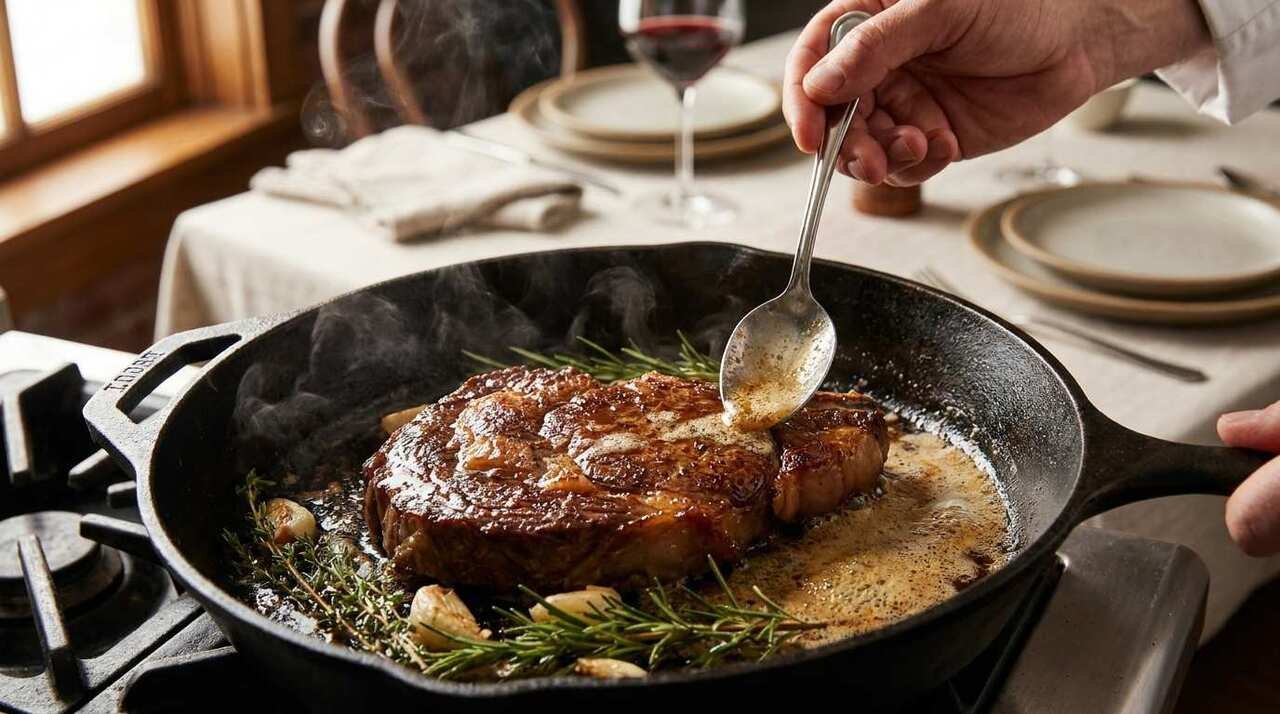

Basting steak with butter is one of the simplest ways to turn a good steak into a rich, deeply flavorful restaurant-style meal. As the steak cooks, we add butter along with aromatics such as garlic, rosemary, or thyme, then repeatedly spoon the foaming butter over the surface of the meat. This technique builds layers of flavor while helping create a beautifully browned crust.
Whether we are cooking a ribeye, New York strip, sirloin, filet mignon, or another tender cut, butter basting can make the finished steak especially aromatic and luxurious. The key is controlling the heat, choosing the right butter, and knowing exactly when to add it.
Table of Contents
What Does It Mean to Baste Steak With Butter?
To baste steak with butter means to spoon hot, melted butter over the steak while it cooks. Rather than simply placing butter on top of the meat and allowing it to melt, we continuously scoop the hot butter from the pan and pour it over the steak.
The butter carries the flavors of any aromatics added to the pan. Garlic, fresh rosemary, thyme, shallots, and black pepper can infuse the butter as it cooks, creating a flavorful coating around the steak.
For the best results, we generally begin by searing the steak in a high-heat cooking oil. Once the steak has developed a strong crust, we reduce the heat and add butter and aromatics. This prevents the butter from burning before the steak has had enough time to brown.
Best Steaks for Butter Basting
Several cuts work exceptionally well with butter basting.
Ribeye
Ribeye is one of the best steaks for butter basting because it contains substantial marbling. As the steak cooks, its natural fat combines beautifully with the butter and aromatics.
The result is a rich, juicy steak with a pronounced beef flavor.
New York Strip
New York strip has a firm texture and excellent beefy flavor. Its relatively even shape makes it easy to sear and baste evenly.
Filet Mignon
Filet mignon is naturally tender and mild, making it particularly suitable for aromatic butter. Garlic, rosemary, and thyme can provide additional flavor without overwhelming the meat. For another elegant way to prepare this tender cut, try our filet mignon with rich balsamic glaze recipe, which pairs perfectly with a rich, tangy balsamic glaze.
Sirloin
Sirloin offers excellent value and can become remarkably flavorful when properly seared and butter basted. Because leaner sirloin can dry out more quickly, careful temperature control is particularly important.
Ingredients for Butter-Basted Steak
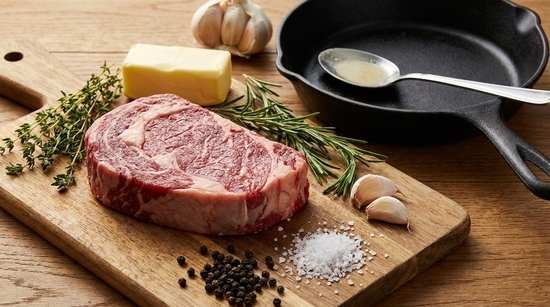
For approximately two steaks, we can use:
- 2 steaks, approximately 1 to 1½ inches thick
- 1 tablespoon neutral cooking oil
- 3 tablespoons unsalted butter
- 3 garlic cloves, lightly crushed
- 2 sprigs fresh rosemary
- 2 sprigs fresh thyme
- Kosher salt, to taste
- Freshly ground black pepper, to taste
Using unsalted butter gives us better control over the final seasoning. We can also substitute salted butter, but we should reduce the amount of additional salt accordingly.
How to Prepare Steak for Butter Basting
Before the steak reaches the pan, proper preparation makes a significant difference.
1. Bring the Steak to a Suitable Temperature
We can remove the steak from the refrigerator shortly before cooking and allow it to sit while we prepare the other ingredients.
There is no need to leave meat at room temperature for an extended period. The more important factors are surface dryness, seasoning, pan temperature, and internal temperature control.
2. Pat the Steak Dry
Using paper towels, we thoroughly pat the steak dry on all sides.
This step is essential because excess surface moisture can interfere with browning. A dry surface allows the steak to make better contact with the hot pan and develop a darker, more flavorful crust.
3. Season Generously
We season both sides with salt and freshly ground black pepper.
For thicker steaks, we should make sure the seasoning is distributed evenly across the entire surface, including the edges.
How to Baste Steak With Butter
Step 1: Heat the Pan
We choose a heavy skillet, preferably cast iron or stainless steel, and heat it over medium-high to high heat.
The pan should be hot enough to create an immediate sizzle when the steak touches the surface.
Step 2: Add Cooking Oil
We add a small amount of neutral oil with a relatively high smoke point.
Avocado oil, canola oil, or another suitable neutral cooking oil can work well.
The oil helps us achieve the initial sear without relying on butter, which can burn at the high temperatures required for crust development.
Step 3: Sear the Steak
We carefully place the steak into the hot pan.
The steak should immediately begin sizzling. We allow it to cook undisturbed until the underside develops a deep golden-brown crust.
Depending on steak thickness, pan temperature, and desired doneness, this can take several minutes.
We then turn the steak and sear the opposite side.
Step 4: Add Butter and Aromatics
Once the steak has developed a good crust, we reduce the heat to medium or medium-low.
We add the butter, crushed garlic, rosemary, and thyme.
The butter should melt and begin foaming. As it becomes fragrant, we tilt the pan slightly so the butter collects along one side.
Step 5: Begin Basting
We use a large spoon to scoop up the hot, aromatic butter.
We repeatedly spoon the butter over the top of the steak.
This is the heart of the technique.
We continue basting while turning the steak periodically, allowing both sides to become coated in the flavorful butter.
The garlic and herbs infuse the butter, while the heat helps develop a rich aroma and deeper flavor.
Step 6: Monitor Internal Temperature
Rather than relying entirely on cooking time, we use an instant-read thermometer to determine doneness.
Approximate final temperatures are:
| Doneness | Internal Temperature |
|---|---|
| Rare | 120–125°F |
| Medium-rare | 130–135°F |
| Medium | 135–145°F |
| Medium-well | 145–155°F |
| Well-done | 160°F+ |
For the most tender and juicy result, many steak lovers prefer medium-rare to medium.
Because the steak can continue cooking slightly after leaving the pan, we should account for carryover cooking when deciding when to remove it.
Why Butter Should Be Added After the Initial Sear
One of the most common mistakes when butter basting steak is adding butter too early.
Butter contains milk solids that can burn when exposed to very high heat for an extended period. Burnt butter can become bitter and unpleasant.
Instead, we first use high heat to establish the crust with cooking oil. Once the steak has browned, we lower the temperature and add butter.
This gives us the best of both techniques:
high heat for browning + moderate heat for butter basting.
Best Aromatics for Butter-Basted Steak
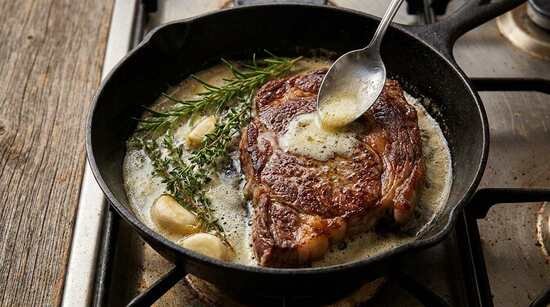
Butter provides richness, but aromatics can make the flavor significantly more complex.
Garlic
Lightly crushed garlic cloves release their flavor into the butter without becoming as aggressive as finely minced garlic.
Rosemary
Rosemary contributes a bold, woodsy aroma that pairs particularly well with ribeye and other strongly flavored cuts.
Thyme
Thyme has a more delicate herbal character and works beautifully with filet mignon and sirloin.
Shallots
Thinly sliced shallots can provide mild sweetness and savory depth.
Black Pepper
Freshly ground black pepper adds warmth and a subtle spicy character.
How Long Should We Butter Baste a Steak?
Butter basting usually takes only a few minutes.
The exact time depends on the thickness of the steak, starting temperature, pan temperature, and desired doneness.
Rather than following a rigid time, we should monitor the steak’s internal temperature with an instant-read thermometer.
A thicker steak may require more time over moderate heat, while a thinner steak can reach the desired temperature quickly.
How to Get a Perfect Steak Crust
Butter basting should complement the crust rather than replace proper searing.
For a beautifully browned exterior:
- Pat the steak completely dry.
- Season evenly.
- Preheat the skillet thoroughly.
- Use a small amount of high-heat cooking oil.
- Avoid constantly moving the steak during the initial sear.
- Sear both major surfaces.
- Add butter only after the crust has developed.
- Lower the heat before prolonged butter basting.
A dark, flavorful crust combined with aromatic butter creates the signature steakhouse-style finish.
Common Butter-Basting Mistakes
Adding Butter Too Early
High heat can burn butter before the steak develops its crust.
Solution: Sear with oil first, then add butter after reducing the heat.
Using Too Much Butter
A large quantity of butter isn’t necessarily better. Excess butter can make the process messy and may make it harder to control the pan temperature.
A few tablespoons are generally sufficient for two steaks.
Skipping the Thermometer
Cooking steak entirely by time can lead to inconsistent results.
Two steaks of the same weight can cook differently depending on thickness and starting temperature.
Overcooking the Steak
Butter adds flavor, but it cannot compensate for an overcooked steak.
We should monitor internal temperature closely and remove the steak when it reaches the appropriate temperature for the desired doneness.
Cutting Immediately
Allowing the steak to rest for several minutes gives the juices time to redistribute.
We should transfer the steak to a cutting board or plate and let it rest before slicing.
How to Rest Butter-Basted Steak
After cooking, we place the steak on a clean plate or cutting board and allow it to rest for approximately 5 to 10 minutes, depending on thickness.
Resting allows the steak to settle before slicing.
We can spoon a little of the remaining aromatic butter over the steak just before serving for an extra layer of richness.
What to Serve With Butter-Basted Steak
Butter-basted steak pairs naturally with hearty side dishes.
Excellent choices include:
- Garlic mashed potatoes
- Crispy roasted potatoes
- Creamed spinach
- Roasted asparagus
- Sautéed mushrooms
- Green beans
- Grilled vegetables
- Caesar salad
- Crispy Brussels sprouts
- Macaroni and cheese
For a classic steakhouse-style dinner, we can combine the steak with mashed potatoes, roasted vegetables, and a simple green salad.
Butter-Basted Steak Sauce Variations
The leftover butter in the skillet can become the foundation for additional flavors.
Garlic Herb Butter
Keep the preparation simple with butter, garlic, rosemary, and thyme.
Pepper Butter
Add freshly cracked black pepper for a more pronounced peppery flavor.
Chimichurri Butter
Combine softened butter with finely chopped parsley, garlic, herbs, and a small amount of acidity for a bright variation.
Blue Cheese Butter
For a bold steakhouse-inspired finish, combine softened butter with crumbled blue cheese and black pepper.
The key is to avoid overpowering a high-quality steak. Rich toppings should enhance the beef rather than completely mask its flavor.
Tips for Restaurant-Style Butter-Basted Steak
For the best possible result, we keep a few principles in mind.
Start with quality meat. A well-marbled steak generally provides better flavor and texture.
Dry the surface thoroughly. Moisture is one of the biggest obstacles to a strong crust.
Preheat the pan. A properly heated skillet encourages rapid browning.
Use oil for the initial sear. This allows us to work at a higher temperature before introducing butter.
Lower the heat before adding butter. This reduces the risk of burning the milk solids.
Use fresh aromatics. Garlic, rosemary, and thyme can transform ordinary butter into an intensely flavorful basting liquid.
Use an instant-read thermometer. Internal temperature provides much more reliable results than cooking time alone.
Rest before slicing. A short resting period helps preserve the steak’s juiciness.
Final Thoughts
Learning how to baste steak with butter gives us an easy way to add exceptional richness and aroma to a home-cooked steak. The technique is straightforward: create a strong crust first, reduce the heat, introduce butter and aromatics, then repeatedly spoon the fragrant butter over the meat while monitoring its internal temperature.
The combination of a deeply browned crust, juicy interior, garlic, fresh herbs, and golden butter creates the kind of steak that feels worthy of a restaurant while remaining simple enough for a home kitchen.
With the right pan, properly dried steak, controlled heat, and a reliable thermometer, butter basting can become one of the most dependable techniques in our steak-cooking repertoire.
Frequently Asked Questions
Can we baste steak with butter from the beginning?
We can, but it is generally not ideal when using high heat. Butter can burn before the steak develops a proper crust. Starting with a high-heat cooking oil and adding butter later gives us greater control.
What butter is best for steak?
Unsalted butter is an excellent choice because it allows us to control the amount of salt independently. European-style butter can also provide a particularly rich flavor.
Can we butter baste a ribeye?
Absolutely. Ribeye is especially well suited to butter basting because its marbling provides substantial natural flavor and richness.
Should we use garlic when butter basting steak?
Garlic is optional but highly recommended for a classic aromatic flavor. Lightly crushed cloves work particularly well because they can infuse the butter without burning as quickly as finely chopped garlic.
How long should steak rest after cooking?
A steak can generally rest for around 5 to 10 minutes, with thicker steaks benefiting from the longer end of that range.




Leave a Reply