
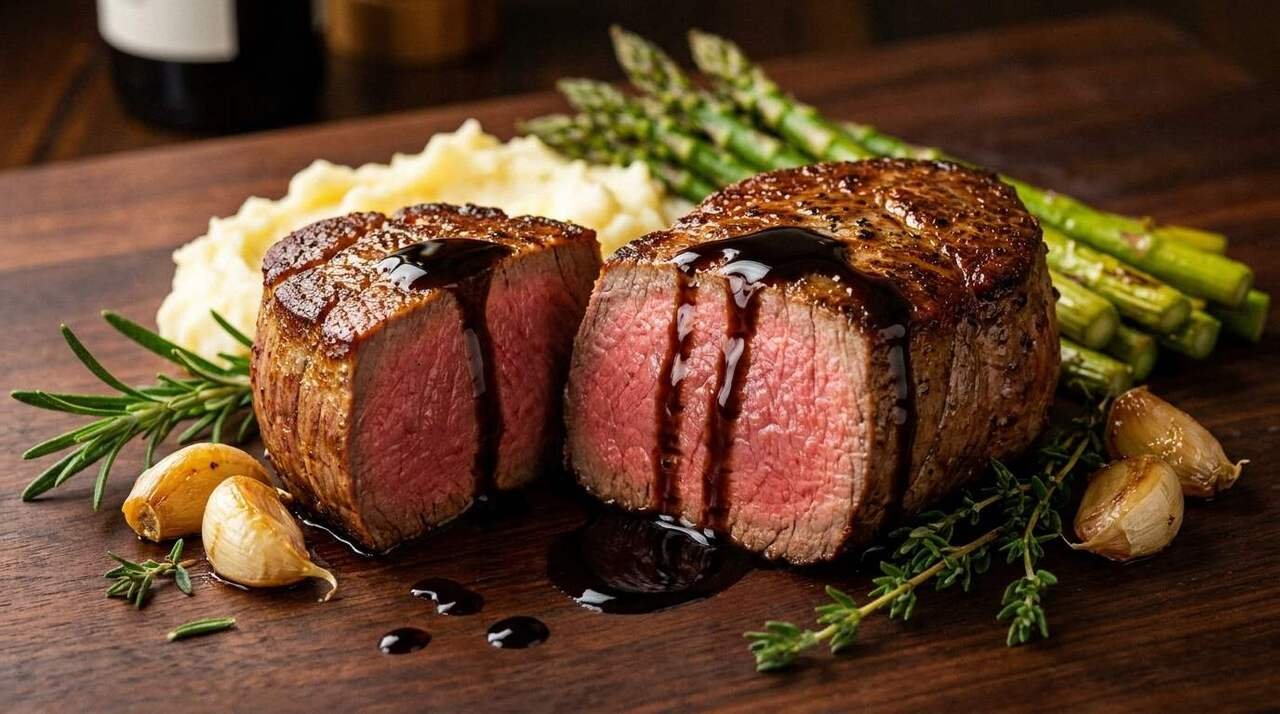

Few dishes deliver the combination of tender texture, rich flavor, and elegant presentation quite like filet mignon. When paired with a deeply flavored balsamic glaze, this premium cut of beef becomes an impressive centerpiece for a special dinner while remaining surprisingly simple to prepare at home.
We can achieve a beautifully browned crust and a juicy, tender center by using a hot skillet, allowing the steaks to rest properly, and finishing them with a concentrated balsamic sauce. The result is restaurant-quality filet mignon with rich balsamic glaze that works beautifully for date nights, holidays, dinner parties, or an elevated weeknight meal.
Table of Contents
Why Filet Mignon Works So Well With Balsamic Glaze
Filet mignon is prized for its exceptionally tender texture and mild beef flavor. Because it contains relatively little connective tissue, it becomes remarkably soft when cooked correctly.
That delicate flavor also makes filet mignon an excellent canvas for a bold sauce. A rich balsamic glaze adds acidity, sweetness, and depth without overwhelming the beef. As balsamic vinegar reduces, its sharpness mellows and its natural sweetness becomes more pronounced.
For an especially balanced sauce, we combine balsamic vinegar with aromatics, butter, and carefully selected seasonings. The butter adds richness while the reduced vinegar provides brightness.
Ingredients for Filet Mignon With Rich Balsamic Glaze
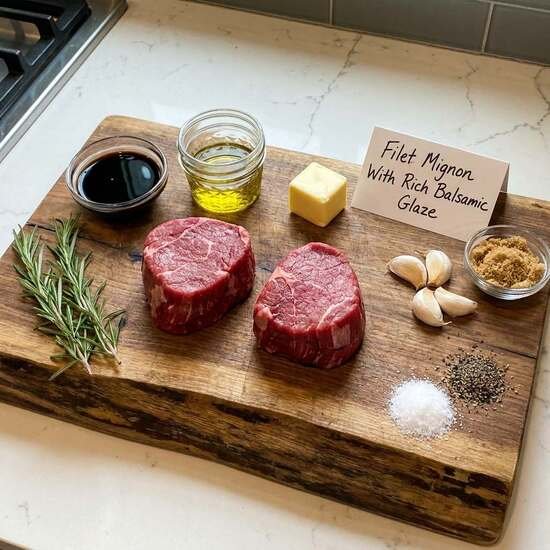
For four servings, we recommend:
For the Filet Mignon
- 4 filet mignon steaks, approximately 1½ to 2 inches thick
- 1½ tablespoons olive oil
- 1 teaspoon kosher salt
- ½ teaspoon freshly ground black pepper
- 2 tablespoons unsalted butter
- 3 garlic cloves, lightly crushed
- 2 sprigs fresh rosemary
- 2 sprigs fresh thyme
For the Rich Balsamic Glaze
- ½ cup balsamic vinegar
- 1 tablespoon honey or maple syrup
- 1 tablespoon finely minced shallot
- 1 tablespoon unsalted butter
- ½ teaspoon Dijon mustard
- ¼ teaspoon freshly ground black pepper
- Pinch of salt
The quality of the balsamic vinegar matters. A good-quality vinegar with naturally balanced acidity and sweetness produces a smoother, more luxurious glaze.
How to Prepare the Filet Mignon
1. Bring the Steaks Toward Room Temperature
Remove the filet mignon from the refrigerator approximately 20 to 30 minutes before cooking.
Pat each steak thoroughly dry with paper towels. Removing surface moisture is important because excess moisture can interfere with browning.
Season both sides generously with kosher salt and freshly ground black pepper.
We recommend seasoning shortly before cooking rather than leaving heavily salted steaks uncovered for a long period unless using a deliberate dry-brining method.
2. Heat the Skillet
Use a heavy-bottomed skillet, preferably cast iron or another pan that retains heat well.
Place the skillet over medium-high to high heat and allow it to become thoroughly hot. Add the olive oil and swirl to coat the cooking surface.
When the oil begins to shimmer, the steaks are ready for the pan.
3. Sear the Filet Mignon
Carefully place the steaks into the hot skillet.
We should hear an immediate, steady sizzling sound. Avoid moving the steaks during the initial sear. Allow the first side to develop a deep golden-brown crust before turning.
Depending on the thickness of the steaks and the heat of the pan, this can take approximately 2 to 4 minutes.
Turn the steaks and continue cooking the second side.
Add the butter, crushed garlic, rosemary, and thyme to the pan. Once the butter melts, carefully tilt the skillet and spoon the aromatic butter repeatedly over the steaks.
This process, often called butter basting, adds richness and allows the garlic and herbs to infuse the butter.
4. Cook the Steaks to Your Preferred Doneness
The most reliable way to determine doneness is to use an instant-read thermometer.
Approximate internal temperatures are:
| Doneness | Internal Temperature |
|---|---|
| Rare | 120–125°F |
| Medium-rare | 130–135°F |
| Medium | 140–145°F |
| Medium-well | 150–155°F |
| Well-done | 160°F+ |
For filet mignon, medium-rare to medium is often preferred because it preserves the cut’s tender texture.
Because the internal temperature can continue rising slightly after the steaks leave the skillet, removing them a few degrees before the final target temperature can help prevent overcooking.
Transfer the steaks to a plate or cutting board and loosely cover them with foil.
5. Rest the Filet Mignon
Allow the steaks to rest for approximately 5 to 10 minutes.
Resting gives the meat time to redistribute its juices. Cutting into the filet immediately after cooking can cause more of those flavorful juices to escape onto the plate.
While the steaks rest, prepare the balsamic glaze.

How to Make a Rich Balsamic Glaze
The glaze comes together quickly and can be prepared in the same skillet for additional flavor.
1. Add the Balsamic Vinegar
If there are excessive burnt bits in the skillet, carefully wipe them away. A small amount of browned residue is desirable because it contributes savory flavor.
Add the balsamic vinegar to the pan.
Scrape the bottom gently with a wooden spoon to loosen flavorful browned bits.
2. Add Shallot and Honey
Stir in the minced shallot and honey or maple syrup.
Bring the mixture to a gentle simmer.
As the balsamic vinegar reduces, its volume will decrease and its flavor will become more concentrated. Avoid boiling it aggressively because the sugars can burn quickly.
3. Add Dijon Mustard
Whisk in the Dijon mustard.
The mustard contributes subtle sharpness and helps balance the sweetness of the reduction.
Continue simmering until the sauce thickens enough to coat the back of a spoon. Depending on the heat and the width of the pan, this may take approximately 5 to 10 minutes.
4. Finish With Butter
Remove the skillet from the heat and whisk in the remaining butter.
The butter creates a smoother, silkier glaze and softens the acidity of the balsamic vinegar.
Taste the sauce and adjust the seasoning with a small pinch of salt or black pepper if needed.
The finished glaze should taste sweet, tangy, savory, and deeply concentrated.
How to Serve Filet Mignon With Balsamic Glaze
Place each rested filet mignon on a warm plate and spoon the balsamic glaze over the top.
For a restaurant-style presentation, we can slice the steak before serving or leave it whole and allow guests to cut into it themselves.
A small drizzle of glaze around the steak can also create an elegant presentation without covering the entire surface of the crust.
Fresh rosemary, thyme, or finely chopped parsley can provide a simple finishing touch.
Best Side Dishes for Filet Mignon
Because filet mignon is rich but relatively mild in flavor, it pairs beautifully with both creamy and fresh side dishes.
Garlic Mashed Potatoes
Creamy mashed potatoes absorb the balsamic glaze beautifully. Adding roasted garlic creates an especially complementary flavor.
Roasted Asparagus
Roasted asparagus provides a slightly crisp texture and fresh vegetable flavor that balances the richness of the steak.
Creamed Spinach
Creamed spinach creates a classic steakhouse-style combination. Its creamy texture works particularly well with the acidic balsamic reduction.
Roasted Brussels Sprouts
Crispy roasted Brussels sprouts provide caramelized edges and a slightly bitter note that contrasts with the sweet glaze.
Simple Green Salad
For a lighter dinner, serve the filet mignon with mixed greens, cucumber, tomatoes, and a simple vinaigrette.
Tips for Perfect Filet Mignon Every Time
Choose Thick-Cut Steaks
Steaks that are approximately 1½ to 2 inches thick are particularly well suited to skillet cooking. Their thickness makes it easier to create a deeply browned exterior while maintaining a tender center.
Dry the Surface Thoroughly
Moisture is one of the biggest obstacles to a good crust. Patting the steaks dry before seasoning helps the surface brown more effectively.
Use a Properly Heated Pan
A cold or lukewarm skillet can cause the beef to cook unevenly and may prevent proper browning.
We should allow the pan to become hot before adding the steaks.
Do Not Constantly Flip the Steaks
Frequent movement can interfere with the development of a strong crust. Let each side sear before turning.
Use a Meat Thermometer
Visual cues are unreliable, particularly with thick steaks. A thermometer provides much greater control over the final doneness.
Do Not Overcook Filet Mignon
Filet mignon is naturally tender, but its relatively low fat content means it can become dry when significantly overcooked.
Medium-rare or medium generally provides an excellent balance between tenderness and flavor.
Watch the Balsamic Reduction
Balsamic glaze thickens substantially as it cools. We should therefore avoid reducing it until it becomes extremely thick in the pan.
If the glaze becomes too thick, a small splash of water or additional balsamic vinegar can help loosen it.
Can We Make the Balsamic Glaze Ahead?
Yes. The balsamic glaze can be prepared several hours in advance and stored in an airtight container in the refrigerator.
When ready to serve, gently warm it in a saucepan over low heat. If it has thickened too much, add a small amount of water and whisk until smooth.
Preparing the glaze ahead can make this filet mignon recipe particularly convenient for dinner parties and special occasions.
Recipe Variations
Balsamic Mushroom Filet Mignon
Sauté sliced mushrooms in the skillet after cooking the steak. Add the balsamic vinegar and continue with the reduction for a rich mushroom-balsamic sauce.
Red Wine Balsamic Glaze
Replace part of the balsamic vinegar with dry red wine. The wine adds additional complexity and pairs naturally with beef.
Garlic Herb Filet Mignon
Increase the garlic and fresh herbs during the butter-basting stage for a more pronounced savory flavor.
Blue Cheese Finish
For a bold steakhouse-inspired variation, add a small amount of crumbled blue cheese immediately before serving. The creamy, salty cheese contrasts beautifully with the sweet-tart balsamic glaze.
Final Thoughts
Filet mignon with rich balsamic glaze combines everything we want from an elegant homemade steak dinner: a beautifully browned exterior, a tender center, aromatic herbs, and a glossy sauce with the perfect balance of sweetness and acidity.
By focusing on a few fundamentals—drying the steaks thoroughly, using a hot skillet, monitoring internal temperature, butter basting, and allowing the meat to rest—we can consistently achieve impressive results.
The balsamic glaze adds an especially memorable finishing touch. Its concentrated flavor complements rather than masks the delicate beef, making this recipe an excellent choice when we want to turn a simple steak dinner into something genuinely special.
Frequently Asked Questions
What is the best pan for filet mignon?
A heavy cast-iron skillet is an excellent choice because it retains heat well and encourages strong browning. A high-quality stainless-steel skillet also works very well.
Should we marinate filet mignon?
Marinating is generally unnecessary. Filet mignon is already tender, and its mild flavor allows the balsamic glaze and fresh herbs to stand out.
How long should filet mignon rest?
A resting period of approximately 5 to 10 minutes is usually sufficient for individual steaks.
Can we cook filet mignon without butter?
Yes. Olive oil can be used for searing, while the finishing butter can be omitted. However, butter basting contributes a richer flavor and helps create a luxurious finish.
Why is our balsamic glaze too thin?
The glaze may simply need additional reduction. Continue simmering gently until it thickens. Remember that the sauce will become thicker as it cools.
Why did the steak not develop a crust?
Common causes include excess moisture on the steak, an insufficiently hot skillet, overcrowding the pan, or moving the steak too frequently during cooking.






Leave a Reply