


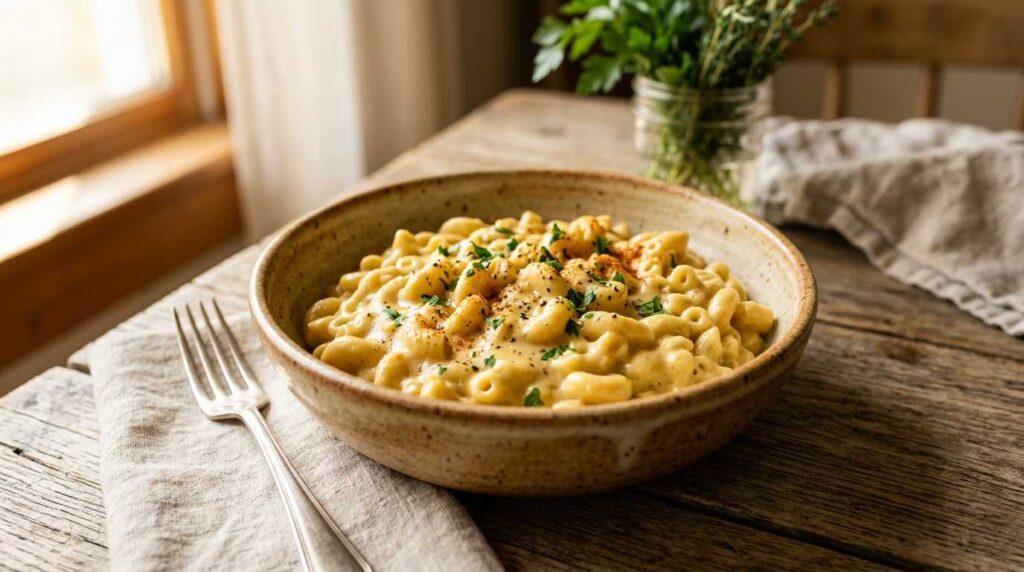
A good vegan mac and cheese sauce should be creamy, savory, rich, and satisfying without relying on dairy. The best versions balance several flavors at once: mild sweetness, salty umami, gentle acidity, and the familiar savory character that makes traditional mac and cheese so comforting.
We can make a surprisingly smooth sauce from simple plant-based ingredients. Cashews, nutritional yeast, plant milk, mustard, spices, and a few basic pantry ingredients create a sauce that coats pasta beautifully instead of turning watery or separating.
Whether we are preparing a quick weeknight dinner, looking for a dairy-free comfort food, or simply want a lighter alternative to traditional macaroni and cheese, this sauce is versatile enough for all three.
Suggested vegan recipe: Garlic Vegan Mayo: Creamy Homemade Recipe
Table of Contents
What Makes a Great Vegan Mac and Cheese Sauce?
The texture is just as important as the flavor. A successful sauce should be smooth enough to coat every piece of pasta, thick enough to cling to the noodles, and fluid enough to remain creamy after serving.
Traditional cheese contributes fat, salt, protein, and emulsifying properties. Since vegan ingredients do not behave exactly the same way, we need to build those qualities from several ingredients.
A strong vegan cheese sauce usually includes:
- Cashews for richness and creaminess
- Nutritional yeast for a savory, cheesy flavor
- Plant milk for a smooth liquid base
- Dijon mustard for acidity and depth
- Garlic powder for savory flavor
- Onion powder for additional depth
- Paprika for warmth and color
- Lemon juice for brightness
- Salt to bring everything together
The result is a sauce that tastes much more complex than the ingredient list suggests.
Ingredients for Vegan Mac and Cheese Sauce
Raw Cashews
Raw cashews are one of the most useful ingredients for creamy vegan sauces. Once soaked and blended, they become remarkably smooth and provide the fat needed for a rich texture.
We recommend using raw, unsalted cashews rather than roasted cashews. Roasted nuts have a stronger flavor that can compete with the other ingredients.
Nutritional Yeast
Nutritional yeast is responsible for much of the sauce’s characteristic cheesy flavor. It has a savory, nutty, slightly sharp taste and works particularly well in dairy-free recipes.
For the strongest flavor, use fresh nutritional yeast and adjust the quantity according to taste.
Plant Milk
Unsweetened plant milk provides the liquid needed to blend the sauce. Oat, soy, almond, or cashew milk can work well.
The important point is to choose unsweetened, unflavored plant milk. Vanilla-flavored milk can introduce an unwanted sweetness.
Dijon Mustard
A small amount of Dijon mustard makes a noticeable difference. It adds acidity and savory depth without making the sauce taste strongly of mustard.
Lemon Juice
Lemon juice gives the sauce a little brightness. Without some acidity, creamy sauces can taste heavy or flat.
We should add it gradually because too much lemon can overpower the cheesy flavor.
Seasonings
Garlic powder, onion powder, paprika, salt, and black pepper create the savory foundation. A small amount of smoked paprika can also add a deeper, slightly smoky character.
How to Make Vegan Mac and Cheese Sauce
1. Soak the Cashews
Place the raw cashews in a bowl and cover them with hot water. Let them soak until softened.
If we have more time, soaking them in room-temperature water for several hours also works.
Soft cashews blend more easily and produce a smoother sauce.
After soaking, drain and rinse the cashews thoroughly.
2. Add Everything to a Blender
Add the softened cashews, unsweetened plant milk, nutritional yeast, Dijon mustard, lemon juice, garlic powder, onion powder, paprika, salt, and black pepper to a high-speed blender.
Blend until completely smooth.
This may take longer than expected. We should continue blending until there are no noticeable pieces of cashew remaining.
A high-speed blender produces the smoothest result, but a standard blender can also work if the cashews have been soaked thoroughly.
3. Adjust the Consistency
The sauce may initially look thicker than desired. Add a small amount of plant milk and blend again.
We should add liquid gradually rather than adding a large amount at once.
For pasta, the ideal consistency is thick and creamy but still pourable. The sauce will also thicken slightly as it cools.
4. Warm the Sauce
Transfer the blended sauce to a saucepan and warm it gently over medium-low heat.
Stir frequently.
We do not need to boil the sauce. Gentle heating allows the flavors to develop while reducing the risk of the sauce becoming too thick or sticking to the bottom of the pan.
If it becomes too thick, add a splash of plant milk.
How to Use Vegan Mac and Cheese Sauce
The obvious choice is macaroni, but this sauce works with many other pasta shapes.
Shells are particularly useful because they hold the creamy sauce inside their curves. Elbows provide the familiar mac and cheese experience, while penne and rotini offer plenty of surface area for the sauce.
We can also use the sauce with:
- Shell pasta
- Elbow macaroni
- Penne
- Rotini
- Rigatoni
- Gluten-free pasta
- Whole-wheat pasta
- Chickpea pasta
- Lentil pasta
For the best result, cook the pasta until just al dente. Overcooked pasta can become soft after being combined with the warm sauce.
How to Make the Sauce Extra Creamy
The biggest secret is controlling the amount of liquid.
Too much plant milk creates a thin sauce. Too little produces a paste-like consistency.
Cashews also need to be blended thoroughly. If they are not soft enough, tiny pieces can remain in the sauce.
Another useful technique is to reserve a little pasta water. The starch in pasta water can help loosen the sauce while allowing it to remain creamy.
After draining the pasta, combine it with the sauce while everything is still warm.
Vegan Mac and Cheese Sauce Without Cashews
Cashews are convenient, but they are not essential.
For a nut-free version, we can use sunflower seeds instead. Soak them just as we would cashews and blend them thoroughly.
Silken tofu can also contribute creaminess, although it produces a slightly different flavor and texture.
Another option is to use a combination of cooked vegetables and plant milk. Cooked potatoes and carrots can create a surprisingly creamy base when blended with nutritional yeast and seasonings.
These alternatives are especially useful for anyone avoiding tree nuts.
Ways to Add More Flavor
A basic vegan cheese sauce can easily be customized.
For a smoky version, add smoked paprika.
For a spicy sauce, add cayenne pepper, chili flakes, or a small amount of hot sauce.
For extra savory depth, add a little miso paste.
For a roasted-garlic version, replace garlic powder with roasted garlic cloves.
We can also stir in chopped jalapeños, green onions, roasted vegetables, or caramelized onions after preparing the sauce.
The important thing is to add stronger ingredients gradually so they do not overpower the creamy base.
Can We Make Vegan Mac and Cheese Ahead of Time?
Yes. The sauce can be prepared ahead and stored in an airtight container in the refrigerator.
It will usually become thicker as it chills. When reheating, place it in a saucepan over low heat and stir in a small amount of plant milk until it reaches the desired consistency.
We should avoid overheating it because excessive heat can make a creamy sauce become excessively thick.
If the sauce has been refrigerated, stirring it thoroughly while reheating helps restore its smooth texture.
Common Problems With Vegan Cheese Sauce
The Sauce Is Too Thick
Add plant milk one tablespoon at a time and stir or blend until the consistency improves.
The Sauce Is Too Thin
Warm it gently for a few minutes while stirring. This allows some moisture to evaporate.
We can also blend in a little more soaked cashew if necessary.
The Sauce Tastes Bland
The most common solution is seasoning. Add salt gradually, followed by nutritional yeast, mustard, or lemon juice.
A bland sauce often does not need more ingredients; it simply needs better balance.
The Sauce Tastes Too Nutty
Reduce the cashews slightly and increase the nutritional yeast and seasonings. A small amount of mustard and lemon juice can also help balance the richness.
The Sauce Is Grainy
The cashews probably were not softened enough or the sauce was not blended long enough.
Soaking the nuts longer and using a powerful blender can significantly improve the texture.
Serving Ideas
Once the vegan mac and cheese sauce is combined with pasta, we can serve it immediately for a soft, creamy dish.
For a baked version, transfer the prepared macaroni to a baking dish and top it with seasoned breadcrumbs. Bake until the surface becomes crisp and golden.
We can also add steamed broccoli, peas, roasted cauliflower, spinach, mushrooms, or caramelized onions for extra texture and flavor.
A sprinkle of fresh herbs can provide a bright contrast to the rich sauce.
The Best Vegan Mac and Cheese Sauce
A satisfying vegan mac and cheese sauce does not need a complicated ingredient list. The key is creating balance between creaminess, savory flavor, acidity, salt, and texture.
Soaked cashews provide the rich foundation, nutritional yeast supplies the characteristic savory note, and mustard and lemon juice keep the sauce from becoming heavy. Plant milk allows us to control the consistency, while simple seasonings build the familiar comfort-food flavor.
Once we have the basic formula, it becomes easy to adapt. We can make it smoky, spicy, garlicky, nut-free, vegetable-packed, or extra creamy depending on what we have available.
Served over freshly cooked pasta, this sauce delivers the comfort and creaminess of classic mac and cheese while remaining completely dairy-free.