


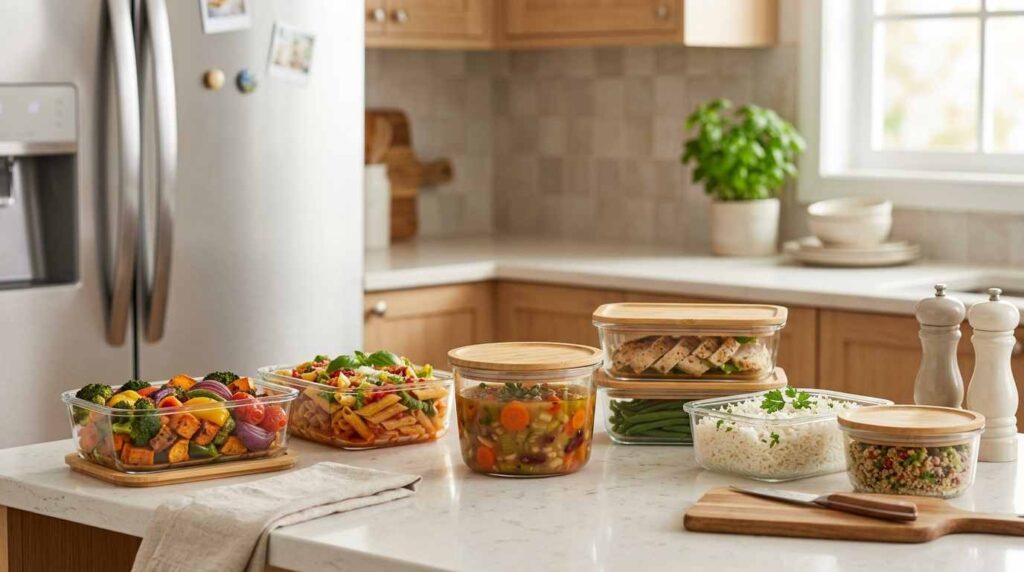
Knowing how to store leftovers safely helps us reduce food waste while keeping meals fresh and safe to eat. Whether we have a little roasted chicken, a pot of soup, cooked rice, pasta, vegetables, or a complete dinner, proper storage begins as soon as the meal is finished.
The most important habits are simple: refrigerate perishable leftovers promptly, use clean containers, keep the refrigerator cold, label stored food, and reheat leftovers thoroughly.
With the right routine, we can safely enjoy yesterday’s dinner without sacrificing flavor, texture, or food safety.
Table of Contents
How Long Can Leftovers Sit Out?
We should not leave perishable leftovers at room temperature for extended periods. As a general food-safety rule, cooked food should be refrigerated within two hours.
If the surrounding temperature is particularly hot, such as during a summer gathering or outdoor meal, the safe window can be shorter.
This matters because many harmful bacteria can multiply rapidly when food remains in the temperature range where bacteria grow easily. Food can look, smell, and taste perfectly normal while still being unsafe.
Instead of leaving a serving dish on the counter for hours, we should transfer the leftovers to the refrigerator as soon as practical.
For large meals, there is no need to wait until everything has completely cooled to room temperature before refrigerating it. In fact, allowing a large pot of food to sit out for a long time can create a food-safety problem.
Cool Leftovers Quickly and Safely
Large quantities of hot food can take a long time to cool if they are stored in one deep container.
A better approach is to divide leftovers into smaller, shallow containers. This allows heat to escape more efficiently and helps the food cool faster in the refrigerator.
For example, instead of putting an entire pot of stew into one large storage container, divide it into several smaller portions.
This method also makes future meals easier because we can remove only the amount we intend to eat.
For soups, stews, sauces, casseroles, and cooked grains, portioning before storage is one of the most useful habits we can develop.
Use Clean, Food-Safe Storage Containers
The container matters almost as much as the refrigerator itself.
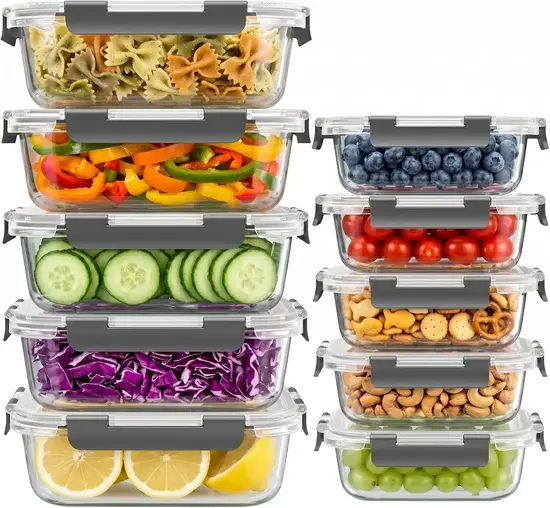
We should store leftovers in clean, food-safe containers with secure lids. Containers should be free from cracks, excessive staining, or damage that makes them difficult to clean properly.
Glass containers are convenient for many leftovers because they are durable and can make it easy to see what is inside. High-quality food-safe plastic containers are also practical, especially when we need lightweight storage.
Avoid storing food in containers that are not designed for food contact.
A secure lid helps prevent spills and protects leftovers from contamination and unwanted refrigerator odors.

How to Store Leftovers in the Refrigerator
The refrigerator should be kept at 40°F (4°C) or below for safe food storage.
When storing leftovers, avoid overcrowding the refrigerator. Cold air needs to circulate around containers so that food can remain properly chilled.
We should also keep raw foods separate from cooked foods. Raw meat, poultry, and seafood should be stored in a way that prevents their juices from dripping onto ready-to-eat foods.
A useful refrigerator organization system is:
- Top and middle shelves: ready-to-eat leftovers and cooked foods
- Lower shelf: raw meat, poultry, and seafood in sealed containers
- Drawers: fruits and vegetables as appropriate
- Door shelves: items that are less temperature-sensitive
The exact arrangement can vary by refrigerator, but preventing cross-contamination should always be the priority.
How Long Do Leftovers Last in the Refrigerator?
Many properly refrigerated cooked leftovers should be used within three to four days.
This applies to a wide range of cooked foods, including meats, poultry, casseroles, soups, stews, cooked vegetables, and many prepared dishes.
We should not rely solely on smell or appearance to determine whether food is safe. Harmful bacteria do not necessarily produce an obvious odor, color change, or unusual appearance.
A simple labeling system makes leftovers much easier to manage.
Write the date the food was prepared or refrigerated on the container. When several meals are stored at once, this prevents forgotten containers from remaining in the refrigerator for too long.
When in doubt about how long a perishable food has been stored, throwing it away is safer than taking a chance.
Can You Freeze Leftovers?
Yes. Freezing is one of the best ways to preserve leftovers when we know we will not eat them within a few days.
Freezing pauses bacterial growth, but it does not make unsafe food safe. We should therefore freeze leftovers while they are still within their safe storage period.
Before freezing, divide food into meal-sized portions. Smaller portions freeze more efficiently and make thawing easier.
Use freezer-safe containers or bags and remove as much excess air as practical. Excess air can contribute to freezer burn and can reduce the quality of food over time.
Label each package with:
- The name of the food
- The date it was frozen
- The number of servings, if useful
This simple system prevents the freezer from becoming a collection of unidentified containers.
How to Prevent Freezer Burn
Freezer burn does not necessarily mean that food is unsafe, but it can seriously affect quality.
It occurs when moisture moves from the food and evaporates from its surface during frozen storage. The result can be dry, leathery, or discolored areas.
To reduce freezer burn, use airtight freezer packaging, minimize air inside bags, and avoid leaving food loosely wrapped.
Foods with high moisture content can be particularly affected by poor packaging.
If a small portion of food develops freezer burn, trimming the affected area may improve the texture. However, heavily freezer-burned food may no longer be enjoyable even if it remains safe from a food-safety perspective.
The Safest Ways to Thaw Frozen Leftovers
We should avoid thawing perishable leftovers on the kitchen counter.
Instead, use one of these safer methods:
Thaw in the Refrigerator
Refrigerator thawing is one of the safest and most convenient methods. It keeps food at a controlled temperature while it gradually defrosts.
For larger portions, allow enough time for the center to thaw completely.
Thaw in Cold Water
Food can also be thawed in cold water when it is contained in a leak-proof package. The water should be changed regularly to maintain a safe temperature.
Thaw in the Microwave
The microwave can be used when food will be cooked or reheated immediately afterward.
Microwave thawing can produce warm spots, so the food should not simply be thawed and left sitting at room temperature.
How to Reheat Leftovers Safely
Reheating is another important part of leftover safety.
When reheating cooked food, we should heat it thoroughly rather than merely warming the outside.
A food thermometer is the most reliable way to check temperature. Many leftovers should reach 165°F (74°C) when reheated.
For microwave reheating, arrange food evenly and cover the container loosely when appropriate. Stir or rotate food during heating because microwaves can produce uneven temperatures.
After heating, allow the food to stand briefly when appropriate so that heat can distribute throughout the portion.
Soups, sauces, and gravies should be stirred during reheating to help distribute heat evenly.
Do You Need to Reheat Leftovers More Than Once?
Repeatedly reheating and cooling the same container is not ideal.
Instead, we should reheat only the portion we plan to eat.
For example, if we have a container of cooked pasta in the refrigerator, remove one serving and heat that serving rather than reheating the entire container.
This approach helps preserve texture and reduces repeated temperature changes.
It is particularly useful when storing family-sized portions of casseroles, rice dishes, soups, and cooked meats.
How to Store Rice and Pasta Safely
Cooked rice and pasta deserve particular attention because they can support the growth of certain bacteria when handled or stored improperly.
After cooking, we should avoid leaving rice or pasta at room temperature for prolonged periods.
Transfer it to shallow containers and refrigerate it promptly.
When reheating, heat the portion thoroughly and serve it immediately.
The same general principle applies to other cooked grains such as quinoa, couscous, barley, and similar foods.
How to Store Leftover Meat and Poultry
Cooked meat and poultry should be refrigerated promptly in clean, covered containers.
If we have a large roast or whole cooked chicken, dividing it into smaller portions can speed cooling and make later meals easier.
Remove stuffing from poultry before refrigeration when appropriate and store it separately.
When reheating meat or poultry, make sure the center reaches a safe temperature rather than relying only on a hot surface.
Sliced meat can often be stored in smaller portions, which makes it easier to reheat only what is needed.
How to Store Leftover Soup and Stew
Soup and stew can be excellent make-ahead foods because they often maintain their flavor well after refrigeration.
However, large pots should not simply be left on the counter until completely cool.
Divide the food into shallow containers and refrigerate promptly.
Once chilled, containers should remain covered.
When reheating soup or stew, stir it regularly and make sure the entire portion becomes thoroughly hot.
For long-term storage, soup and stew can also be frozen in appropriately sized freezer containers, leaving enough space for expansion.
How to Store Leftover Casseroles
Casseroles are best divided into manageable portions before refrigeration or freezing.
Use a covered, food-safe container, or cover the original baking dish securely if it is appropriate for storage.
When freezing an entire casserole, consider whether it will be easier to thaw and reheat as individual portions.
This can save time and prevent us from repeatedly reheating the same food.
Cream-based casseroles may change texture after freezing, while dishes containing sauces, vegetables, or starches can vary considerably in quality after thawing. Safe storage remains possible, but the expected texture should be considered.
How to Know When Leftovers Should Be Thrown Away
We should discard leftovers when there is a reasonable concern that they have been stored improperly or for too long.
Warning signs can include:
- Unusual odor
- Visible mold
- Unexpected discoloration
- Slimy or unusually sticky texture
- Damaged or leaking storage containers
- Food that has been left unrefrigerated too long
- Uncertainty about how long the food has been stored
However, the absence of these warning signs does not guarantee that food is safe.
That is why storage time and temperature are more reliable indicators than appearance or smell alone.
If we cannot confidently determine when a perishable leftover was prepared or how it was stored, discarding it is the safer choice.
A Simple Leftover Storage Routine
We can make leftover safety almost automatic by following the same routine after every meal.
Step 1: Finish the meal.
Do not leave perishable food sitting on the table longer than necessary.
Step 2: Portion large amounts.
Divide soups, stews, casseroles, rice, pasta, and meat into smaller containers.
Step 3: Cover everything.
Use secure lids or appropriate food-storage packaging.
Step 4: Refrigerate promptly.
Move perishable leftovers into the refrigerator within the recommended time.
Step 5: Label the containers.
Write the date on each container so older food can be used first.
Step 6: Freeze what will not be eaten soon.
If we know a portion will not be consumed within the refrigerator storage period, freeze it while it is still safe.
Step 7: Reheat only what we need.
This helps preserve quality and reduces repeated temperature changes.
Step 8: Check storage time before eating.
When there is uncertainty, choose food safety over avoiding waste.
Best Practices for Reducing Food Waste Safely
Safe storage and food waste reduction can work together.
Instead of cooking large quantities without a plan, we can portion meals according to how many servings we realistically expect to eat.
A simple eat-first section in the refrigerator can also help. Place older leftovers toward the front where they are visible, while newer foods go behind them.
Freezing individual portions is particularly useful for busy weeks. A container of frozen soup, cooked meat, pasta sauce, or casserole can become a convenient meal without requiring us to cook from scratch.
Good labeling is equally important. A freezer full of unidentified food eventually becomes food waste because we no longer know what it is or when it was stored.
Leftover Storage Cheat Sheet
| Food | Storage approach |
|---|---|
| Cooked meat | Refrigerate promptly; use within a few days or freeze |
| Cooked poultry | Refrigerate promptly; use within a few days or freeze |
| Soup | Divide into shallow containers and refrigerate or freeze |
| Stew | Portion, cover, refrigerate or freeze |
| Cooked rice | Cool and refrigerate promptly; reheat thoroughly |
| Cooked pasta | Refrigerate promptly in a covered container |
| Casseroles | Portion and refrigerate or freeze |
| Cooked vegetables | Store covered in the refrigerator |
| Sauces and gravy | Refrigerate promptly in sealed containers |
| Large leftovers | Divide into smaller portions for faster cooling |
Final Tips for Safe Leftover Storage
The safest leftover routine is also one of the simplest. Refrigerate promptly, keep food cold, use clean containers, label dates, freeze food when necessary, and reheat leftovers thoroughly.
We should never depend entirely on smell or appearance to decide whether a leftover is safe. Time and temperature are essential parts of food safety.
By treating leftovers as carefully as we treat freshly prepared food, we can enjoy more meals from the ingredients we already have while reducing unnecessary food waste.
A few consistent habits—smaller portions, proper refrigeration, accurate labeling, safe thawing, and thorough reheating—can make leftover storage both safer and much easier.